Rain slicked the windows of a small terrace house in Blackpool, where a woman named Sarah sat at her kitchen table. She wasn’t looking at the weather. She was looking at a utility bill that felt like a weight in her hands. For Sarah, and millions like her, energy isn’t a line item in a national budget or a talking point in a televised debate. It is the difference between a warm evening and a shivering night. It is the invisible force that dictates whether her paycheck stretches to the end of the month.
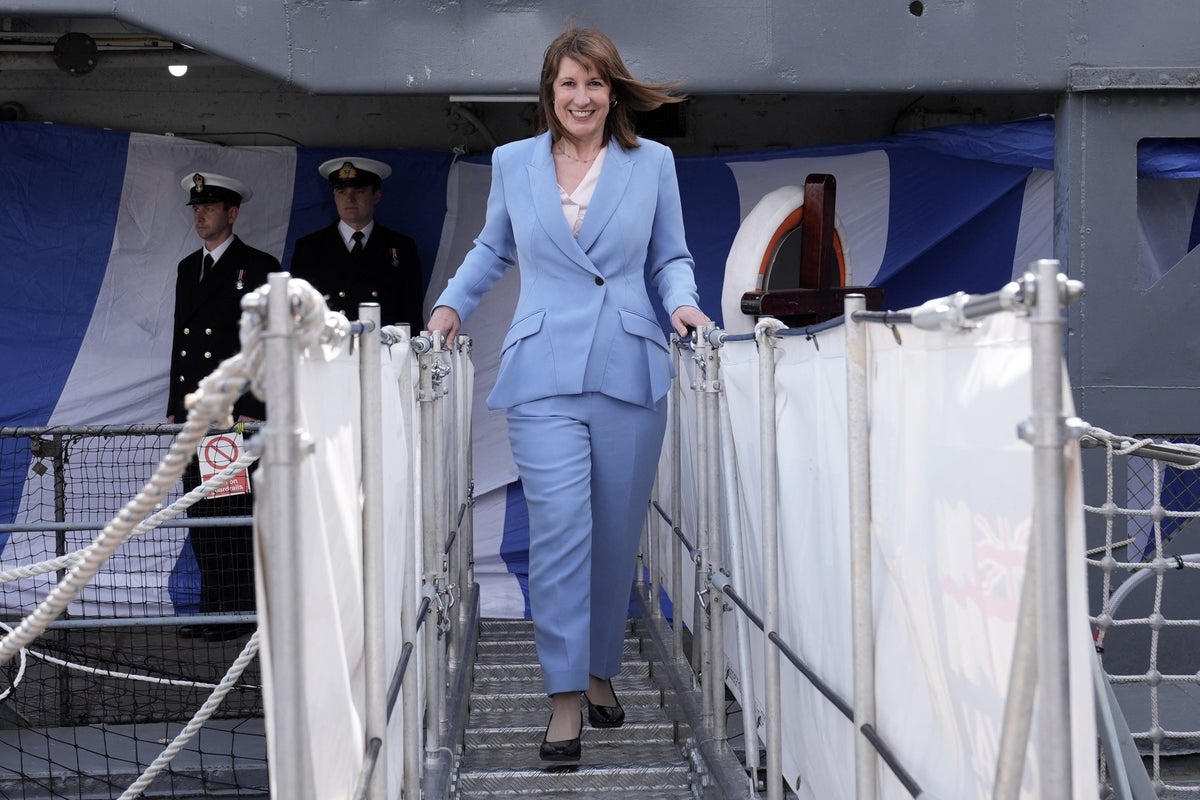
While Sarah stared at her bill, Rachel Reeves, the Chancellor of the Exchequer, was grappling with the same problem from a different angle. The announcement was quiet but heavy with consequence: the government would back further drilling in the North Sea. It was a move that seemed to fly in the face of certain green promises, yet it was rooted in a brutal, shivering reality.
Britain is hungry. We are a nation that runs on heat, light, and movement, and right now, we are feeding that hunger with hands that don’t belong to us.
The Debt of Distance
Every time we flip a switch or turn a dial, we are participating in a global scavenger hunt. For decades, the UK has drifted further away from energy independence. We began to rely on the kindness of pipelines that stretch across borders and under oceans, crossing through territories that aren’t always friendly. When those pipelines stutter, or when a tyrant halfway across the globe decides to turn a valve, Sarah’s kitchen in Blackpool gets colder.
The logic behind the Chancellor’s support for new North Sea licenses is as simple as it is controversial. If we don’t get it from our own backyard, we have to buy it from someone else’s.
Buying energy from abroad isn't just expensive; it’s carbon-intensive in ways we rarely talk about. When we ship liquefied natural gas (LNG) across the Atlantic or the Middle East, the carbon footprint of that journey is immense. It involves massive tankers, cooling processes, and thousands of miles of transit. By contrast, pulling gas from a rig a few hundred miles off the coast of Scotland is, paradoxically, the "greener" way to burn a fossil fuel. It is the lesser of two evils in a world that isn't quite ready to live on sunshine alone.
The Skeleton in the Machine
Think of the UK's energy grid as an aging car. We want to buy a shiny new electric vehicle—and we are building it, piece by piece—but we still have to get to work tomorrow. If we throw away the keys to the old car before the new one is parked in the driveway, we are stranded.
The North Sea represents that old car. It is a maturing basin, its glory days of the 1970s and 80s long gone. The easy oil is finished. What remains is harder to reach, trapped in complex geological pockets that require sophisticated engineering and, more importantly, massive capital investment.
But investors are skittish. They see the windfall taxes. They hear the calls for an immediate end to all drilling. They wonder if their billion-pound investment will be rendered worthless by a change in policy five years from now. By backing these licenses, the Treasury is trying to send a signal: we won't let the engine seize up yet.
The stakes are measured in people. There are approximately 200,000 jobs tied to the UK's offshore energy sector. These aren't just faceless workers; they are engineers in Aberdeen, technicians in Teesside, and helicopter pilots in Norwich. To shut down the North Sea overnight wouldn't just be an environmental statement; it would be an economic amputation.
The Great Transition Gap
There is a gap between the world we want and the world we have. In the world we want, the wind whistling through the Highlands and the waves crashing against the Cornish coast provide every kilowatt we need. In the world we have, wind is intermittent. The sun sets. Batteries aren't yet big enough to hold the surplus for a week of winter gloom.
During those gaps, natural gas is the "balancer." It is the fuel that can be ramped up in minutes to meet a spike in demand. If that gas doesn't come from the North Sea, it comes from Qatar, Norway, or the United States.
The Chancellor’s stance is an admission of vulnerability. It is an acknowledgment that the "Just Transition" is currently more "Transition" than "Just." If the government allows domestic production to collapse too quickly, the price of energy will skyrocket even further, and the tax revenue that could have funded wind farms and carbon capture projects will instead flow into the coffers of foreign state-owned energy giants.
A Gamble Against the Clock
Critics argue that every new well is a nail in the coffin of our climate goals. They aren't wrong about the urgency. The planet is warming, and the North Sea is a finite resource that we must eventually leave behind. The tension lies in the timing.
If we stop drilling today, we don't stop using gas today. We just change the return address on the invoice.
The strategy being deployed is a high-wire act. The government is trying to squeeze the last bits of value and security out of the North Sea to fund the very infrastructure that will eventually replace it. It is using the past to pay for the future.
It’s a messy, complicated, and deeply human dilemma. It’s about the engineer in Aberdeen who needs to pay his mortgage, and it’s about Sarah in Blackpool who needs to boil a kettle without checking her bank balance first.
We are standing on the shore, looking out at a gray, churning sea. Beneath those waves lies a reserve of energy that has defined British prosperity for half a century. We are trying to find a way to let go of that history without falling into the void. It is a choice made not out of a love for oil, but out of a fear of the dark.
The rigs will stay. The drills will turn. And for now, the lights in that kitchen in Blackpool will stay on, powered by a dying industry that we aren't quite brave enough—or rich enough—to kill.