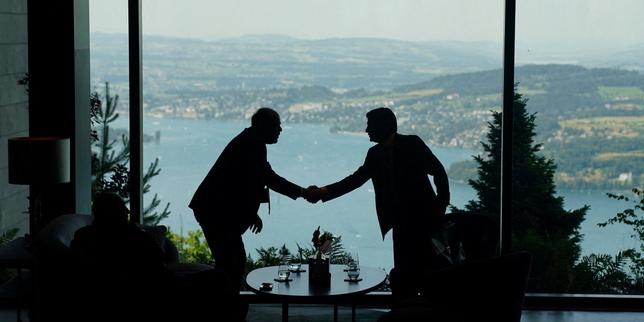
The radiators in the suburbs of Munich do not care about geopolitical handshakes. They do not read the press releases detailing the latest Middle Eastern truce, nor do they feel the collective sigh of relief that echoes through the halls of diplomacy when a ceasefire is signed. They only understand one language: pressure. Specifically, the steady, invisible pressure of natural gas flowing through thousands of miles of steel pipe, buried deep beneath the European soil.
For months, the headlines promised breathing room. A diplomatic breakthrough in the Middle East was supposed to calm the volatile energy markets, bringing prices down and allowing Europe to quietly, efficiently replenish its reserves before the frost arrives.
It hasn't happened.
Walk into the trading floor of any major European utility company right now, and you will not find celebration. You will find a quiet, hyper-focused anxiety. The screens glow with flickering red and green numbers, tracking the inventory of underground storage facilities across the continent. Normally, by this point in the year, these massive subterranean caverns—vast salt domes and depleted reservoirs—should be filling up at a brisk, comforting clip. Instead, the injection rates have slowed to a crawl.
Europe is hesitating. It is a dangerous game of chicken with the calendar.
The Illusion of Safety
To understand why a truce thousands of miles away hasn’t fixed the problem, look at a hypothetical consumer we will call Elena. She runs a small, multi-generational bakery just outside Lyon. For Elena, gas is not an abstract commodity traded on the Dutch Title Transfer Facility (TTF). It is the blue flame that bakes her croissants every morning at 4:00 AM.
When news of the truce broke, Elena expected her energy bills to plummet. They didn't.
The market operates on a psychological lag. While the immediate threat of a wider conflict disrupting major supply routes has eased, the underlying structural reality of European energy remains completely transformed. The cheap, abundant pipeline gas that once flowed reliably from the east is gone, replaced by a complex, fragile web of Liquefied Natural Gas (LNG) tankers crossing the Atlantic and Pacific oceans.
[Image of LNG tanker ship at sea]
This is the new normal. It is a system built on floating infrastructure, entirely vulnerable to the whims of global demand.
Consider what happens next when a major economy like China or India experiences a sudden heatwave. Their demand for air conditioning spikes. They outbid European buyers for those very same LNG cargoes currently sailing across the ocean. The truce did not create more gas; it merely stopped the immediate bleeding. The global scramble for fuel remains as fierce as ever.
The High Stakes of Waiting
European buyers are currently caught in a psychological trap. Because prices spiked so dramatically over the last few years, purchasing managers are terrified of buying too early at an inflated price. They are waiting, hoping that the truce will eventually drag prices down further.
It is a massive gamble.
If a buyer fills a storage facility with expensive gas in July, and the price drops in October, they lose millions. But if they wait for a drop that never comes, and winter arrives early, they leave an entire population exposed.
This hesitation manifests as a physical slowdown in the filling of storage facilities. Think of it like a driver watching the fuel gauge drop, refusing to pull into a gas station because they heard a rumor that a cheaper station is opening ten miles down the road. But the tank is draining, and the sky is turning grey.
The numbers tell a sobering story. While European storage levels look deceptively high on paper—hovering around early-summer averages—the rate at which new gas is being injected has hit a worrying plateau. We are relying on the buffer left over from a previous mild winter. We are spending our inheritance rather than earning a new wage.
The Invisible Infrastructure
Most people never think about where their energy lives. They picture giant tanks on the outskirts of cities. In reality, Europe’s energy security is buried hundreds of meters underground.
These facilities are geological marvels. Strata of porous rock or massive, man-made salt caverns are engineered to hold billions of cubic meters of gas under immense pressure. Filling them is not as simple as turning on a tap. It requires immense mechanical force to compress the gas and push it into the earth. It takes time. Months of steady, uninterrupted work.
When buyers pause, the pumps slow down. The physical capacity to catch up later is limited by the laws of physics. You cannot force a summer’s worth of gas into the ground in a frantic three-week rush come November. The bottleneck is absolute.
But the real problem lies elsewhere. It rests in the global shipping lanes.
Every tanker that diverts to Asia because a European buyer hesitated is a tanker that cannot be replaced. The supply chain has no memory. It does not keep a spot open for you because you were waiting for a better deal. Once those ships turn toward Tokyo or Shanghai, that energy is gone from the European balance sheet for the season.
The Human Cost of a Decimal Point
Back in Lyon, Elena looks at her quarterly projections. She cannot afford another winter of record-high energy costs. If prices spike again, she will have to lay off her apprentice, a young man named Lucas who is just learning the trade.
This is the true face of the energy transition. It is not found in the sleek graphics of corporate sustainability reports. It is found in the hard choices made at kitchen tables and in the backrooms of small businesses. When energy analysts talk about "demand destruction," this is what they mean. They mean a bakery closing its doors because the cost of heat outpaces the price of a loaf of bread.
The truce provided a political narrative of peace, but economic realities are colder. The structural deficit of energy in Europe remains an open wound. Without the massive, predictable volumes of pipeline supply, the continent is permanently exposed to the volatility of the global spot market.
A Cold Calculation
The coming weeks will decide the trajectory of the winter. If European utilities continue to hold out for lower prices, they may find themselves entering the heating season with reserves that are technically full but structurally inadequate to handle a prolonged cold snap.
The weather remains the ultimate arbiter. A single prolonged blocking high over Siberia, pushing freezing air across western Europe for three weeks straight, would obliterate the current safety margins. At that point, the price of gas won't matter. The only thing that will matter is volume.
The buyers know this. The traders know this. Yet, the pressure to deliver short-term financial performance keeps their fingers hovering over the buy button, waiting for a drop that the market may never deliver. They are gambling with the thermostat of a continent.
The sun sets over the industrial ports of Rotterdam and Antwerp. The massive unloading arms sit idle for hours at a time, waiting for the next vessel, while across the world, the tankers keep moving, guided by the cold, unfeeling logic of the highest bidder.