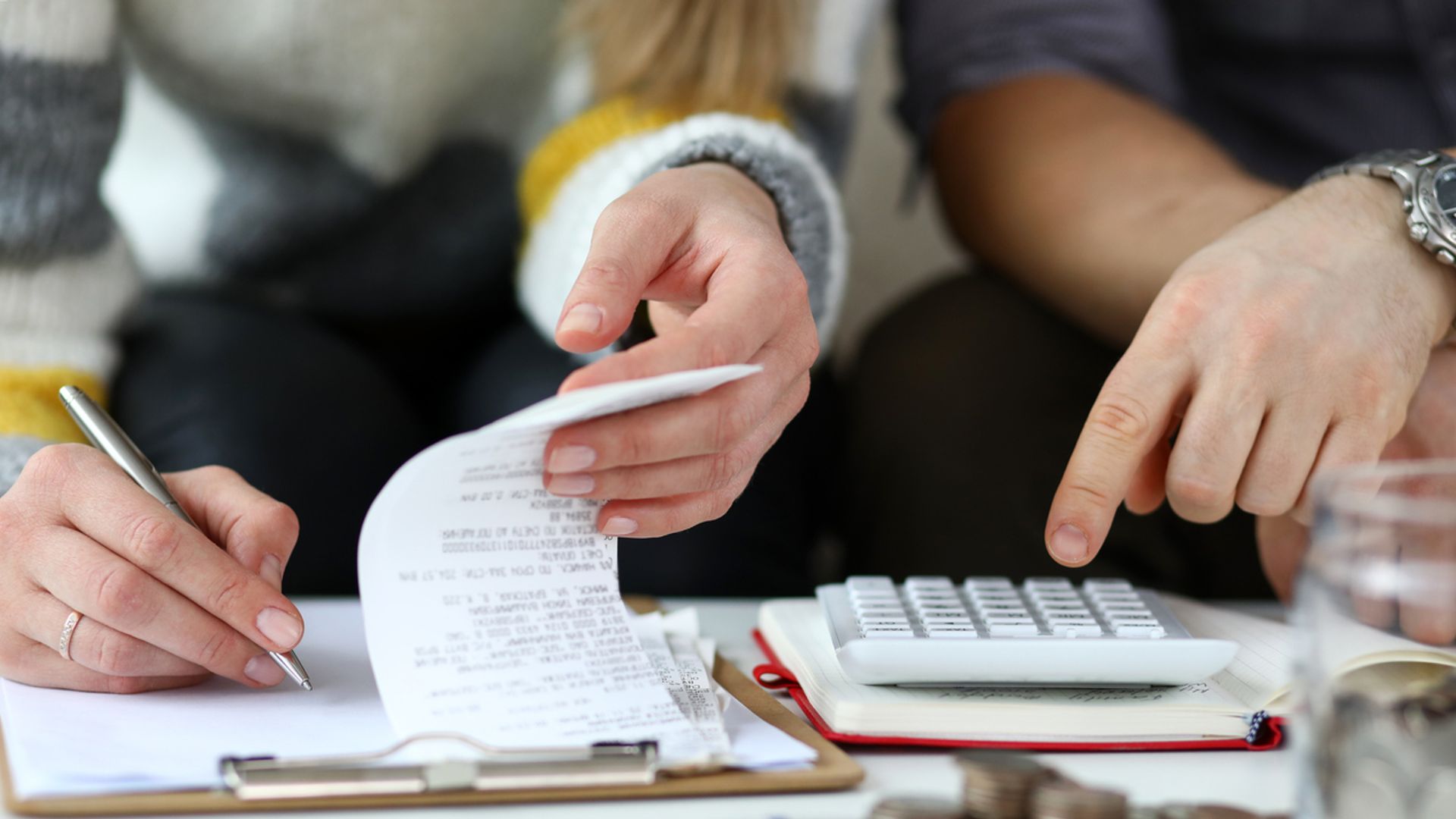
The click of a thermostat is a small sound. In a quiet hallway, it is barely a whisper, a tiny mechanical snap that tells the boiler to wake up. But this winter, for millions of households, that sound has begun to mimic the cocking of a heavy shutter. It is the sound of money leaving a room. It is the sound of a choice being made between a warm evening and a balanced checkbook.
We are currently witnessing a silent, upward migration of numbers. The energy price cap, that invisible ceiling designed to protect us from the worst excesses of the global market, is lifting. It isn't just rising; it is stretching toward a three-year high. For the average household, this translates to an extra few hundred pounds a year. On a spreadsheet, a few hundred pounds looks like a manageable adjustment, a rounding error in a national budget. In a kitchen in the North of England, or a flat in South London, it looks like a skipped car service, a cancelled birthday dinner, or a thicker wool sweater pulled over trembling shoulders.
The statistics are sterile. They tell us that the typical annual bill is set to climb significantly, driven by a volatile wholesale gas market and geopolitical tremors that feel a world away until the bill arrives in the letterbox. We talk about "megawatt hours" and "price caps" as if they are weather patterns we can only observe through a window. But these are not just economic indicators. They are the invisible stakes of modern life.
Consider a hypothetical family: let’s call them the Millers. They aren’t "fuel poor" by the traditional definitions of the past decade. They both work. They have a mortgage. They represent the "squeezed middle" that economists love to cite. For the Millers, the rise in energy costs doesn't mean the lights go out. It means the ambient anxiety of their lives increases by exactly the same percentage as their utility bill. It means the father lingers by the radiator, checking if it’s truly necessary for it to be on in the spare room. It means the mother spends her lunch break scrolling through energy-saving forums, hunting for the mythical "vampire devices" that might be sucking pennies from her sockets in the dead of night.
The tragedy of the kilowatt hour is its invisibility. You cannot see it being consumed. You only see the aftermath.
The Ghost in the Grid
To understand why your bank account is feeling the frost, we have to look at the machinery behind the curtain. The United Kingdom remains tethered to gas. Even as wind turbines spin on the horizon and solar panels glint on suburban roofs, gas remains the marginal fuel. It is the bridge we haven't quite finished crossing. When the price of gas spikes on the international stage—due to a cold snap in Asia, a pipeline maintenance issue in Norway, or conflict in Eastern Europe—the price of every cup of tea you brew spikes with it.
We are living through the consequences of a global energy system that is remarkably fragile. The price cap was introduced to prevent "tease and squeeze" tactics by energy companies, where loyal customers were punished with higher rates while new ones got the deals. It was a shield. But a shield can only do so much when the arrows being fired are this heavy. When the regulator, Ofgem, adjusts that cap, they aren't doing it out of malice; they are reflecting the brutal reality of what it costs to buy energy on the world stage.
However, knowing that the price hike is "fair" in market terms does nothing to keep a living room at 18°C.
There is a specific kind of exhaustion that comes from monitoring the unmonitorable. If you walk through any residential street at 6:00 PM, you can almost feel the collective intake of breath. This is the "peak." This is when the grid groans under the weight of a nation coming home, turning on ovens, and firing up power-hungry showers. We have been told to shift our usage, to wash our clothes at midnight, to become clock-watchers in our own homes.
It is a strange way to live. We are the first generation in a century to be more aware of the cost of a hot bath than the pleasure of it.
The Myth of the Easy Fix
The advice given to the public often feels like a collection of Victorian proverbs updated for the digital age. "Bleed your radiators." "Draft-proof your doors." "Turn your flow temperature down."
These things help. They are the low-hanging fruit of energy efficiency. But they are also a distraction from a deeper truth: the UK has some of the oldest, leakiest housing stock in Western Europe. We are trying to keep ourselves warm in sieves made of brick. You can turn the thermostat down until your breath mists in the air, but if the heat is escaping through the walls as fast as the boiler can produce it, you are engaged in a war of attrition you cannot win.
The real cost of this energy crisis isn't just the money. It’s the mental bandwidth. Poverty, even the relative poverty of the middle class being squeezed, has a "scarcity mindset" effect. When you are constantly calculating the cost of a tumble dryer cycle, you have less room to think about your career, your children’s education, or your own well-being. The energy crisis is a cognitive tax.
We hear talk of "energy independence" as a distant, glittering goal. We are told that by 2030 or 2035, the volatility of the gas market will no longer haunt our winter evenings. But for someone looking at a bill that has jumped by £40 a month, 2035 might as well be the next century. They need to survive February.
The current rise takes us back to levels we haven't seen since the height of the initial energy shock. We thought we were through the worst of it. We thought the "new normal" would be a plateau. Instead, we are finding that the plateau was just a ledge on a much taller mountain.
The Social Fabric of Warmth
There is a human dignity tied to the temperature of a home. We don't talk about this enough. When a person is cold in their own house, they retreat. They spend more time in bed. They stop inviting friends over because they are embarrassed that the air in their hallway is biting. The social fabric of our communities thins out when the cost of "hosting" includes a hidden surcharge for the heating.
I remember talking to an elderly man in a library last winter. He wasn't there for the books, though he had one open in front of him. He was there because the library was heated, and his flat was not. He spoke about his "daily migration." He had a map in his head of every warm public space in the city—the libraries, the museums, the certain supermarkets with a cafe and a lenient policy toward long-staying customers.
He was a refugee from his own energy bill.
This is the reality behind the headline "Energy bills to rise." It isn't just a number. It's a fundamental shift in how we inhabit our private spaces. The home is supposed to be a sanctuary, a place where the outside world stops. But when the outside world's market fluctuations can penetrate your walls and dictate whether you can feel your toes, the sanctuary is breached.
The Weight of the Invisible
What can be done? The government offers various schemes—Warm Home Discounts, winter fuel payments, various grants for insulation. They are vital lifelines for the most vulnerable. But for the person earning just enough to be ineligible for help, but not enough to ignore a £300 increase, the options are slim.
We are forced into a state of hyper-vigilance. We become experts in the "Smart Meter Dance"—that ritual of checking the little glowing screen in the kitchen to see if the LED has turned from green to amber.
Green means safety.
Amber means caution.
Red means a looming decision about what to cut from the grocery list.
The most frustrating part of this narrative is the feeling of helplessness. You cannot negotiate with a gas molecule. You cannot ask the grid for a discount based on your loyalty. You are a passenger on a ship steered by forces—global supply chains, geopolitical posturing, and the slow, grinding transition to renewables—that do not know your name.
But there is a resilience in the human element that the "dry facts" often miss. We see it in the rise of community energy projects, where neighbors pool resources to buy solar panels. We see it in the "warm banks" that have popped up in churches and community centers, transforming from a temporary emergency measure into a staple of the winter landscape. We are learning to share warmth because we can no longer afford to generate it in isolation.
The numbers will continue to fluctuate. The cap will rise, and perhaps one day, it will fall again. But the psychological mark of this era will remain. We have been taught that the most basic of human needs—warmth—is a luxury that can be revoked by a conflict three thousand miles away or a spike in a trading floor in a different time zone.
As the sun sets earlier and the shadows in our hallways grow longer, that tiny "click" of the thermostat remains the most significant sound in the house. It is a reminder that we are all connected to a vast, shivering web of energy. We are all waiting for the day when the cost of living doesn't depend on the cost of staying warm.
Until then, we pull the sweater tighter. We check the seals on the windows. We look at the little green light on the smart meter and hope it stays that way. The kilowatt hour is a cold companion, but it is the one we have to live with. For now, the only real warmth is the kind we find in the people around us, standing together against a winter that feels just a little bit too expensive to bear.
Consider the light in your window tonight. It isn't just illumination. It is a testament to what we are willing to pay to keep the dark at bay. It is the most expensive thing we own, and yet, we cannot even hold it in our hands.