Deploying drones and heavy security forces against street demonstrations in Rawalakot signals an institutional failure to resolve political and economic grievances through negotiation. Conventional reporting on the November 2026 clash—which left seven people dead and around two dozen injured according to accounts from Rawalakot—treats the event as a sudden spike in violence. A rigorous analytical lens shows something different: escalation to unmanned aerial platforms and lethal force occurs when administrative concessions fail and collective action hardens into a sustained movement.
Deconstructing Standard Coverage and Its blind Spots
Typical breaking-news coverage compresses months of structural friction into a single kinetic snapshot. Reports highlight the immediate death toll, note allegations of drone strikes and heavy firing, and cite competing claims about who initiated gunfire. While that sequence captures the shock of the event, it leaves three analytical gaps that obscure how the crisis actually operates.
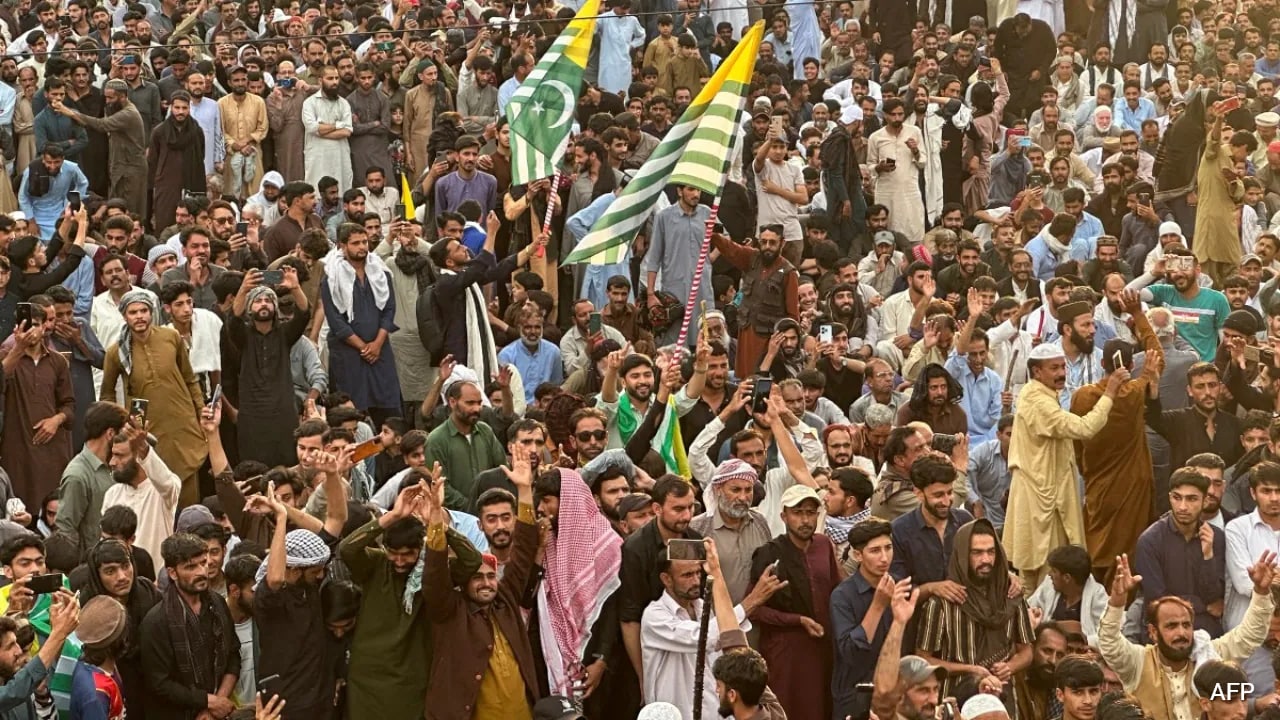
First, standard reporting treats protest mobilization as an exogenous shock rather than an endogenous response to unfulfilled bargaining. Demonstrations led by the Jammu Kashmir Joint Awami Action Committee (JKJAAC) have persisted across months of friction over electricity pricing, subsidized wheat, healthcare, jobs, and political representation—including disputes over the twelve Legislative Assembly seats reserved for refugees settled outside the territory. When talks stall and mass sit-ins hold key transit nodes such as Rawalakot, the state faces a credibility deficit that routine policing no longer closes.
Second, event-driven headlines blur the boundary between verified operational facts and contested field claims. Accounts from demonstrators and local observers allege armed drones and heavy weapons were used in Rawalakot, whereas official police narratives allege armed protesters fired first, and independent verification on the ground remains constrained amid internet restrictions and heightened security deployments. Treating every allegation as settled fact—or every official denial as neutral context—weakens analytical precision.
Third, headline summaries rarely map the second-order feedback loops of coercive escalation. Lethal force may disperse a crowd for hours, yet every fatality raises the emotional and moral cost of compromise for remaining participants. In contested jurisdictions where legitimacy is already strained, kinetic repression often converts localized economic complaints into broader anti-establishment defiance.
Known Facts Versus Educated Hypotheses
Separating established parameters from analytical inference keeps risk assessments grounded when information environments are contested:
- Known fact: Protests associated with the JKJAAC have recurred across multiple phases since mid-2026, centering on economic relief, governance grievances, and the status of reserved Legislative Assembly seats.
- Known fact: Authorities in Pakistan-administered Kashmir proscribed the committee under anti-terrorism legislation in June 2026, pursued arrests and bounties against leadership figures, and imposed severe telecommunications and internet restrictions.
- Known fact: On November 5, 2026, clashes in Rawalakot resulted in seven reported deaths and roughly 23 injuries, accompanied by reports of heavy gunfire and alleged drone deployment, alongside official assertions that protesters opened fire first.
- Educated hypothesis: Security forces turn to unmanned aerial systems and heavy firepower in dense urban or semi-urban protest zones when ground riot units face numerical stamina, terrain constraints, or fear of prolonged encirclement—even though aerial or heavy-weapons use sharply magnifies reputational damage.
- Educated hypothesis: Prolonged network blackouts and anti-terrorism designations suppress short-term coordination and outside visibility, but they also starve officials of reliable de-escalation channels and accelerate radicalization among aggrieved youth.
The Escalation Cost Function
Any state security apparatus confronting protracted mass protests faces a trade-off that can be modeled as an Escalation Cost Function. At low levels of force, administrative and policing costs are manageable, and political fallout remains contained. As authorities escalate from crowd-control gear to live fire, heavy armaments, or armed drones, three cost curves steepen simultaneously:
- Political Legitimacy Cost: Using military-grade or aerial force against domestic or locally administered populations erodes claims of paternal governance. Even supporters who previously backed state narratives on regional security often re-evaluate their stance when lethal force hits civilian neighborhoods or funeral processions.
- Mobilization Elasticity: Protest participation is not fixed. When security operations kill demonstrators or bystanders, grievance expands from material demands (such as power tariffs or flour subsidies) to accountability and justice. A crackdown meant to deter attendance can therefore expand the protest base over subsequent days.
- Information and Verification Drag: Cutting connectivity and restricting journalists reduces real-time crowd coordination, yet it creates an information vacuum filled by raw video clips, rumors, and rival narratives. External observers, human rights bodies, and international actors then judge the state by worst-case visible outcomes rather than official explanations.
Consider a stylized operational scenario. Suppose local authorities attempt to clear a long-running sit-in at a major bus terminal or town square after negotiations collapse. Standard baton and tear-gas lines stall against barricades and stubborn crowds. Bringing in heavier kinetic assets—whether heavy automatic fire or unmanned platforms—may clear the immediate intersection, yet the resulting casualties trigger larger neighborhood gatherings elsewhere and harden local leaders against any settlement short of formal guarantees. The tactical objective of clearing space conflicts directly with the strategic objective of restoring durable order.
Three Pillars of Coercive Overreach
When a protest movement endures for months despite bans, arrests, and curfews, three structural dynamics explain why heavy force produces diminishing returns:
- Securitization of Civic Grievances: Labeling a broad civic or economic coalition as terrorists or anti-state actors narrows the policy toolkit to arrests and kinetic force. Once ordinary residents feel criminalized for demanding affordable power or jobs, compliance drops and negotiation becomes politically toxic for protest organizers.
- Asymmetry of Resolve: State forces operate under budgets, rotation fatigue, chain-of-command rules, and external scrutiny. Committed local protesters often tie movement demands to daily survival—such as household utility bills, food prices, or local dignity—giving them high endurance in familiar terrain.
- The Martyrdom Multiplier: In tight-knit communities, deaths during a security operation turn individual grievances into collective memory. Funeral processions and public mourning create natural assembly points that bypass bans on rallies.
Why Institutional Contradictions Amplify Unrest
The Rawalakot confrontation cannot be separated from deeper institutional friction between federal or central security priorities and local expectations in Pakistan-administered Kashmir. Residents point to local resource potential—especially hydropower generation—alongside high electricity costs, limited economic opportunity, and constitutional arrangements that protesters argue dilute purely local political agency.
When courts uphold existing constitutional rules—such as rulings affirming the protection of reserved seats absent a constitutional amendment—legal formality collides with street-level political pressure. If executive authorities rely on coercive containment rather than credible fiscal and administrative compromise, constitutional disputes mutate into street contests. Furthermore, the second-order operational risk of high-intensity security deployments in mountainous or sensitive border-adjacent areas is mission creep: resources tied down in internal crowd control reduce flexibility elsewhere while raising the odds of tragic miscalculation.
Tactical Logic for De-Escalation and Risk Containment
From an operational and risk-management standpoint, breaking a cycle of coercive escalation requires shifting from kinetic deterrence to structured containment and bargaining. A disciplined sequence follows four steps:
- Halt Lethal and Aerial Escalation in Populated Zones: Immediately withdraw heavy weapons and cease any drone or live-fire operations around protest camps and residential areas. Preserving life is the prerequisite for lowering the mobilization multiplier.
- Separate Public Safety from Broad Criminalization: Narrow enforcement strictly to verifiable acts of arson or armed violence rather than sweeping anti-terrorism designations against entire protest committees. Broad bans alienate moderate voices who could otherwise help wind down street blockades.
- Restore Basic Communications Under Transparent Rules: Lift blanket internet and mobile blackouts once immediate public-safety emergencies pass. Information transparency reduces rumor-driven panic and lowers external pressure caused by opacity.
- Sequence Concrete, Verifiable Concessions: Pair law-and-order assurances with phased, measurable relief on high-friction economic items—such as electricity billing formulas, wheat subsidies, or administrative review mechanisms—rather than issuing vague promises that lose credibility after past breakdowns.
Every de-escalation path carries real limitations and execution risks. Negotiating after deadly clashes can be portrayed by hardliners as weakness, while protest coalitions themselves may contain factions with incompatible demands or incentives to keep pressure high. Even well-designed economic concessions take time to reach households and cannot by themselves resolve deep constitutional disputes over representation overnight. Still, negotiated off-ramps carry lower long-term institutional cost than indefinite reliance on heavy force.
Strategic Play
Authorities seeking to end the cycle of unrest in Rawalakot and across Pakistan-administered Kashmir should immediately cap security operations at non-lethal perimeter containment while opening a narrow, high-level negotiation track focused on immediate economic relief and verified casualty accountability. Continuing to rely on heavy weapons and coercive crackdowns will keep streets volatile and deepen political alienation, whereas pairing disciplined restraint with concrete material concessions offers the fastest realistic path to restoring order without multiplying casualties.