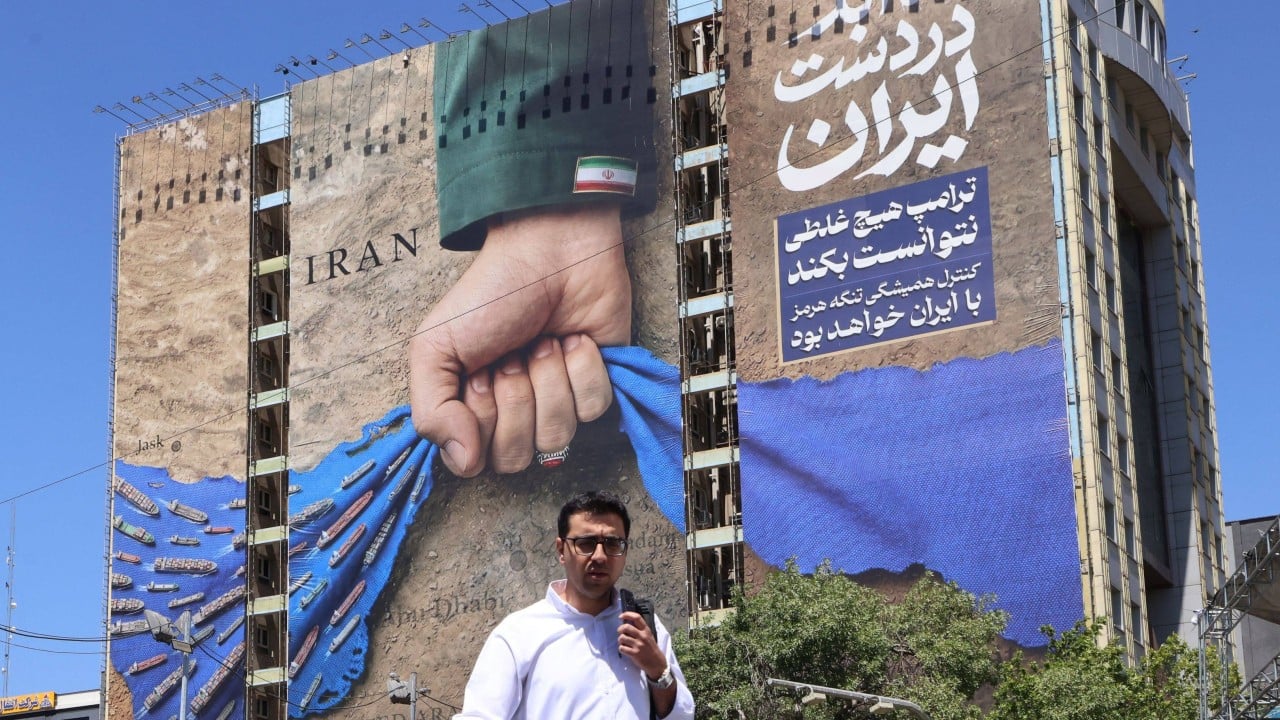
The traditional playbook of international diplomacy dictates that the introduction of kinetic military action during active peace negotiations signals a breakdown in talks. This interpretation fundamentally misreads the current conflict architecture between the United States and Iran. The deployment of precision strikes by US Central Command against Iranian missile launch sites and mine-laying vessels near Bandar Abbas, Sirik, and Jask—occurring simultaneously with high-level diplomatic talks in Doha—is not an abandonment of diplomacy. It is the execution of a highly calculated strategy of coercive leverage. Washington is utilizing controlled kinetic friction to establish a hard floor for a 60-day ceasefire extension and enforce the unconditional maritime opening of the Strait of Hormuz.
To evaluate the strategic trajectory of these developments, the situation must be viewed through a structured framework rather than a sequence of disparate geopolitical events. The current crisis is governed by three operational vectors: the mechanics of the maritime cost function, the asymmetric leverage of the highly enriched uranium stockpile, and the structural expansion of the regional alignment framework.
The Maritime Cost Function and Chokepoint Enforcement
The primary flashpoint remains the Strait of Hormuz, a maritime chokepoint through which approximately 20 percent of global petroleum and liquefied natural gas passes. The tactical objective of the latest US strikes was to neutralize specific Iranian assets: land-based anti-ship missile batteries and fast-attack craft attempting to emplace naval mines.
[Iranian Mine/Missile Deployment] -> Increases Maritime Risk/Insurance Costs -> Enforces Localized Blockade
                                                                                ^
[US Target Selection: Precision Strikes] -> Neutralizes Active Threat Assets ----+
This target selection operates on a precise mathematical and strategic logic. By targeting only active threat assets, the United States aims to suppress Iran's capability to enforce a localized blockade without escalating the conflict into a full-scale theater war.
This creates a clear cause-and-effect loop within the maritime transport market. The deployment of naval mines by Iran functions as an economic multiplier, forcing global maritime insurance syndicates to raise war risk premiums to prohibitive levels. This effectively closes the strait to commercial traffic even without a continuous Iranian naval presence. The US kinetic response alters Iran's cost-benefit calculus by establishing an immediate physical cost—the destruction of valuable missile systems and naval platforms—for every attempt to alter the maritime status quo.
The diplomatic negotiations in Qatar reflect this tactical friction. Under the draft memorandum of understanding, the core transactional framework involves a phased de-escalation:
- The Transit Mandate: Iran must restore commercial shipping volumes through the strait to pre-war baselines within a strict 30-day window.
- The Fee Dispute: The United States has rejected Tehran’s sovereign claim, co-authored with Oman, to levy navigational service fees on commercial vessels during the 60-day truce.
- The Reciprocal Action: Washington has conditioned the complete lifting of its naval blockade of Iranian ports directly upon verified compliance with these maritime parameters.
The Nuclear Stockpile Asymmetric Leverage Framework
While maritime access serves as the immediate tactical problem, the ultimate strategic bottleneck remains Iran’s stockpile of highly enriched uranium (HEU). The structural failure of past diplomatic frameworks, such as the Joint Comprehensive Plan of Action (JCPOA), has informed the current US negotiation mandate, which demands explicit, upfront structural guarantees rather than deferred compliance.
+------------------------------------------+------------------------------------------+
|            US Strategic Mandate          |         Iranian Defensive Position       |
+------------------------------------------+------------------------------------------+
| • Rejection of JCPOA-level baselines     | • Preservation of domestic fuel cycle    |
| • Absolute removal of HEU stock          | • Denial of foreign stockpile transfers  |
| • Mandated external destruction of fuel  | • Red line on zero-enrichment caps       |
+------------------------------------------+------------------------------------------+
| Result: A fundamental asymmetry in core strategic security requirements.            |
+------------------------------------------+------------------------------------------+
The underlying mechanism of this dispute is the concept of breakout time. A domestic HEU stockpile grants Tehran a permanent, compressible timeline to achieve weapons-grade enrichment. Consequently, the United States views any agreement that leaves the physical material within Iranian territory as inherently unstable.
The Iranian negotiating team, led by parliamentary speaker Mohammad Bagher Ghalibaf and Foreign Minister Abbas Araghchi, treats domestic enrichment as an unalterable element of national sovereignty. While Tehran has indicated a willingness to dilute its HEU stockpile to lower enrichment percentages, it has firmly rejected the physical transfer of the material to third-party states like Russia or the United States.
The public insistence by Washington that the uranium must either be extracted or destroyed in place under international oversight creates an ideological and strategic impasse. The US kinetic strikes serve as a reminder that the alternative to a negotiated settlement on the nuclear stockpile is the systematic military targeting of the underlying infrastructure.
Abraham Accords Expansion and Linkage Politics
A significant complication in the current round of negotiations is the introduction of structural linkage politics by the White House. The explicit demand that a durable peace agreement is contingent upon regional powers—specifically Saudi Arabia and Qatar—fully normalizing relations with Israel via the Abraham Accords introduces a separate layer of geopolitical complexity.
This tactic aims to transform a bilateral conflict resolution process into a regional security architecture realignment. The strategic calculation relies on a multi-tiered linkage:
- Isolation Strategy: Forcing regional integration isolates Iran diplomatically and undercuts its long-term strategy of regional alliance building.
- Coalition Security: It seeks to formalize an anti-hegemonic coalition that links Gulf financial resources and territory with Western military capabilities and Israeli technological infrastructure.
- The Multi-Front Bottleneck: This regional demand intersects with active hostilities on secondary fronts. For instance, the simultaneous intensification of Israeli military operations against Hezbollah in Lebanon directly tests the boundaries of the US-Iran truce. Because Tehran views Hezbollah as its primary external deterrent asset, the expansion of the northern front puts intense pressure on the indirect talks in Doha. It forces Iranian decision-makers to choose between protecting their regional proxies or securing domestic sanctions relief.
Limitations of Coercive Diplomacy
The strategy of combining kinetic strikes with diplomatic negotiations possesses distinct structural vulnerabilities. Coercive diplomacy relies entirely on the target’s rational assessment of cost; it breaks down if the political cost of concession exceeds the physical cost of military punishment.
The first limitation is the high risk of miscalculation. While US Central Command classifies its strikes near Bandar Abbas as defensive measures within the boundaries of a fragile truce, the internal political dynamics of Iran could force a retaliatory response. The recent history of internal instability within Iran, including the widespread protests of early 2026, limits the regime’s ability to appear weak or capitulatory before a highly sensitive domestic audience.
The second limitation is the problem of verification asymmetry. Verifying the cessation of maritime mining or the dismantling of mobile missile launchers requires constant, invasive intelligence assets. If the proposed 60-day renewable ceasefire is implemented, the United States and its partners face the challenge of monitoring a highly distributed, asymmetric military apparatus that excels at deniable operations.
Strategic Forecast
The intersection of ongoing precision strikes and high-intensity diplomacy points toward a definitive outcome over the coming weeks. The United States will not halt its targeted kinetic actions in the south; instead, it will maintain a continuous baseline of military friction to enforce compliance at the negotiating table in Doha.
The most likely structural path forward is the formalization of a highly transactional, narrow memorandum of understanding. This agreement will decouple the immediate maritime crisis from the broader nuclear issue. Iran will likely agree to a monitored suspension of mine-laying activities and grant unhindered commercial transit through the Strait of Hormuz in exchange for the partial unfreezing of its overseas financial assets in Qatar and a temporary easing of the naval blockade.
However, this resolution will be strictly time-bound. By isolating the maritime chokepoint issue to secure immediate global economic stability, the agreement will defer the core structural dispute regarding Iran's highly enriched uranium stockpile to a rigid 30-to-60-day post-settlement window. Given the zero-sum nature of the nuclear enrichment demands and the added friction of the Abraham Accords normalization mandates, this upcoming phase will face a high probability of structural failure. This failure will likely trigger a return to systemic kinetic operations by the third quarter of 2026.