The sea in Aomori does not shout. It whispers against the jagged black rocks, a rhythmic, cooling sound that has lulled generations of fishermen into a false sense of permanence. Stand on the shoreline long enough, and you begin to believe the world is static. You begin to believe the ground beneath your boots is the final, unmovable truth.
But the earth is not a solid foundation. It is a puzzle of jagged, shifting skin, floating atop a roiling, liquid heat. And here, in the north, the puzzle pieces are grinding against one another with a patience that defies human understanding.
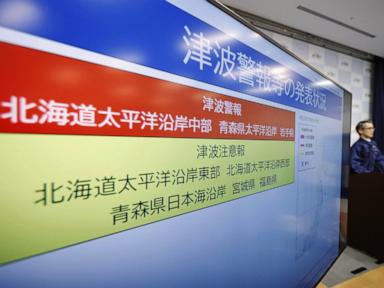
A few weeks ago, the Japan Meteorological Agency issued an advisory. It was not a siren. It was not an order to evacuate. It was something more insidious, more difficult to digest. It was a note of caution, a quiet statistical observation that the likelihood of a massive rupture—a mega-quake—had moved from the realm of "very low" to "slightly elevated."
To an outsider, the news might seem bureaucratic. A percentage point here, a seismic reading there. But to those who live here, the air changed immediately. It was as if the wind had suddenly died, leaving a vacuum where the hum of normal life used to reside.
I remember my grandfather’s hands, mapped with deep, callous lines that mimicked the topography of the northern mountains. He used to say that the ocean gives and the ocean takes, but the ground? The ground is a debtor. It holds onto energy for years, decades, centuries, and one day, it will demand repayment. He was talking about subduction zones. He was talking about the Pacific Plate, a massive slab of oceanic crust, sliding relentlessly beneath the continental plate of Japan.
It is the classic story of the bent bow. The plates are not sliding smoothly. They are snagged. They are locked. The ocean floor pushes against the land, and the land resists. It bends. It stores tension like a spring wound tight to the point of snapping. We are currently living in the silence before the snap.
When the advisory hit, the local markets didn't close. The trains kept running. People went to work. But there was a difference. In the tea shop where I sat that morning, the usual chatter about the weather or the price of fish had vanished. In its place was a brittle, quiet alertness. A woman at the counter touched her phone, checking the app for the third time in an hour. We were all doing the same thing. We were looking for a sign that the statistical probability had been downgraded, or better yet, that the monster had decided to go back to sleep.
But that is not how physics works.
The advisory is a blunt instrument used to navigate an impossible situation. How do you tell a population that their existence hangs by a thread without causing mass panic? How do you prepare a community for a cataclysm that might happen tomorrow, or might happen in fifty years?
If you tell them to leave, you destroy the local economy and cause immense distress for a risk that may not manifest in their lifetime. If you say nothing, you risk the lives of thousands. So, the authorities issue these notices. They exist in the gray space between "everything is fine" and "the end is coming."
Consider the science behind this. When we talk about a mega-quake, we are not discussing the localized shaking of a street corner. We are talking about a rupture hundreds of kilometers long. We are talking about a release of energy equivalent to tens of thousands of atomic bombs, focused on the fault line.
For the northern coast, this is the Japan Trench. For centuries, this zone has remained relatively quiet, a slumbering giant. But seismic records, etched into the mud and sand layers of the region, tell a different story. They tell of periodic, violent upheavals. The silence of the last century is not a guarantee of future peace; it is a statistical anomaly that is mathematically certain to end.
Kenji, a man who runs a small drying shed for squid near the port, laughed when I asked him if he was afraid. He was wearing a faded indigo apron, his face a leather mask of wind and salt. He didn't look up from his work as he spoke.
"Fear is a luxury for those who don't know where they live," he said. "We live on a raft made of toothpicks. I have my go-bag in the truck. I have my water stored. I know which hill to run for. That is all I can do. Worrying about the plate shifting is like worrying about the moon rising. It will happen when it happens."
His calm was not born of ignorance. It was the product of a radical acceptance. He has integrated the threat into his daily routine. The risk is a background noise, like the hum of a refrigerator. It is always there, but he has learned to stop listening to it so that he can continue to live.
This is the psychological burden of the advisory. It forces us to confront the fragility of our daily lives. We spend so much time building, buying, planning, and investing in the future, all while standing on a floor that is fundamentally temporary. Most of us go through life pretending the ground is solid. The advisory tears that curtain away.
It forces you to look at your home and see not just a place to sleep, but a structure that must endure a specific level of lateral force. It forces you to look at your family and wonder if the drill you practiced is enough. It strips away the illusion of control.
There is a specific cruelty to this kind of warning. It provides no timeline. A hurricane comes with a path. A blizzard arrives with a forecast. But this? This is an open-ended question. It is an invitation to live with uncertainty as a roommate.
The danger is that we become desensitized. We hear "elevated risk" on Monday. By Wednesday, it’s just noise. We go back to our coffee. We go back to our screens. We resume our lives, and the danger, which has not moved an inch, is slowly pushed to the back of our minds. This is the human defense mechanism. We cannot live in a state of high alert forever. Our nerves would fray. Our hearts would give out.
And yet, this is exactly when we are most vulnerable.
The history of seismic events in this part of the world is littered with stories of those who waited too long to move, not because they didn't know, but because they had become tired of being afraid. They had traded their caution for the comfort of the status quo.
So, how do we exist in this space?
We stop treating the advisory as an alert to panic and start treating it as a reason to simplify. We look at what matters. When the threat of absolute erasure is hanging in the air, the trivialities of daily life—the status, the material clutter, the petty grievances—wither away. What remains is elemental. It is the need for safety, the value of connection, and the importance of being ready.
This is not a call to live in terror. It is a call to live in reality.
If you live on the coast, you know the sound of the tide. You know how the light hits the water at sunset. You know the way the wind smells before a storm. These are your anchors. The tectonic plates beneath you are moving, drifting, bending, and eventually, they will break. That is a fact of this planet. It is not a tragedy; it is the geological process of creation and destruction.
We are witnesses to a slow-motion collision of giants. Our time here is brief. We are flashes of light against the backdrop of deep time.
So, pack the bag. Keep the water stocked. Check the route to high ground. And then, stop looking at the sky for signs of the end. Look at the person sitting across from you. Go for a walk along the beach while the water is still calm.
The clock is ticking, yes. But it has always been ticking. The only difference is that now, we have stopped ignoring the sound.
The sun is dipping below the horizon now, casting a long, golden bruise across the Pacific. The water is glassy, deceptive, and beautiful. A group of children is playing near the water’s edge, their laughter carrying on the breeze. They aren't thinking about the subduction zone. They aren't thinking about the potential for a wave that could reshape the coastline. They are simply existing, fully present in the golden hour.
Perhaps that is the only rational response to living on the edge of the world. To acknowledge the depth of the risk, to take the necessary precautions, and then to walk onto the sand and enjoy the evening, knowing that the earth beneath us is alive, dangerous, and utterly magnificent.
The tide is coming in, steady and sure, reclaiming the shore inch by inch, a reminder that everything we hold is borrowed. We stand firm, we prepare, and we watch the horizon, waiting for a dawn that is never guaranteed but always, miraculously, arrives.