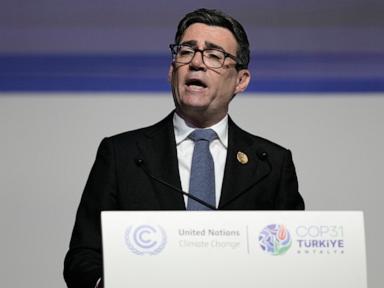
The simultaneous appointment of a dedicated climate security envoy by the United Kingdom and Greta Thunberg’s public condemnation of COP31 leadership represent two opposing institutional responses to the exact same systemic failure. Multilateral climate negotiations have reached a structural bottleneck where consensus-driven diplomacy no longer matches the speed of physical environmental degradation. While activist movements demand immediate, binding fossil fuel phase-outs, nation-states are quietly shifting their strategic posture from preventative mitigation toward geopolitical risk management and national defense securitization.
Understanding this divergence requires stripping away the political theater surrounding international climate summits and examining the underlying operational mechanisms. When a G7 nation formalizes a climate security role while prominent youth activists label the Conference of the Parties process compromised, both actors are reacting to the breakdown of the post-Paris Agreement implementation model. The UK government is institutionalizing climate change as a threat multiplier for intelligence, supply chains, and border stability, whereas external critics are exposing the governance flaws inherent in hosting major climate summits within hydrocarbon-dependent economies or behind opaque diplomatic protocols.
The Securitization Matrix of Modern Climate Policy
The creation of a climate security envoy marks a distinct administrative pivot in how state apparatus processes environmental data. Historically, climate policy sat within environmental, energy, or international development ministries—departments frequently sidelined during hard-nosed budgetary or national security deliberations. By elevating climate risk into the security domain, the state alters the institutional incentives and analytical frameworks used to allocate capital and diplomatic bandwidth.
This transition operates through three distinct structural mechanisms:
- Threat Multiplier Integration: Defense and intelligence agencies no longer treat extreme weather events as isolated humanitarian emergencies. Instead, analysts model agricultural yield failures, water scarcity, and coastal inundation as direct precursors to state fragility, mass migration, and resource conflict in strategically vital regions.
- Supply Chain Vulnerability Mapping: Industrial strategy now requires stress-testing critical mineral corridors, maritime chokepoints, and energy infrastructure against physical climate shocks. A climate security envoy functions as an interagency coordinator bridging foreign policy, defense procurement, and trade resilience.
- Diplomatic Leverage Recalibration: Traditional climate diplomacy relied on moral persuasion and financial pledges to encourage decarbonization in developing economies. Security-framed diplomacy treats energy transition technology and climate adaptation aid as instruments of geopolitical competition, directly countering rival influence in the Global South.
The operational logic behind this shift is straightforward. Environmental ministries lack the statutory authority to compel defense contractors, intelligence services, or treasury officials to alter baseline risk models. Embedding a dedicated envoy within the foreign and security establishment forces national security councils to price physical climate risks into long-term geopolitical forecasting. However, this approach carries a severe structural limitation: securitization prioritizes national border resilience and resource protection over global emissions reduction. A nation can successfully fortify its own infrastructure and supply chains while global atmospheric carbon concentrations continue to climb.
The Structural Paradox of COP31 Governance
While state actors pivot toward defensive securitization, the multilateral negotiation framework represented by COP31 faces a crisis of institutional legitimacy. Greta Thunberg’s criticism of COP31 leadership targets a recurring structural flaw in the United Nations Framework Convention on Climate Change (UNFCCC) architecture: the tension between universal consensus rules and acute economic conflicts of interest.
Under UNFCCC procedural rules, decisions require consensus among nearly 200 participating parties. This governance design grants de facto veto power to any state or bloc whose short-term economic survival depends on fossil fuel extraction or high-emission industrial output. When COP leadership roles, host nations, or executive committees maintain deep financial or political ties to the hydrocarbon sector, external critics argue that the negotiation apparatus has been captured by incumbent industry interests.
The friction between activist movements and summit leadership stems from fundamentally incompatible definitions of success:
- The Diplomatic Metric of Success: Negotiators measure progress through incremental text agreements, voluntary Nationally Determined Contributions (NDCs), and the establishment of new multilateral funding mechanisms, regardless of whether those mechanisms are fully capitalized.
- The Physical Metric of Success: Climate scientists and activists measure progress exclusively through the atmospheric carbon budget, global mean surface temperature trajectories, and the immediate cessation of new fossil fuel infrastructure expansion.
This divergence creates a predictable diplomatic cycle. Summit presidencies claim historic breakthroughs based on carefully worded compromises—such as agreeing to "transition away" from fossil fuels rather than executing a binding "phase-out"—while civil society leaders denounce the outcomes as mathematically insufficient to prevent systemic ecological collapse. The criticism directed at COP31 leadership is not merely personal or ideological; it is a critique of an institutional framework that rewards diplomatic process over measurable atmospheric outcomes.
The Principal-Agent Problem in Multilateral Climate Negotiations
To understand why national climate security appointments and multilateral summit criticisms occur simultaneously, analysts must apply the principal-agent framework from institutional economics. In international climate governance, the principals are global citizens—and specifically younger generations—who bear the long-term physical and economic costs of atmospheric warming. The agents are the elected officials, diplomats, and summit presidents tasked with negotiating emissions reductions on their behalf.
The agency loss in this system is driven by severe temporal asymmetry:
- Political Time Horizons: Elected leaders and appointed diplomats operate on two-to-five-year electoral or administrative cycles. Imposing immediate economic costs on domestic voters or powerful industrial lobbies to prevent climate damages thirty years in the future represents an acute political liability.
- Atmospheric Time Horizons: Carbon dioxide persists in the atmosphere for centuries, and the thermal inertia of the oceans delays the full physical impact of current emissions by decades. The severe economic penalties of present-day inaction fall outside the accountability window of current decision-makers.
Because the agents do not bear the direct consequences of delayed action, they systematically favor policies that defer hard economic trade-offs. Establishing a climate security envoy allows a government to demonstrate decisive executive action on climate risks without immediately disrupting domestic energy markets or confronting entrenched industrial interests. Conversely, activists like Thunberg operate entirely outside institutional electoral cycles, allowing them to highlight the widening gap between diplomatic rhetoric and geophysical reality without incurring political costs.
Resource Allocation Trade-Offs Mitigation Versus Adaptation
The rise of climate security offices signals a broader macroeconomic reallocation of capital from mitigation to adaptation and resilience. In classical climate economics, every dollar spent on mitigation—reducing greenhouse gas emissions at the source—yields a global public good, because a ton of carbon prevented in London or New Delhi benefits the entire planet equally. Because the benefits are non-excludable, individual nations face a classic free-rider problem: each state prefers that other nations bear the economic cost of decarbonization while enjoying the resulting climate stability.
Adaptation and climate security investments invert this economic structure. Building flood defenses, hardening military bases against extreme heat, diversifying critical mineral supply chains, and securing domestic agricultural production generate localized, excludable benefits. The nation that funds the adaptation infrastructure captures the vast majority of the protective value.
As global emissions trajectories consistently overshoot the 1.5°C threshold established in the Paris Agreement, rational state actors adjust their capital allocation models accordingly:
- Declining Confidence in Collective Mitigation: Repeated deadlocks at consecutive COP summits demonstrate that major emitters will not voluntarily strand trillions of dollars in fossil fuel assets on the timeline required by climate models.
- Rising Cost of Unmitigated Physical Risk: Insurance market retreats, sovereign credit rating downgrades linked to climate vulnerability, and supply chain disruptions impose immediate balance-sheet costs on sovereign states.
- Shift to Sovereign Risk Hedging: Appointing a climate security envoy institutionalizes this hedging strategy. The state accepts higher baseline global warming as a probable scenario and reorganizes its diplomatic and security apparatus to manage the resulting geopolitical fallout.
This strategic pivot explains why activist criticism of COP leadership is intensifying. From the perspective of climate justice and atmospheric science, a global shift toward national climate security represents an implicit abandonment of vulnerable, low-income nations that lack the fiscal capacity to self-insure or fortify their borders against severe climate shocks.
Operational Limitations of the Climate Security Framework
While integrating climate analysis into national security planning corrects a long-standing blind spot in statecraft, relying on a security envoy model introduces distinct operational risks. Treating climate change primarily through a security lens can distort policy priorities and undermine the international cooperation required to solve the root cause of the crisis.
First, securitization breeds zero-sum competition. National security establishments are trained to view global dynamics through the prism of relative gains and strategic rivalry. When clean energy supply chains, rare earth minerals, and climate adaptation technologies are classified as national security assets, states erect tariffs, export controls, and protectionist subsidies. While these measures may enhance domestic resilience, they simultaneously inflate the global cost of green technologies and slow down the overall pace of worldwide decarbonization.
Second, envoy roles often lack budgetary execution authority. Across diplomatic systems, special envoys frequently operate with small analytical teams and persuasive mandates rather than direct control over defense budgets, foreign aid disbursements, or regulatory enforcement. Without statutory authority to veto high-emission infrastructure projects or redirect treasury funds, a climate security envoy risks becoming a bureaucratic signaling mechanism—producing high-level risk assessments that are routinely overridden by short-term energy security or economic growth mandates.
Third, military-led climate adaptation cannot substitute for ecological stability. Defense planners can harden naval ports against sea-level rise and deploy humanitarian logistics during extreme weather disasters, but military logistics cannot prevent ocean acidification, collapse of staple crop yields, or irreversible permafrost thaw. Over-reliance on security framing creates an illusion of control over systemic biological and geophysical processes that remain fundamentally beyond the reach of state power.
The Dual-Track Reality of Future Climate Diplomacy
The juxtaposition of the UK’s climate security appointment and the ongoing friction surrounding COP31 leadership defines the operational reality of climate governance moving forward. The international system has fractured into two parallel tracks that operate on different rules, timelines, and success metrics.
Track One is the Multilateral Consensus Process (UNFCCC/COP), which will continue to function as a necessary forum for global accounting, loss-and-damage negotiations, and diplomatic norm-setting, even as its ability to mandate rapid emissions cuts remains constrained by consensus rules and host-nation conflicts of interest. Activist pressure on COP leadership will remain a permanent feature of this track, serving as an external auditing mechanism that exposes gaps between diplomatic pledges and physical emissions data.
Track Two is Sovereign Climate Securitization, where major economies bypass multilateral gridlock by integrating climate risk directly into defense posture, industrial policy, and bilateral security alliances. This track moves faster and commands substantially larger capital pools because it aligns climate action with immediate national self-interest.
For corporate strategists, institutional investors, and policy analysts, the strategic imperative is clear: stop pricing future regulatory and physical risks based on the aspirational communiqués produced at annual COP summits. Capital allocation, supply chain design, and geopolitical risk modeling must instead track the concrete policy outputs of national security councils, defense ministries, and climate security envoys. When states begin appointing security officials to manage environmental breakdown, they are signaling that the era of preventative diplomacy is yielding to an era of mandatory adaptation and geopolitical risk containment.