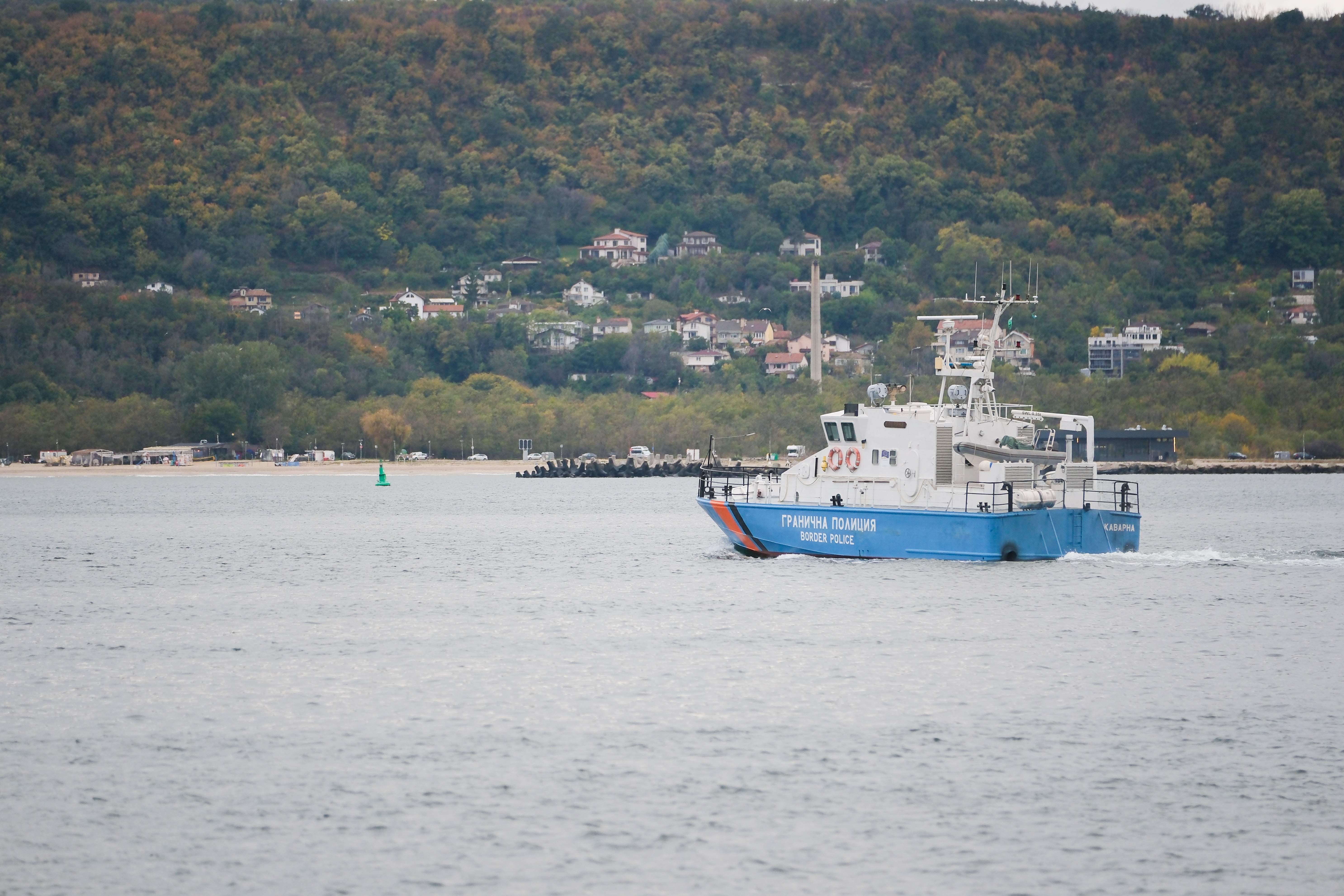
"Unclear who launched the strike." That is the headline comfort food served up whenever an unmanned surface vessel or aerial drone turns a hull into scrap metal in the Black Sea. Bulgaria says the origin is uncertain. Cable news repeats it. Analysts nod sagely.
It is theater.
When a ship goes down in a contested maritime basin ringed by radar arrays, satellite constellations, electronic warfare jammers, and coastal patrol assets, "nobody knows" almost never means genuine ignorance. It usually means someone does not want to say the quiet part out loud. Attribution in modern maritime warfare is rarely a detective mystery waiting for a monocle and a magnifying glass. It is a political choice dressed up as technical ambiguity.
I have spent years watching defense commentators, corporate risk teams, and maritime insurers blow budgets chasing the wrong ghost after an attack. They treat drone strikes on ships like whodunits in a parlor room. Who pressed the launch button? Which unit owned the airframe? Which flag flew over the launch pad? Those questions make great copy for a breaking-news chyron. They are terrible operational questions if your job is keeping vessels afloat, supply chains moving, or capitals from miscalculating escalation.
The Lazy Consensus Around Attribution Fog
The lazy consensus goes like this: drones are cheap, expendable, and deniable, so attribution at sea has collapsed into permanent fog. Because small unmanned systems lack the unmistakable signature of a crewed bomber or a heavy anti-ship cruise missile, coastal states like Bulgaria can throw up their hands and claim uncertainty.
That argument confuses tactical deniability with strategic blindness.
Let us separate two concepts that commentators routinely mash together. Plausible deniability is a political posture—a government's refusal to confirm authorship or its deliberate choice to keep investigation findings under wraps to avoid triggering treaty obligations, domestic panic, or retaliatory spirals. Attribution opacity is a technical condition in which observers genuinely lack the data to link an event to an actor.
In the Black Sea, those two things are not twins. They are often opposites.
Consider the physical environment of the Black Sea. Unlike the vast expanses of the Pacific or the open Atlantic, the Black Sea is a semi-enclosed basin packed with overlapping sensors. NATO reconnaissance aircraft fly regular orbits along its edges. Commercial and military satellites pass overhead on predictable schedules. Automatic Identification System transponders, synthetic aperture radar, signals intelligence collectors, and coastal radar stations monitor traffic across narrow chokepoints and shipping lanes.
An unmanned surface vessel—a low-profile explosive boat skimming the waves—or a long-range one-way attack drone does not materialize out of thin air. It needs launch coordinates, routing corridors, command-and-control links or pre-programmed waypoint navigation, weather windows, and target cueing. Even autonomous or semi-autonomous systems leave footprints in the electromagnetic spectrum, in launch-area activity, in debris metallurgy, or in the strategic logic of who benefits from sinking a specific hull at a specific hour.
When officials say the origin is unclear, ask a sharper question: unclear to the public, or inconvenient to name publicly?
Why "Unclear" Is Often a Diplomatic Shield
Bulgaria sits in a delicate spot. Located on the western shore of the Black Sea, a NATO member, deeply tied to regional energy and trade routes, and acutely sensitive to anything that drags littoral states closer to direct kinetic confrontation.
If a ship sinks near your waters and you declare with certainty that Actor A launched a drone from Location B, you immediately inherit pressure. Pressure to explain why your surveillance did or did not catch it. Pressure from allies to respond politically or materially. Pressure from domestic constituencies worried about spillover into coastal tourism, ports, or territorial waters.
Saying the origin is unclear buys time. It lowers the temperature in the first few hours after a strike, when rumors outpace verified intelligence and emotions run hot. It keeps the incident contained inside intelligence channels rather than forcing an immediate public showdown.
That is smart statecraft in some moments. Pretending it is an objective statement about the limits of modern sensor technology is bad analysis.
To be fair to the skeptics, there are real technical hurdles. Small drones have tiny radar cross-sections. Sea state—choppy waves, spray, glare—can mask low-riding hulls from surface sensors. Jamming and spoofing distort electronic tracks. Debris recovered at sea may be damaged, incomplete, or composed of commercial off-the-shelf components that multiple actors buy through shell networks. If a strike happens outside immediate visual or coastal radar line-of-sight, piecing together the exact launch point takes time.
Time is the enemy of instant headlines. A news cycle demands an answer within forty minutes. Intelligence work often takes forty hours or forty days, and sometimes the hardest parts never get declassified. When the press asks "Who did it?" ten minutes after a sinking and gets a cautious non-answer, it translates caution into mystery.
You Are Asking the Wrong Question About Maritime Drones
Here is where the search intent behind almost every Black Sea drone headline goes off the rails. Readers type queries looking for the culprit—the nation, the proxy, the unit—as if naming the shooter solves the problem.
It does not. In asymmetric naval warfare, attribution is the appetizer; deterrence and survivability are the meal.
Think about what a drone strike on a ship actually changes on the water. Whether a strike comes from a state navy, a special operations detachment, or a semi-autonomous strike cell operating under state cover, the physical effect on the target is the same: hull breach, fire, flooding, crew risk, rising war-risk insurance premiums, and rerouted commerce.
Maritime risk managers who obsess over attribution while ignoring ship hardening, electronic resilience, convoying or route discipline, and crew evacuation readiness are fighting the last war with a magnifying glass. I have seen shipping executives and corporate security leads spend weeks debating geopolitical motives while leaving basic operational vulnerabilities wide open—unencrypted communications habits, predictable transit patterns, weak damage-control drills, and zero contingency planning for sudden GPS or satcom degradation.
Imagine a scenario where a commercial or dual-use vessel operates along a predictable Black Sea corridor without updated threat briefings, relies on single-channel navigation aids, and has crews trained only for traditional collision or piracy rather than high-speed unmanned threats. Knowing which flag was painted on the drone's origin point does not patch a flooded engine room.
The Real Shift: Cheap Precision Against Expensive Hulls
The deeper story behind any ship sunk by drones in the Black Sea is economic and structural asymmetry.
A surface warship or specialized transport costs tens or hundreds of millions of dollars and takes years to build and crew. A long-range aerial drone or unmanned surface vessel costs a fraction of that, can be produced in batches, and puts zero human pilots or sailors in the immediate strike craft.
That asymmetry changes naval doctrine everywhere. Sea control in contested waters is no longer decided solely by big guns or capital ships. It is shaped by persistent surveillance, cheap expendable precision, electronic warfare, and the psychological tax imposed on every vessel entering the zone.
When a ship goes down and the origin is labeled unclear, that ambiguity itself becomes part of the coercive effect. Every operator navigating nearby has to price in a threat whose exact rules of engagement and launch boundaries feel fluid. Uncertainty raises risk premiums faster than almost any press release.
What Analysts Get Wrong About Deniability
Deniability at sea is frequently misunderstood as invisibility. It is not.
In modern conflicts, deniability works more like plausible cover than a cloaking device. An actor may use an unmanned platform, an unconventional launch site, or an indirect operational chain so that rival governments can choose not to escalate over an ambiguous incident—even when intelligence analysts have a strong working assessment of what happened.
Let us be candid about the limits of my own contrarian view. If you push the "it's all political theater" thesis too far, you risk becoming a conspiracy theorist who sees hidden puppet masters behind every genuine intelligence gap. Sometimes sensors really do miss a low-flying drone. Sometimes weather degrades satellite collection. Sometimes a strike genuinely involves contested command lines, rogue or semi-independent strike teams, or spoofed signals meant to sow confusion.
A disciplined analyst holds two truths at once:
- Genuine gaps exist in real-time maritime tracking, especially in cluttered coastal environments and under heavy electronic interference.
- Strategic restraint exists among governments that know more publicly than they admit, or choose ambiguity to manage escalation.
Conflating those two realities—claiming either total blind ignorance or omniscient certainty—is lazy thinking. The sharp move is to look at incentives, sensor coverage, post-strike diplomatic behavior, and operational patterns together rather than taking any single official statement at face value.
Actionable Moves When the Headline Says "Unclear"
If you run maritime operations, advise executives, track regional security, or simply refuse to be fooled by surface-level reporting, stop waiting for a neat confession from a press podium. Do this instead.
1. Audit Who Gains From Ambiguity
Whenever a strike occurs and attribution is declared murky, map the incentives of every nearby actor. Ask who benefits from quiet deterrence without a public crisis, who fears domestic political blowback, and who wants rival shipping or logistics spooked without triggering a formal collective defense debate. Incentives do not prove authorship on their own, but they expose why official stories sound the way they do.
2. Track Post-Strike Behavior, Not Just Initial Statements
Watch what happens in the 24 to 72 hours after a sinking. Do naval patrols shift? Do coastal air-defense or radar alerts tighten? Do insurance markets reprice specific corridors? Do diplomatic channels quietly harden or stay conspicuously silent? Actions on the water and in risk markets tell you far more than an initial "unclear" quote.
3. Shift Risk Budgets From Whodunits to Survivability
Stop pouring disproportionate energy into guessing the exact launch unit before addressing exposure. Focus on route intelligence, electronic interference readiness, damage control, crew training, and clear decision triggers for pausing or rerouting transit when threat indicators spike.
4. Demand Evidence Over Speculation
When reading coverage of a drone attack at sea, separate confirmed physical facts—location, vessel type, time, visible damage, weather, nearby traffic—from speculation about motives and culprits. If a report blends hard coordinates with unverified guesses about who fired, strip out the guesses and judge what actually stands.
The Brutal Reality of Contested Waters
The Black Sea has become a live laboratory for unmanned maritime warfare, electronic contestation, and gray-zone signaling. Calling a strike's origin "unclear" is often the opening move in a diplomatic dance, not the final word on reality.
Ships do not sink in a vacuum. Follow the incentives, harden the hulls, and stop letting "unclear" do the thinking for you.


