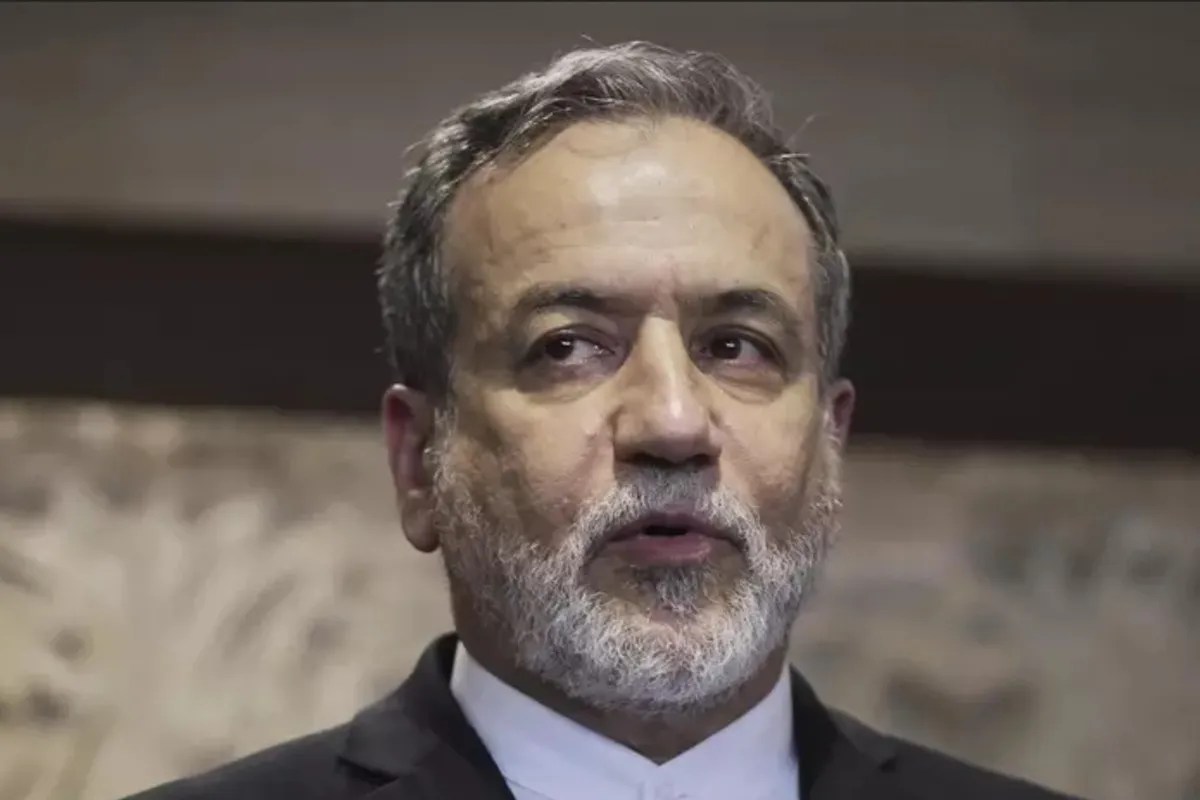
When a foreign minister tells the press that the decision now rests with Washington, most commentators nod along like trained seals. They read the headline. They repeat the line. They treat diplomatic theater as an objective status report.
They have it backward.
Whenever Abbas Araghchi—or any veteran Iranian statesman—pushes the spotlight onto the White House and declares that the next move belongs to the United States, he is not handing over control. He is shifting blame. That distinction is everything.
Standard coverage of peace talks and negotiations between Tehran and Washington leans on a lazy consensus: that diplomacy is a linear relay race. One side makes a statement or signals openness. The other side holds the baton and must decide whether to run or drop it. If talks stall, pundits tally up who said what last and assign responsibility like a referee calling a foul.
That framing is shallow. It confuses public signaling with actual leverage.
The Myth of the Single Decider
Diplomacy is not a light switch that Washington can simply flip from "off" to "on." Neither is it a chessboard where one player makes a move and sits politely on their hands while waiting for the other to respond.
In high-stakes statecraft, putting the decision in the other side’s hands is a classic move of asymmetric positioning. When a negotiating party states that the ball is in Washington’s court, it accomplishes three things at once:
- It frames the speaker as reasonable: Saying "we are waiting on them" projects readiness and restraint without locking in painful concessions on camera.
- It puts domestic and international pressure on the rival: Allies, critics, and voters in the opposing capital start asking why their government hasn't closed the deal yet.
- It hides internal friction: A government dealing with hardline factions, economic strain, or competing security priorities can blame external gridlock instead of admitting its own narrow room to maneuver.
I have watched negotiations collapse across multiple sectors and geopolitical theaters over the years, and the pattern is remarkably consistent. I have seen seasoned teams blow months of credibility—and billions in value—because they took an opponent’s public invitation at face value instead of auditing the incentives behind it. When someone tells you the choice is all yours, check what they are refusing to put on the table first.
Defining the Real Terms of Negotiation
Before we argue over who holds the cards, we need to be precise about what "peace talks" actually mean in this context. Casual observers use the phrase to mean a warm handshake, a grand reconciliation, or a comprehensive treaty that erases decades of hostility.
That is fantasy.
In hardball geopolitics, talks between adversaries like Iran and the United States are rarely about sudden affection. They are transactional containment exercises. They revolve around verifiable limits, enforcement mechanisms, sanctions relief, regional security red lines, and mutual risk reduction. Calling every back-channel signal or conditional remark a step toward "peace" sets up readers for whiplash when headlines swing from hopeful to hostile overnight.
Realists in international relations—scholars and practitioners like Thomas Schelling and Henry Kissinger—spent decades dissecting how states bargain under coercion and distrust. Schelling’s work on the logic of conflict and brinkmanship highlights a core truth: threats, signals, and concessions only carry weight if they are credible and tied to real costs. A public declaration that another capital holds the decision is a strategic signal, not a binding commitment.
Why People Ask the Wrong Questions About Talks
Whenever diplomatic rhetoric heats up, search feeds fill up with predictable questions. Most of them start from a flawed premise.
"Does putting the decision on the U.S. mean Iran is ready to compromise?"
Not necessarily. Readiness to talk is not the same as readiness to surrender core interests. A state can be eager for sanctions relief or de-escalation while refusing to budge on regional posture, missile programs, or sovereignty claims. Reading a tactical statement as a sign of imminent capitulation is how analysts get blindsided every single cycle.
"Why doesn't Washington just take the offer if the ball is in its court?"
Because there is rarely a clean, take-it-or-leave-it offer sitting on the table with zero strings attached. Every diplomatic opening comes wrapped in preconditions, sequencing disputes, and verification headaches. What looks like an open door in a press quote often turns out to be a narrow hallway lined with tripwires once negotiators sit down behind closed doors.
"Who actually has more leverage in these negotiations?"
Asking "who has more leverage" in the abstract is like asking whether a hammer or a wrench is better without knowing what you are building. Leverage depends on the issue and the time horizon. Economic pressure, military reach, diplomatic isolation, domestic resilience, and regional influence cut in different directions. Whoever claims the other side holds the sole decision is usually trying to obscure where their own leverage is tight—or where they want to avoid paying the political price of saying "no" first.
Imagine a Different Bargaining Table
Imagine a scenario where two stubborn rivals are arguing over who must blink first on a high-stakes agreement. Rival A steps up to a microphone and says, "Everything depends on Rival B now. The choice is theirs."
To the casual spectator, Rival A looks passive, perhaps even cornered. Yet behind closed doors, Rival A has already set strict boundaries on what it will never sign, knowing Rival B faces steep political costs for walking away empty-handed. By publicly handing Rival B the "choice," Rival A forces Rival B to wear the blame if the talks fail—while keeping its own red lines intact.
That is not passivity. That is choreographed pressure.
The Honest Blind Spots of a Skeptical View
A purely cynical lens has limits, and pretending otherwise would be dishonest. Sometimes a shift in tone really does reflect a change in urgency. Economic pain at home, leadership transitions, shifting regional alliances, or fear of escalation can push governments toward deals they previously rejected.
Dismissing every diplomatic statement as pure spin can make you miss genuine inflection points. The trick is not to assume every word is a lie, nor to swallow every quote as gospel. Watch actions, timelines, enforcement details, and domestic pushback—not just applause lines in front of cameras.
How to Read Diplomatic Headlines Without Getting Played
If you want to understand what is actually happening in peace talks instead of riding an emotional roller coaster, change how you read the coverage.
- Separate the headline from the mechanism: Ask what concrete action is being proposed, verified, or traded—not just who sounds more accommodating.
- Track domestic audiences: Notice who each public statement is really speaking to back home. Toughness and flexibility both have domestic price tags.
- Watch the clock, not the microphone: Pay attention to deadlines, election cycles, economic pressure points, and diplomatic calendars. Timing often reveals motive better than speeches do.
- Expect friction, not fairy tales: Adversarial negotiations move in fits and starts. A stalled round or sharp rebuttal does not automatically mean the end of diplomacy, just as a polite quote does not mean a signed deal.
Stop treating diplomatic soundbites like final verdicts. Read the incentives, follow the pressure, and keep your eyes on what moves after the cameras turn off.