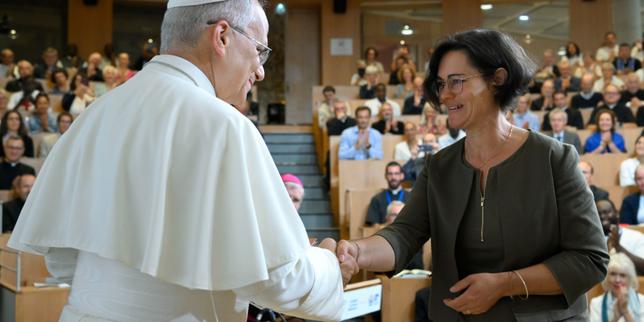
The lazy consensus of our cultural elite is that institutional religion is dying a slow, terminal death in the West. Every standard narrative insists that young people have permanently checked out, trading sacred traditions for secular individualism, digital tribes, and therapeutic self-actualization. Yet beneath the noise of declining Sunday attendance figures, an entirely different groundswell is taking shape in places like Paris. When major figures speak to newly baptized adults in historic French Catholic institutions, the media treats it as an anomalous relic of the past—a quaint footnote for people clinging to ancient myths.
They are missing the entire plot. In other news, read about: The Morning Paris Stood Still And Rediscovered Its Soul.
The conventional coverage reduces these modern conversions to personal comfort, emotional escapism, or reactionary traditionalism. That perspective is not just condescending; it is analytically bankrupt. The reality is that secularism has run its course as an inspiring worldview, leaving a vacuum of raw meaning. Young adults are not turning toward ancient faith traditions despite their strict demands; they are turning toward them precisely because of those demands.
The Hollow Promise of Absolute Autonomy
For decades, the prevailing social contract offered a simple bargain: strip away moral structures, eliminate institutional authority, and give individuals total autonomy to construct their own identities. We were told that radical freedom would breed ultimate fulfillment. The New York Times has analyzed this critical subject in extensive detail.
Look around. How is that working out?
Rates of alienation, existential exhaustion, and systemic burnout among Gen Z and millennials are unprecedented. Complete freedom without boundaries turns out to be an exhausting burden. When every choice is weightless, nothing has any real consequence. When you are told you can author your own purpose from scratch, you eventually realize you are writing on water.
Institutions that demand nothing of you offer nothing in return. Modern secular culture bends over backward to validate every preference, yet it leaves young people starving for substance. By contrast, a tradition that looks a generation square in the eye and tells them they are sinners capable of redemption, bound by objective moral truths, and invited into a cosmic narrative larger than their own egos is radically refreshing. It treats them like adults capable of handling heavy truths rather than fragile consumers needing perpetual affirmation.
Why Strictness is the Ultimate Growth Strategy
Management consultants love to talk about lowering friction. Make the user experience frictionless, eliminate friction in onboarding, remove friction from purchasing. But human beings are not software apps. Applying UX design principles to existential philosophy creates spiritual sludge.
In the sociology of religion, strict churches consistently outgrow liberal, accommodating ones. This phenomenon, often studied as the strictness thesis, defies the corporate intuition that lowering standards attracts a wider market. When an organization dilutes its doctrine to fit the spirit of the age, it loses its distinctiveness. Why bother waking up early on a Sunday morning for an institution that simply echoes the editorial page of a mainstream newspaper?
People do not join demanding communities in spite of the barriers to entry; they join because of them. High barriers signal high value. When a young professional in Paris undergoes rigorous catechumenate, studies theology, and makes a public commitment to a counter-cultural moral framework, they are engaging in an act of profound rebellion against a conformist consumer culture.
The mainstream media frames this as a retreat from modernity. It is actually an advance guard.
The Rejection of Therapeutic Deism
For a long time, modern religion tried to save itself by becoming a polite social club. Pastors and priests traded theology for pop psychology, turning sermons into gentle life-coaching sessions about self-esteem and positive vibes. Sociologists call this moralistic therapeutic deism: the quiet belief that God exists to make us feel good and help us get along.
It failed. It failed because you can get better life coaching from a podcast or a weekend retreat, and you do not need to sing hymns to achieve mindfulness.
The resurgence happening among young urbanites is aggressively non-therapeutic. It is unapologetically dogmatic, intellectually rigorous, and aesthetically rich. Young people discovering traditional liturgy are reacting against the sterile, corporate architecture of modern secular spaces—the glass-box offices, the minimalist apartments, the algorithmically generated feeds. They want incense, candlelight, Latin or vernacular polyphony, and ideas that demand mental heavy lifting. They want mystery, not a PowerPoint presentation.
The Battle Lines of the Next Decade
The cultural divide of the coming years will not be between the religious and the irreligious in the simple terms of the twentieth century. The real fault line runs between a flat, utilitarian materialism that reduces human beings to economic units and carbon footprints, and an unapologetic, transcendent humanism that insists human life has infinite, unearned dignity.
When critics dismiss events at historic French institutions as minor blips, they reveal a profound historical illiteracy. Movements that change civilizations always start with small, intensely committed minorities who reject the reigning orthodoxies of their day.
Stop reading the decline narratives. Look at who is filling the pews, studying the philosophy, and asking the hard questions. The future does not belong to the lukewarm managers of institutional decline. It belongs to the radicals willing to look modern convenience in the eye and choose the heavy yoke of tradition instead.