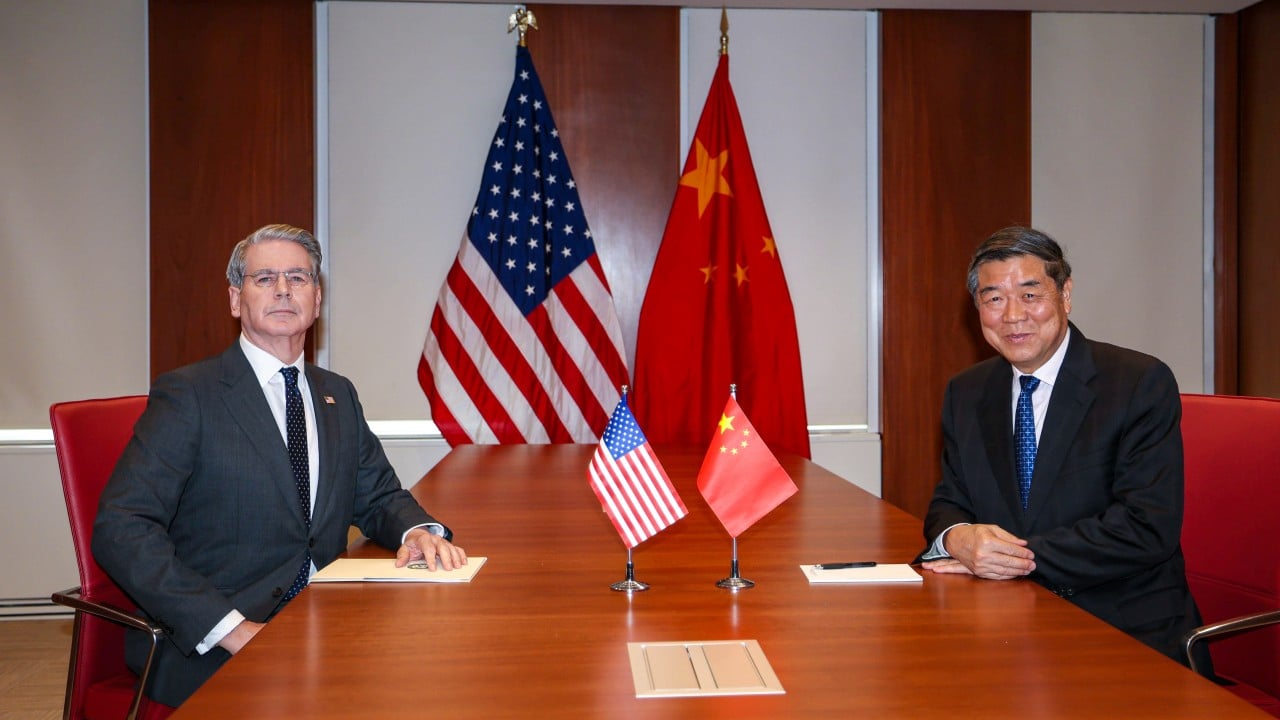
Two months. That is the temporary band-aid slapped onto a structural hemorrhage. Whenever Washington and Beijing announce another fragile trade truce extension, the mainstream financial press treats it like a diplomatic triumph. Pundits sigh with relief, stock indices tick upward, and corporate boardrooms pop champagne. Everyone breathes easy because the immediate tariff cliff has been avoided for another sixty days.
It is a comforting delusion.
I have watched supply chain executives burn millions of dollars over the last five years chasing this exact mirage. They treat trade disputes as temporary weather events—a sudden thunderstorm that will pass if you just wait under an awning long enough. They treat these extensions as windows of opportunity to negotiate a grand, permanent reconciliation. That is utter nonsense. The friction between the United States and China is not a policy disagreement. It is a permanent architectural decoupling.
The lazy consensus holds that if both sides just sit across a walnut table long enough, exchange enough polite communiques, and offer minor concessions on agricultural exports or intellectual property enforcement, the old globalized status quo will return. This is historical illiteracy. We are living through the messy, grinding end of a thirty-year economic experiment. The illusion of a permanent trade truce exists purely to keep equity markets calm and supply chain planners paralyzed in a state of perpetual hesitation.
The Anatomy of the Truce Trap
Look at the mechanics of these short-term extensions. They are rarely designed to solve core disputes. They are tactical pauses engineered for entirely different domestic imperatives. When a two-month extension is announced, ask yourself what is happening in the political calendar. Is an election looming? Is inflation ticking upward at a politically damaging rate? Are corporate lobbyists screaming about quarterly inventory shortages?
These extensions act as a narcotic for corporate strategists. Instead of aggressively diversifying manufacturing footprints or redesigning product architectures to bypass geopolitical chokepoints, executives use the breathing room to do nothing. They wait. They hope. They assume the next negotiation will yield certainty.
Certainty is dead. The sooner your organization accepts that operational volatility is the permanent baseline, the faster you stop bleeding money on consultants who promise a return to 2015-style global trade harmony.
Consider the fundamental asymmetry of the demands. Washington wants structural economic reform from Beijing—an end to state-directed industrial subsidies, forced technology transfers, and massive overcapacity dumping. Beijing wants sovereign breathing room to secure its technological independence, dominate advanced manufacturing, and insulate its domestic economy from dollar-denominated financial leverage. These are zero-sum objectives. You cannot compromise your way into mutual alignment when both superpowers are playing entirely different rulebooks.
Dismantling the Supply Chain Myth
The most dangerous phrase uttered in modern boardrooms is dual sourcing. Consultants stand up in sleek suits, click through pitch decks filled with cheerful color-coded maps, and tell you to simply split your production between Shenzhen and somewhere in Southeast Asia. Problem solved, right?
Wrong.
Dual sourcing is often a lazy fiscal fiction. When you look under the hood of alternative manufacturing hubs, you quickly realize that a staggering percentage of the inputs—raw chemicals, precision components, specialized tooling, and refined rare earth elements—still originate from the exact same Chinese industrial clusters you are trying to avoid. You haven't decoupled; you have just added a middleman, increased your logistics overhead, and introduced a new layer of vulnerability.
Imagine a scenario where a mid-sized electronics manufacturer shifts thirty percent of its assembly to Vietnam to satisfy nervous investors. On paper, diversification looks pristine. In reality, their tier-two and tier-three suppliers are still buying circuit boards and battery cells from suppliers in Guangdong who are tightly bound to state-backed financing networks. When the next real tariff escalation hits, that Vietnamese assembly line stumbles just as hard as the Shenzhen factory because the underlying dependency was never severed. It was merely laundered through a different zip code.
True operational resilience is painful. It requires deep vertical integration or the painstaking development of entirely redundant supply chains where every single tier of input is mapped and secured domestically or within heavily vetted allied jurisdictions. It costs capital. It compresses margins in the short term. That is precisely why executives prefer the seductive comfort of a two-month trade truce. It justifies inaction.
The Real Cost of Waiting
Every time a trade truce is extended, corporate leaders make a silent bet against structural reality. They gamble that the geopolitical winds will shift back in their favor before their capital expenditures run dry.
This is terrible strategy.
When you orient your five-year strategic plan around the hope that two adversarial superpowers will suddenly embrace free trade principles, you are abdicating your responsibility as a leader. Geopolitical risk is no longer a footnote in the back of an annual report; it is the primary operating environment. If your business model relies on frictionless trans-Pacific shipping and stable bilateral diplomacy between Beijing and Washington, your business model is obsolete.
The companies winning right now are not the ones with the best government relations teams or the most optimistic forecasts. They are the ruthless pragmatists who treat every trade truce as what it actually is: a temporary stay of execution. They are automating aggressively to neutralize labor cost differentials. They are redesigning products to use universally available components rather than proprietary inputs tied to geopolitical flashpoints. They are building localized supply ecosystems that can withstand a sudden, total border closure tomorrow.
Stop waiting for the adults to step back into the room and fix global trade. The adults left years ago. The current system is defined by permanent competition, weaponized commerce, and structural mistrust.
Stop planning for the truce. Plan for the rupture.