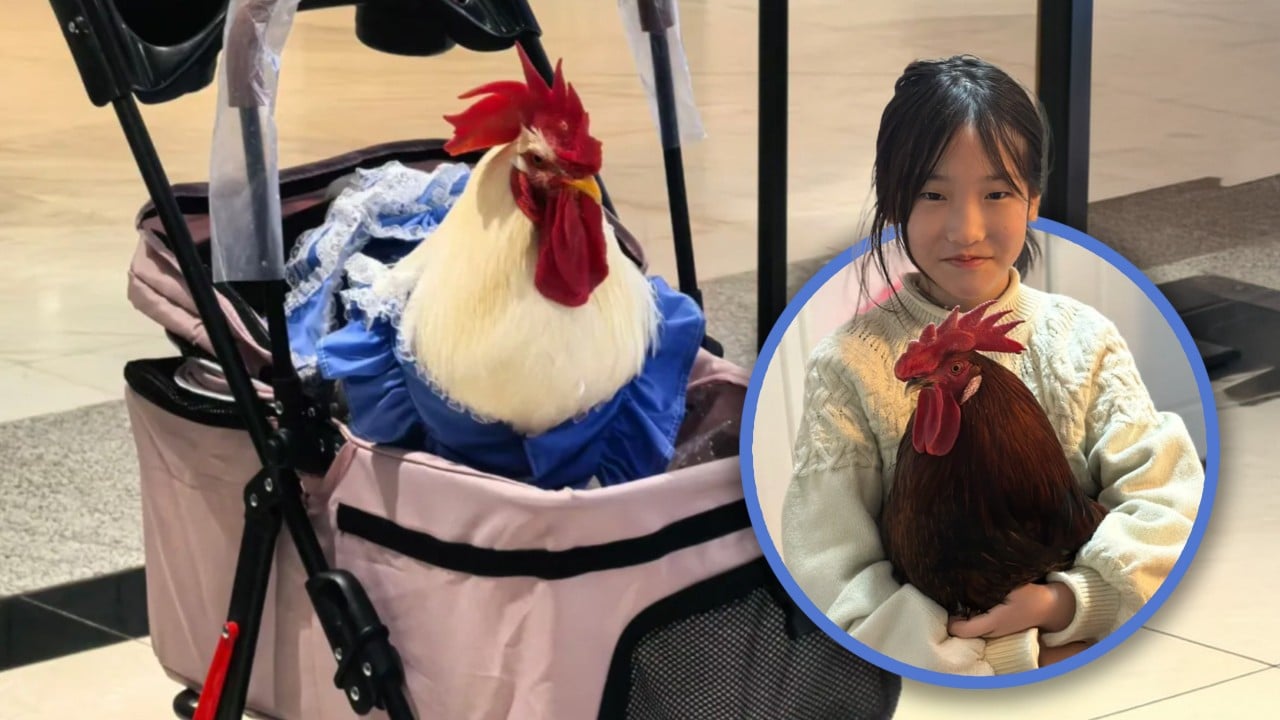
Forget the standard poodle or the aloof house cat. In the crowded high-rises of Shanghai and Beijing, a new sound echoes from balcony gardens and designer living rooms. It's the soft clucking of a pet chicken. China city dwellers adopt chickens as pets at an exploding rate, and they aren't keeping them for eggs or Sunday dinner. They’re treating them like high-maintenance royalty, complete with strollers, custom knit sweaters, and gourmet diets.
This isn't a brief internet trend. It's a massive shift in how young Chinese professionals view companionship and status. While the rest of the world might see a farm animal, people in China’s tier-one cities see a "healing" companion that fits surprisingly well into a 600-square-foot apartment.
The Rise of the Emotional Support Hen
Why a chicken? You’d think the noise and the mess would be a dealbreaker for someone living on the 22nd floor. But for many, chickens represent a quirky, low-energy alternative to dogs. You don’t have to walk a chicken twice a day to keep it from chewing your sofa. Most of these urban birds are breeds like the Silkie or the Dutch Bantam. Silkies look like walking cotton balls. They have fluffy feathers that feel like fur and a remarkably docile temperament.
Young workers in China face brutal schedules. The "996" culture (working 9 am to 9 pm, six days a week) leaves little room for a pet that demands constant activity. Chickens offer a specific type of "healing" energy. Owners report that watching a bird peck at its food or settle into a lap for a nap provides a meditative escape from the digital grind. It's visceral. It's tactile. It's totally different from looking at a screen all day.
Prams Diapers and Designer Threads
If you walk through a park in Guangzhou, don't be shocked if the "baby" in the luxury stroller starts flapping its wings. Owners are spending thousands of yuan on chicken infrastructure. Since chickens aren't exactly house-trained, the "chicken diaper" has become a booming industry on platforms like Taobao and JD.com. These are small, fabric harnesses with waterproof liners that allow birds to roam free on expensive rugs without leaving a mess.
It goes beyond just hygiene. I’ve seen birds sporting miniature backpacks, pearl necklaces, and even tiny sneakers designed to protect their feet from hot pavement during outings. The level of care is intense. This isn't just "keeping a pet." It's "parenting." Owners take their birds to pet-friendly cafes, pose them for elaborate social media shoots on Xiaohongshu (China’s version of Instagram), and buy them specialized organic feed enriched with probiotics for "feather shine."
The Psychology of the Urban Flock
Psychologists in China point to a phenomenon called "compensatory consumption." When young people feel they can't afford a home or a traditional family because of soaring costs, they redirect that nurturing instinct toward something manageable. A chicken costs a fraction of a child’s education but offers a similar outlet for caretaking.
There’s also the "uniqueness" factor. In a society that often feels hyper-conformist, owning a chicken is a bold personal statement. It says you're different. It says you don't care about traditional pet norms. It's an instant conversation starter that helps lonely urbanites connect with others online and in person.
Navigating the Legal and Health Grey Zones
Living with poultry in a skyscraper isn't all clucks and cuddles. There are real hurdles. Most Chinese residential complexes have strict rules about livestock. To get around this, owners often classify their birds as "exotic pets" rather than farm animals. It’s a legal tightrope. If a neighbor complains about the 5 am wake-up call from a rooster, the bird is usually gone within 24 hours. That's why hens are vastly more popular than roosters in the city.
Health is another big one. China has a history with avian flu, and the government takes poultry movement seriously. City dwellers have to be incredibly careful. Most pet chickens are kept strictly indoors or in controlled environments to avoid contact with wild birds. Owners often seek out specialized vets, which are rare and expensive. You can't just take a Silkie to a standard dog vet and expect them to know how to handle a respiratory infection in a bird.
Comparing the Experience to Traditional Pets
When you compare a chicken to a dog, the differences are stark. A dog wants your attention 24/7. A chicken is happy to hang out near you while you work.
- Space requirements: A chicken needs a clean coop or a designated corner. A dog needs the whole floor.
- Cost: High-end bird feed is cheaper than premium raw dog food, though the "fashion" costs for chickens are catching up.
- Lifespan: A well-cared-for pet chicken can live 5 to 10 years. That’s a significant emotional investment.
- Interaction: Don't expect a chicken to fetch. They recognize their owners and can be trained to follow basic commands, but their affection is more subtle. It's about presence, not performance.
How to Start Your Urban Flock Responsibly
If you're looking to join this movement, don't just go buy a chick from a wet market. Those birds aren't bred for temperament or indoor living. You need a reputable breeder who specializes in ornamental poultry.
First, check your local building codes and talk to your neighbors. One noise complaint can end your journey. Second, invest in the right gear immediately. That means a high-quality UV light if your apartment doesn't get direct sun, as chickens need it for calcium absorption and bone health. Third, find a vet who actually handles birds before the bird arrives.
Urban chicken keeping is a commitment to a living creature with specific biological needs. It isn't just a prop for your social media feed. If you can handle the cleaning and the occasional dawn cluck, you might find that a chicken is the most rewarding roommate you’ve ever had. Get the diapers ready. Buy the stroller. Join the flock.