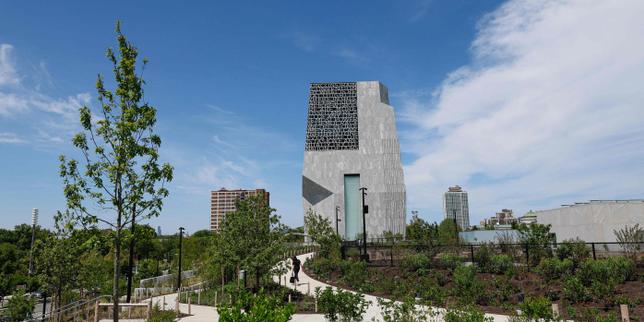
The media consensus surrounding the decade-long saga of the Obama Presidential Center in Chicago follows a predictable, lazy script. It is framed as a triumphant homecoming, a neighborhood revitalization engine, and a shiny beacon of civic pride for the South Side.
That narrative is completely wrong.
The mainstream press coverage treats modern urban planning like it is still 1995. They judge the success of massive, billion-dollar civic footprints by the size of their architectural ambition rather than the reality of localized economic displacement. The standard line is that a sprawling, multi-acre campus will automatically inject prosperity into Woodlawn and Jackson Park. In reality, the project is a textbook case of top-down development forcing 21st-century economic pressures onto a community that needed structural investment, not a tourist attraction.
I have watched cities dump billions into vanity infrastructure projects for twenty years. The outcome is always the same. You do not fix systemic municipal disinvestment by building a museum; you just change who can afford to live near it.
The Tourism Myth vs. The Displacement Reality
Mainstream analysts love to quote projected visitor numbers. They talk about hundreds of thousands of tourists flocking to the South Side every year, spending money in local shops, and lifting the community tide.
Let’s dismantle that premise right now.
Tourists do not wander into neighborhood bodegas or hire local contractors. They arrive via dedicated transit, spend money inside the clean perimeter of the complex, and leave. The actual economic footprint of a modern presidential library is highly insular. Look at the Clinton Presidential Center in Little Rock or the George W. Bush Presidential Center in Dallas. They create beautiful, manicured bubbles. They do not magically fix the surrounding public school funding or repair crumbling local transit lines.
What they do do is catalyze hyper-speculation.
Years before the first shovel hit the dirt in Jackson Park, real estate speculators were already buying up housing stock in Woodlawn. Property values surged, and landlord behavior shifted. For a neighborhood where a massive percentage of residents are renters, a sharp spike in property values is not a sign of wealth creation—it is a countdown clock to eviction.
The city had to pass a specific housing ordinance in 2020 just to curb the immediate displacement threats caused by the mere announcement of the center. When your civic project requires emergency legislation to protect the local population from being priced out before construction even finishes, you are not building a community asset. You are managing an economic shockwave.
The Flawed Logic of the Presidential Library System
The entire structure of modern presidential libraries is built on an unsustainable, outdated concept. Historically, these institutions served as repositories for physical documents managed by the National Archives and Records Administration (NARA).
The Obama Center breaks this mold, but in a way that highlights the inefficiency of the entire endeavor.
- The Digital Pivot: The Obama administration chose not to build a traditional, NARA-managed research library. Instead, the millions of pages of unclassified documents are being digitized.
- The Brick-and-Mortar Anachronism: If the actual research, data, and historical records are living in the cloud, the physical center ceases to be a functional academic hub. It becomes an exhibition space.
- The Cost-Benefit Deficit: We are looking at a construction price tag clear north of $800 million for a physical footprint that serves an essentially symbolic purpose, while the actual utility of the archive is accessed via a web browser.
Imagine a scenario where that same $800 million in private and philanthropic capital was structured as an endowment for direct, hyper-local equity investments, small business grants, and modern vocational training facilities across the South Side. The long-term return on human capital would dwarf the economic output of a museum gift shop and a tower overlooking Lake Michigan. But human capital investments do not look as impressive on an architectural rendering.
The Operational Risk Nobody Wants to Discuss
The Obama Foundation is responsible for the cost of construction and must provide an endowment to cover operational expenses for the museum portion. However, the ongoing maintenance of the surrounding public parkland and the inevitable strain on city infrastructure fall squarely on the public sector.
Chicago's municipal finances are famously strained. Pension obligations, transit deficits, and public school budget shortfalls dominate every single fiscal cycle. Yet, the city committed tens of millions of dollars in infrastructure upgrades—rerouting major arteries like Stony Island Avenue and Hayes Drive—to accommodate the footprint of this center.
This is classic opportunity cost neglect. Every dollar spent rerouting a four-lane road to optimize the view from a presidential museum is a dollar not spent fixing the slow zones on the CTA Red Line or updating water infrastructure in neighborhoods that actually need it.
We are told this is a public-private partnership where everyone wins. But in these arrangements, the private entity captures the cultural prestige and the branding power, while the public entity absorbs the long-term infrastructure friction and the gentrification management costs.
Stop Asking if it Looks Good, Start Asking Who it Serves
The common defense of the project is that the South Side deserves world-class architecture. It is an emotional argument designed to shut down financial criticism.
Of course the South Side deserves investment. But it deserves structural investment that builds generational wealth for the people who currently live there, not aesthetic investments that prepare the area for wealthier newcomers.
If you want to evaluate the success of an urban development project, ignore the ribbon-cutting ceremonies. Ignore the star-studded galas. Look at the eviction court data five years post-opening. Look at the percentage of local, black-owned businesses that managed to stay on their leases versus the national chains that moved in to capitalize on the foot traffic.
The Obama Presidential Center is a monument to an old way of thinking—the idea that you can drop a massive, top-down cultural institution into a complex urban ecosystem and expect prosperity to trickle down naturally. It didn't work for the stadium booms of the 1990s, it didn't work for the downtown convention center trends, and it won't work here.
True civic development starts from the pavement up, not from a 235-foot tower down.