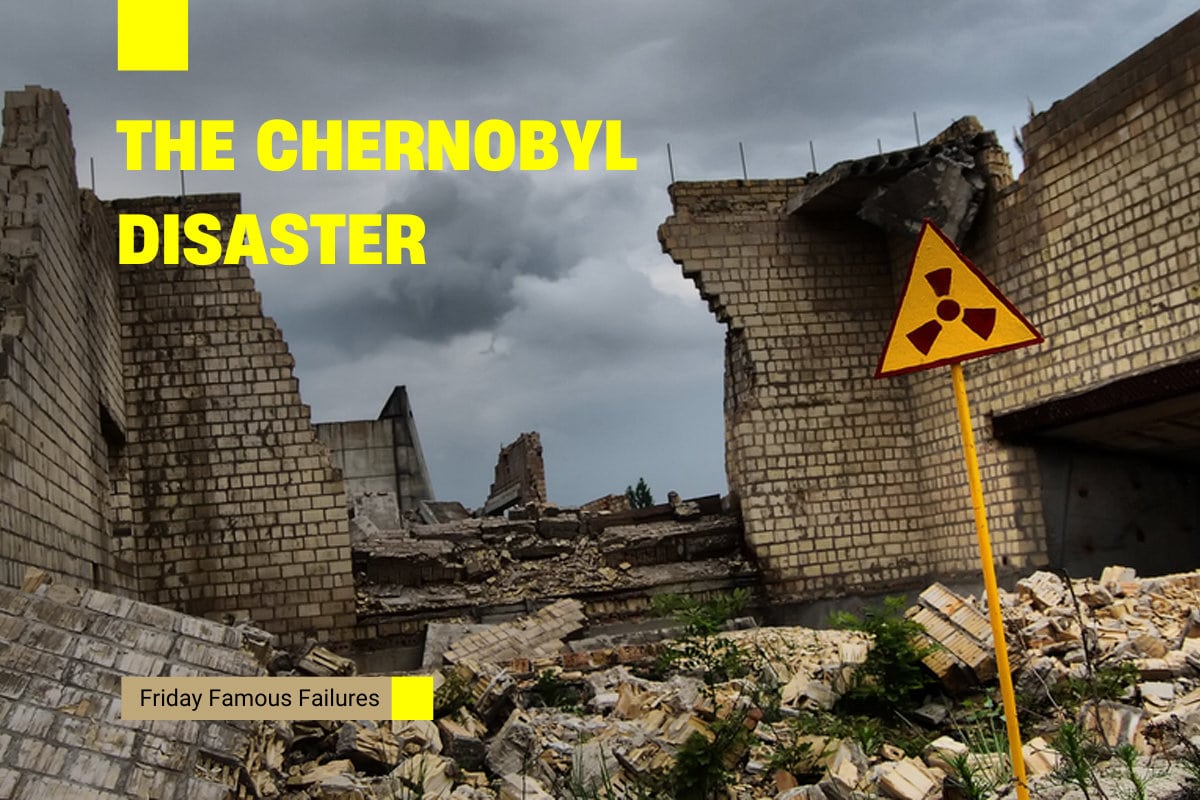
April 26, 1986, wasn't supposed to be a night that changed the world. It was just a Saturday in northern Ukraine. Workers at the Chernobyl Nuclear Power Plant were prepping for a routine safety test on Reactor 4. They wanted to see if the turbines could keep the cooling pumps running during a power outage. Instead, they triggered a steam explosion that blew the 2,000-ton lid off the reactor, releasing 400 times more radioactive fallout than the Hiroshima bomb.
Forty years on, the ghosts of Pripyat still talk. Most people think they know the story because they watched a miniseries. They think it was just a few guys in a control room making bad choices. It's way more complicated than that. It was a failure of physics, a failure of political transparency, and a design flaw that the Soviet government knew about but kept secret. If you want to understand why some countries are terrified of nuclear power today while others are doubling down on it, you have to look at what actually happened in those early morning hours.
The Fatal Flaw in the RBMK Design
Most people don't realize the reactor was doomed before the test even started. The RBMK-1000 reactor had a "positive void coefficient." In plain English, that means if the coolant (water) turns to steam or is lost, the nuclear reaction speeds up instead of slowing down. It's like a car that accelerates when you take your foot off the brake.
Then there were the control rods. These are supposed to shut the reactor down. In the RBMK design, these rods had graphite tips. Graphite actually speeds up the reaction. When the operators pressed the AZ-5 button for an emergency shutdown, those graphite tips entered the core first. For a split second, they spiked the power instead of killing it.
The power surged to over 100 times its rated capacity. The fuel rods shattered. The cooling water instantly vaporized. That massive pressure blast didn't just break the reactor; it destroyed the building.
1:23 AM The Moment Everything Broke
The timeline is a mess of confusion and denial. At 1:23:40 AM, Alexander Akimov ordered the emergency shutdown. Within seconds, the first explosion rocked the hall. A few seconds later, a second, even bigger explosion sent burning lumps of graphite and fuel onto the roofs of neighboring reactors.
Firefighters arrived in minutes. They weren't told they were dealing with a ruptured core. They thought it was a simple roof fire. These men, the "liquidators," walked into a wall of invisible fire. Ionizing radiation at that level tears apart human DNA like a shotgun blast through a spiderweb. Many of them died within weeks from Acute Radiation Syndrome (ARS).
You've got to realize the scale of the denial. For the first 36 hours, the Soviet leadership tried to pretend nothing happened. They didn't even evacuate Pripyat, the city of 50,000 built for the plant workers. Kids played in the "black rain" while their parents went about their business. By the time the buses arrived, the residents were already walking sponges for radioactive iodine and cesium.
The Invisible Cloud Over Europe
Chernobyl wasn't just a Ukrainian problem. It was a global one. The Soviet Union only admitted there was an accident after radiation detectors at the Forsmark nuclear plant in Sweden—over 1,000 kilometers away—started screaming.
Winds carried the plume across Belarus, Russia, Scandinavia, and Western Europe. To this day, certain areas of the United Kingdom and Germany still have restrictions on selling livestock because the soil remains contaminated with Cesium-137. This stuff has a half-life of 30 years. That means even forty years later, a huge chunk of that radiation is still active in the environment.
What the Numbers Actually Tell Us
The death toll is one of the most debated statistics in history. The official Soviet count is 31. That's a joke.
UN-affiliated agencies like the Chernobyl Forum estimate the total eventual deaths could be around 4,000. Other groups, like Greenpeace, argue the number is closer to 90,000 or even higher when you factor in long-term cancers across the entire continent.
We know for a fact that there was a massive spike in thyroid cancer among children who drank contaminated milk in 1986. Because the government didn't distribute potassium iodide pills immediately, those kids' bodies soaked up radioactive iodine-131. It was a preventable tragedy layered on top of a technical disaster.
The Exclusion Zone as a Living Laboratory
Today, the 30-kilometer Exclusion Zone is a weird paradox. It's one of the most contaminated places on Earth, but it’s also a thriving wildlife sanctuary. Without humans around, wolves, boars, and even the rare Przewalski’s horse have taken over the ruins of Pripyat.
It turns out that for wildlife, the presence of humans is actually more toxic than high-level radiation. Researchers find animals with cataracts or strange mutations, sure. But the populations are booming. It’s a haunting reminder of how fast nature moves back in when we're forced out.
In 2016, the New Safe Confinement was slid into place. It’s a massive steel arch designed to last 100 years. It covers the old "Sarcophagus" that was hastily built in 1986. Inside that arch, robots are still working to figure out how to eventually dismantle the melted fuel and the "Elephant's Foot"—a lethal mass of corium that can still kill a person in minutes if they stand next to it.
Why This Matters for 2026 Energy Policy
We're currently in a massive debate about "Green Nuclear." Countries like France are building new reactors to hit carbon-neutral goals. Meanwhile, Germany shut down its last plants because the memory of Chernobyl (and later Fukushima) is too strong.
Modern reactors aren't RBMKs. They use passive safety systems that don't need electricity or human intervention to cool down. They don't have positive void coefficients. But the lesson of Chernobyl isn't just about the tech. It's about the culture.
The disaster happened because of a "culture of silence." Engineers were afraid to report flaws. Managers were afraid to fail their quotas. Politicians were afraid to look weak. When you combine high-risk technology with a lack of transparency, you get a catastrophe.
If we’re going to use nuclear power to fight climate change, the oversight has to be brutal and transparent. There’s no room for "good enough" when you're managing the power of the stars.
Practical Steps for the Curious
If you’re interested in the reality of the zone today, don't just watch the dramas. Look at the data.
- Check the IAEA (International Atomic Energy Agency) reports on Chernobyl's long-term environmental impact. They provide the most balanced scientific view.
- Look into the "Liquidator" archives. These are first-hand accounts from the 600,000 people who helped clean up the site. Their stories are far more harrowing than any fictional script.
- Use real-time radiation maps. Several NGOs maintain sensors around the Exclusion Zone that you can monitor online. It’s a stark way to see that the site is still "breathing" radioactive particles.
Stop thinking of Chernobyl as an "accident." It was a systemic collapse. Understanding that distinction is the only way to make sure the next forty years of energy production don't repeat the mistakes of that April night.