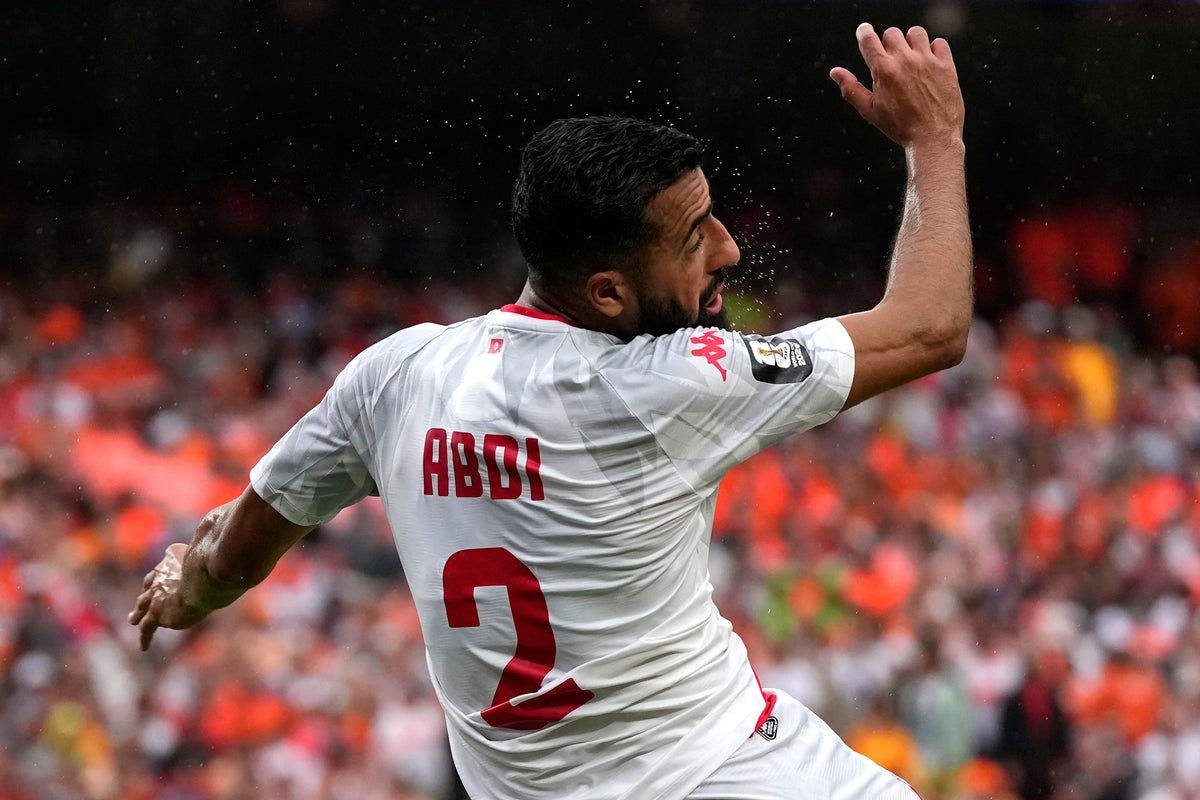
The dressing room smelled of deep-heat rub, damp wool, and the heavy, metallic tang of anxiety. Outside, the crowd sounded like a distant engine, revving impatiently. Inside, nobody spoke. A footballer’s hands tell you everything you need to know before a match. Some players wrap tape around their wrists until their skin turns white. Others trace the stitches on their boots over and over, looking for a flaw that isn't there.
They were ninety minutes away from facing Germany. You might also find this related story insightful: The Brutal Truth About the UK Padel Boom.
To the rest of the world, this was just another fixture in the ledger of international football. A powerhouse against an underdog. A well-oiled machine built on decades of infrastructure, sports science, and tactical certainty, playing against a squad assembled from grit, hope, and passport stamps. On paper, the outcome was already decided. The algorithms had run the numbers. The bookmakers had set the odds.
But football is not played on paper. It is played in the suffocating space between what a man is capable of and what he is terrified of failing to achieve. As reported in detailed reports by FOX Sports, the results are widespread.
Paraguay was chasing a utopia. That is the word that kept echoing through the training camp in the days leading up to the match. A utopia. It sounds beautiful, doesn't it? It evokes images of perfection, of a flawless game where every pass finds its target and every tactical shift works like clockwork.
But true utopia in football is much uglier than that. It is a collective delusion. It is the absurd, irrational belief that eleven individuals, when bound together by a single purpose, can overcome a superior force through sheer, unadulterated unity. It is the refusal to accept the mathematical reality of your own limitations.
Consider what happens when a squad realizes they are outmatched. Two things can occur. The first is a quiet, creeping isolation. Players begin to play for themselves, trying to minimize their own personal blame when the inevitable collapse happens. They track back slower. They shout at a teammate for a misplaced pass to shift the spotlight. The second option is much harder. It requires a complete surrender of the ego.
To chase a utopia, you have to be willing to run thirty yards into an empty space just on the off-chance that your teammate might see you, even if you know you will probably never get the ball. You have to be willing to take a clearance to the ribs because it buys your goalkeeper two seconds to reset his line.
The strategy against Germany wasn't hidden in a complex tactical manual. It didn't rely on a revolutionary new formation or a secret vulnerability discovered in the opponent's defensive line. The strategy was simply each other.
The German team moved like a single organism, a coordinated wave of pressure and precise passing. To counter that, Paraguay couldn't just match their movement; they had to anticipate the gaps before they even appeared. This required a level of communication that went beyond shouting across the grass. It was about knowing the exact stride length of the man playing next to you. It was about knowing that when the left-back pressed forward, the central midfielder would automatically drop into the vacated space without needing to be told.
This kind of chemistry isn't built in a single training session. It is forged in the low-rent hotels of away qualifiers, in the shared frustration of delayed flights, and in the quiet moments on the team bus when the headphones come off.
The match began not with a tactical chess move, but with a collision. A heavy challenge in the center circle that left grass stains on jerseys and set the tone for the afternoon. Germany wanted to dictate the rhythm. They wanted to pass the ball into a state of submission, wearing down the defense until a single, fatal gap opened up.
Paraguay’s response was a suffocating, claustrophobic presence. Every time a white shirt touched the ball, two red-and-white jerseys materialized. It was exhausting to watch. It must have been excruciating to play.
There is a specific kind of fatigue that sets in around the sixty-minute mark of a match like this. Your lungs feel like they are burning through cardboard. Your calves cramp with every sudden change of direction. This is where the narrative of tactical discipline usually breaks down. When the body screams for rest, the mind wanders, and that is when a world-class opponent punishes you.
But every time a Paraguayan player stumbled, another was there to cover the distance. It wasn’t beautiful football. It was a brutal, relentless exercise in survival.
When the final whistle blew, the scoreboard showed a result that the analysts hadn't predicted. The stadium fell into a strange, stunned hush, punctuated only by the wild celebrations of a small pocket of fans in the upper tier. The players didn't celebrate with theatrical backflips or rehearsed routines. Most of them simply dropped to their knees right where they stood, staring at the grass.
They hadn't achieved perfection. They hadn't played a flawless game. But they had held the line.
In the mixed zone after the match, where journalists wait with microphones and recorders to catch a fleeting quote, the players looked smaller than they did on the pitch. They were wrapped in tracksuits, their faces pale with exhaustion, carrying ice packs strapped to their knees and ankles. They spoke in quiet, tired clichés about hard work and focusing on the next game.
But you could see it in their eyes. The utopia they had been chasing wasn't a distant, unattainable myth anymore. They had caught a glimpse of it on a muddy pitch, in the bruised ribs of their teammates, and in the shared silence of a dressing room that finally knew what it meant to be a team.