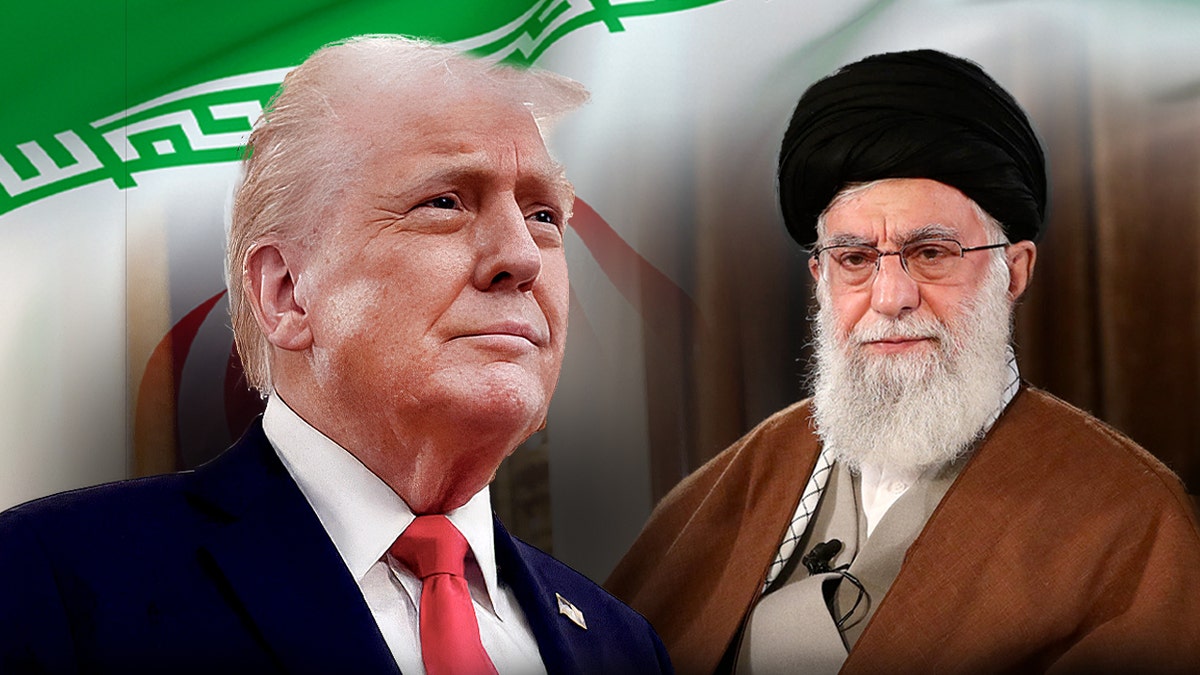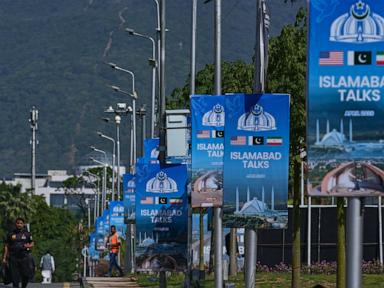
The media is currently obsessed with a "fragile peace" hanging by a thread. Pundits sit in air-conditioned studios in London and D.C., wringing their hands over the potential collapse of a ceasefire in the Iran conflict. They treat "ceasefire" as a synonym for "success." They are wrong.
A ceasefire is not peace. It is a tactical pause that allows the most radical actors to reload, regroup, and refine their targeting parameters. By freezing the front lines exactly where they are, the international community isn't preventing a larger war; it is subsidizing the next one. We are paying for the intermission of a tragedy that will only return with a higher production budget and a more violent script.
The Myth of the Rational Actor
The primary flaw in the current diplomatic consensus is the belief that every player at the table wants to avoid escalation. This is a projection of Western secular materialism onto a theater defined by ideological endurance.
In thirty years of analyzing Middle Eastern defense procurement and kinetic cycles, I have seen billions of dollars in "stabilization aid" vanish into the black hole of proxy militias. We assume that because war is expensive and bloody, everyone must be looking for an exit ramp. But for the IRGC and its network of non-state actors, the exit ramp is the failure. To them, a ceasefire is a breathing room to harden underground facilities that are currently too vulnerable to strike.
If you stop a fight when one side is on the ropes, you haven't saved a life. You’ve just guaranteed that when the fight resumes, the guy who was losing now has a knife.
Why "De-escalation" is a Dirty Word
Diplomats love the word "de-escalation" because it sounds like progress. In reality, forced de-escalation creates a massive pressure cooker.
When you prevent a decisive military outcome, you create a "frozen conflict." Look at the history of the region. Look at the borders that haven't moved in decades but remain the site of constant low-level attrition. These aren't successes; they are festering wounds.
A ceasefire in the current Iran context does three things, all of them bad:
- It rewards brinkmanship. It teaches aggressive regimes that they can initiate a conflict, grab territory or leverage, and then hide behind a diplomatic shield once the counter-attack begins to hurt.
- It destroys deterrence. If the international community rushes to demand a halt the moment a state defends itself effectively, that state loses its ability to discourage future attacks.
- It empowers the hardliners. Within the Iranian domestic power structure, a ceasefire is sold as a victory over "Zionist-Imperialist aggression," providing the political capital needed to crack down even harder on internal dissent.
The Mathematics of Proportionality
We hear constant calls for "proportional responses." This is a legalistic fantasy that ignores the physics of warfare.
$$F = ma$$
In physics, force is mass times acceleration. In geopolitics, stability is the result of overwhelming force, not equal force. If Side A shoots ten missiles and Side B shoots ten missiles back, you don't get peace. You get a stalemate that lasts until Side A figures out how to shoot eleven.
To actually stop a war, the cost of continuing must be made higher than the cost of total surrender. A ceasefire artificially lowers the cost of war. It creates a ceiling on the consequences. When you remove the risk of total defeat, you remove the primary incentive for a lasting, negotiated settlement. You are effectively telling the combatants, "Go ahead, try your luck. If it goes south, we'll step in and stop the clock."
The Intelligence Gap: What the Satellites Don't See
I have sat in briefings where "stability" was measured by the number of days since the last rocket launch. It’s a vanity metric.
While the "peace" holds, the logistics don't stop. The smuggling routes through the Levant don't close. The centrifuge cascades don't freeze. A ceasefire is the best thing that ever happened to a weapons smuggler. It turns a "hot" border with active surveillance into a "grey" border where "humanitarian" shipments can be used as cover for high-grade components.
The competitor articles you're reading focus on the "humanitarian window." They want you to believe that a 72-hour pause is a moral imperative. They ignore the fact that those 72 hours are used to move mobile launch platforms into civilian schools and hospitals, ensuring that when the war restarts, the civilian death toll will be ten times higher.
Is it moral to delay a war today if it means a nuclear exchange tomorrow?
The Fallacy of the "Middle Path"
There is a pervasive idea that there is a diplomatic "sweet spot" between total war and total capitulation. This is the "Middle Path" fallacy. In the context of a revolutionary state like Iran, which views its regional role through a millenarian lens, there is no middle ground.
You are either containing them or you are being manipulated by them.
Imagine a scenario where the current ceasefire holds for six months. The West celebrates. Trade resumes. Oil prices stabilize. Behind the scenes, the IRGC perfects the guidance systems on its latest drone iteration. It bridges the gap in its air defense network. It secures a new shipping lane through a shell company in the UAE.
Six months later, the "peace" breaks. But this time, the drones aren't being intercepted. This time, the casualties aren't in the dozens, but the thousands. Was the six-month "peace" worth the increased lethality of the eventual conflict?
The answer is no. But no politician will admit that, because they won't be in office when the bill comes due. They want the photo op today; they don't care about the funeral tomorrow.
The "People Also Ask" Delusion
When people ask, "Will a ceasefire lead to a long-term deal?" they are asking the wrong question. The real question is: "Does a ceasefire make a long-term deal more or less likely?"
The data suggests it makes it less likely. When you give a regime a way out without requiring them to change their fundamental behavior, you reinforce that behavior. We are effectively training the Iranian leadership like a bad dog—giving it a treat every time it growls so it will stop for five seconds.
Another common query: "How can we protect civilians during the Iran war?"
The brutal, honest answer is: Finish the war. The quickest way to protect civilians is to achieve a decisive military conclusion. Dragging a conflict out over decades through a series of failed ceasefires is the most "inhumane" thing a superpower can do. It creates a permanent class of refugees and a generation of children raised in rubble.
The Downside of the Hard Truth
Admitting that a ceasefire is a mistake is politically radioactive. It sounds like warmongering. It’s a hard sell to a public that is tired of "forever wars."
The downside to my approach—allowing the conflict to reach its natural, kinetic conclusion—is that it is incredibly violent in the short term. It requires stomach. It requires the realization that the status quo is not a "peace" worth saving.
We are currently in a cycle of "managed instability." We manage the pain so it’s just below the threshold of a global crisis, but we never cure the disease. This is profitable for the defense industry and convenient for career diplomats, but it is a death sentence for the region.
The Strategy of Forced Choice
If the West actually wanted to end the threat of a wider Iran war, it would stop chasing ceasefires and start imposing choices.
- Stop providing a safety net. Tell all parties that there will be no diplomatic intervention to stop a counter-offensive. If you start a fight, you finish it.
- Define victory, not "stability." Stability is a stagnant pond. Victory is a clear result that changes the political reality on the ground.
- End the proxy immunity. As long as Tehran can fight to the last Lebanese, Iraqi, or Yemeni life without risking its own assets in Isfahan or Tehran, it has no reason to stop. A ceasefire only protects the puppet master while the puppets are replaced.
The current obsession with a ceasefire isn't about saving lives. It's about saving face. It's about maintaining the illusion that the "international rules-based order" still has teeth. It doesn't.
Every day we spend negotiating the minutiae of a temporary halt is a day we spend ignoring the reality that the Iranian leadership is not looking for a seat at our table—they want to flip the table over.
Stop rooting for a ceasefire. Start rooting for a conclusion.
The most dangerous thing in the Middle East isn't a war. It's a war that isn't allowed to end.
A ceasefire is just a coffin with a view.
Leave the table. Let the batteries run dry. Let the smoke clear. Only then will you see what’s actually left to build. Until then, you’re just decorating a blast zone.