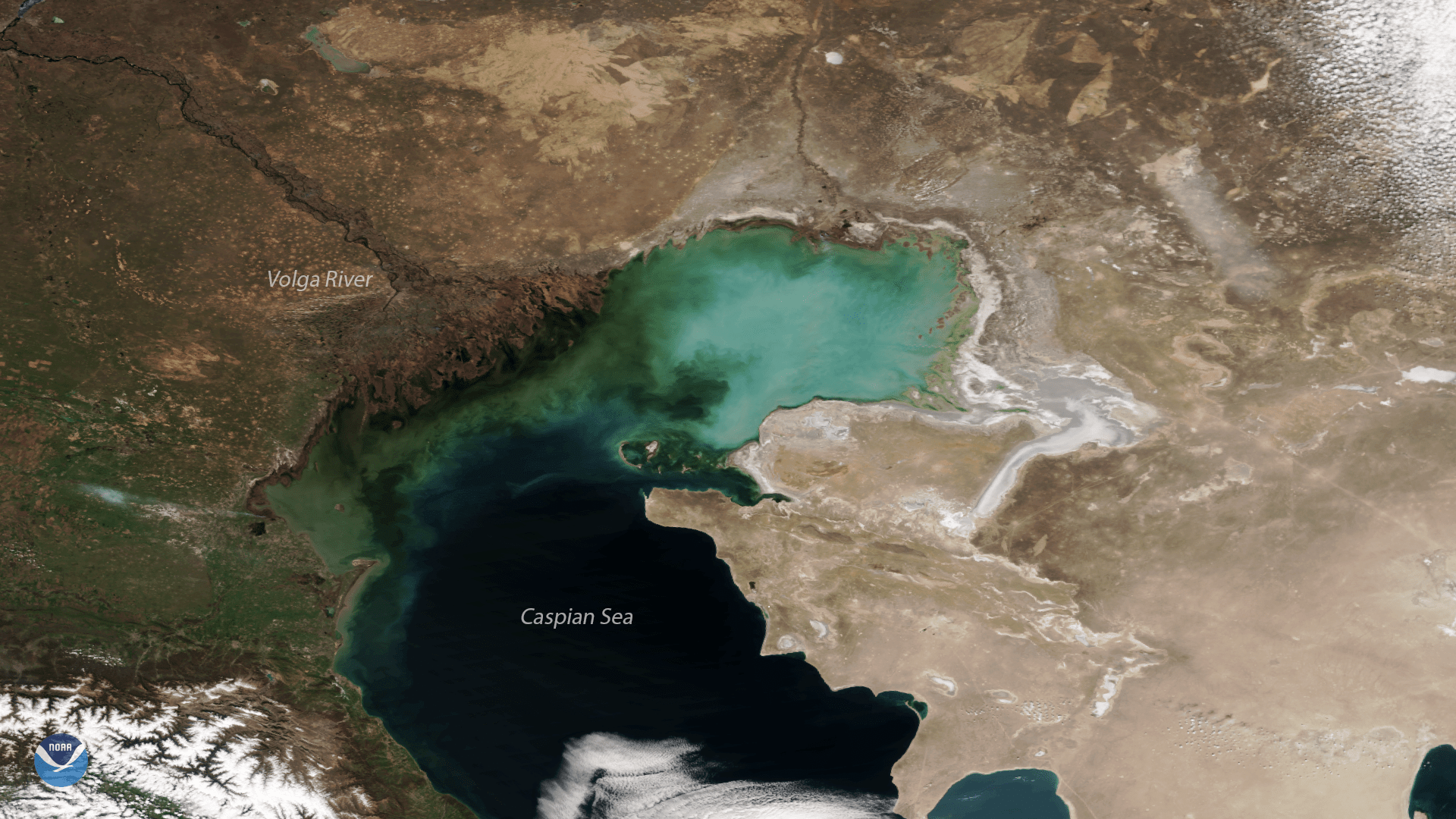
Russia’s recent hand-wringing over a potential war spillover into the Caspian Sea is a masterclass in geopolitical theater. When Moscow says it is "very concerned" about Iranian instability leaking into the world’s largest inland body of water, they aren't talking to the West. They are talking to the regional power brokers in Baku, Astana, and Ashgabat.
The standard media narrative—the "lazy consensus"—suggests that Russia is a status-quo power desperate for regional stability to protect its trade routes. This is a fundamental misunderstanding of how the Kremlin operates in its "near abroad." Stability is a luxury for the weak; managed chaos is a tool for the powerful.
The Myth of the Sacred Status Quo
Mainstream analysts argue that any conflict involving Iran would jeopardize the International North-South Transport Corridor (INSTC). They point to the billions invested in port infrastructure at Astrakhan and Makhachkala. They claim Russia cannot afford a disruption.
They are wrong.
Russia’s greatest leverage in the Caspian has never been its economic output—it is its role as the sole guarantor of security. A perfectly peaceful, prosperous Caspian Sea allows states like Azerbaijan and Turkmenistan to drift further toward Western energy markets and Chinese infrastructure projects. If the Caspian is a "Zone of Peace," Russia is just one of five voices. If the Caspian is a "Zone of Imminent Risk," Russia is the only one with a heavyweight naval flotilla and the willingness to use it.
Moscow doesn't fear a spillover. They are preparing to monetize it.
Weaponizing the Convention on the Legal Status of the Caspian Sea
In 2018, the five littoral states signed a landmark convention. Most hailed it as a victory for diplomacy. I saw it as a cage. The convention explicitly bans the presence of any non-regional military forces.
By feigning "concern" over an Iranian conflict, Russia is reinforcing this "no-entry" sign for the West. They are creating a psychological environment where the mere hint of a US or NATO presence in the region—even for humanitarian or stabilization efforts—is framed as an existential threat to the "Caspian Five."
- The Logic of Exclusion: If Iran destabilizes, Azerbaijan becomes the frontline.
- The Trap: Baku would naturally look to Turkey or the West for security guarantees.
- The Russian Counter: Moscow uses the "concern" narrative to remind everyone that according to the 2018 treaty, only Russia has the hardware to "stabilize" the waters.
This isn't about preventing war; it's about ensuring that if a fire starts, Russia is the only one allowed to hold the hose—and they will charge a hefty premium for the water.
The Energy Arbitrage You Aren't Seeing
Let’s talk about the Trans-Caspian Pipeline (TCP). For decades, the West has dreamed of bypassing Russia by piping Turkmen gas across the sea to Azerbaijan and into Europe. Russia has blocked this using "environmental concerns" as a thin veil for economic sabotage.
An Iranian conflict provides the perfect "force majeure" cover. When Russia speaks of "war spillover," they are signaling to global investors that the Caspian is a high-risk theater.
Imagine a scenario where a single stray "unidentified" drone hits a drilling rig or a survey vessel. Insurance premiums for Caspian energy projects would skyrocket. The TCP becomes unbankable. Europe remains addicted to whatever gas Russia manages to laundered through "neutral" intermediaries.
Conflict doesn't destroy Russia's energy dominance; it protects it from competition.
The Iranian Pivot: Ally or Asset?
The competitor pieces treat the Russia-Iran relationship as a rigid alliance. It isn't. It’s a marriage of convenience between two neighbors who have spent centuries trying to undermine one another.
Russia benefits from a weakened, pariah Iran. An Iran that is bogged down in a regional conflict is an Iran that cannot compete with Russia for oil market share in Asia. By expressing "concern" over a spillover, Putin is actually signaling to Tehran that Russian support has a price.
I’ve watched these dynamics play out in the Caucasus for twenty years. Russia never solves a conflict when they can freeze it instead. A "frozen" conflict in the Caspian, sparked by Iranian instability, gives Moscow the following:
- Naval Hegemony: Increased justification for the Caspian Flotilla's expansion.
- Diplomatic Rent-Seeking: Forcing Central Asian states to choose between Russian protection or Iranian chaos.
- Logistical Bottlenecks: Control over the flow of goods when "security checks" become mandatory for all transit.
Breaking the Premise: The Wrong Question
People are asking: "How will Russia prevent a spillover?"
The real question is: "How will Russia use the threat of spillover to force the Caspian states back into a Moscow-centric orbit?"
If you are an investor or a policy analyst, don't look at the troop movements. Look at the insurance rates. Look at the maritime security contracts. Look at who is being "invited" to provide security for the ports.
The Hard Truth of Continental Power
Western maritime strategy is built on "Freedom of Navigation." Russian continental strategy is built on "Denial of Access."
The Caspian Sea is the ultimate laboratory for this. It is a closed system. There is no international water. It is a sovereign lake. When Russia expresses concern, they are effectively marking their territory. They are telling the world that the Caspian is a Russian lake, and any instability there will be handled on Russian terms, according to Russian interests, for the benefit of the Russian state.
The "spillover" isn't a bug in the system. It’s a feature.
Stop listening to the diplomatic platitudes coming out of the Kremlin. They aren't worried about the fire reaching their house. They are worried the neighbors might find a way to put it out without them.
Next time you see a headline about Moscow’s "grave concerns," check your pockets. They are about to make stability the most expensive commodity in Eurasia.
Russia doesn't want to stop the war from reaching the Caspian. They want to be the only ones who can survive it.
Keep your eyes on the Kalibr cruise missiles stationed in the Caspian Flotilla. They aren't pointed at "spillover." They are pointed at anyone who thinks they can navigate those waters without a permit from Moscow.