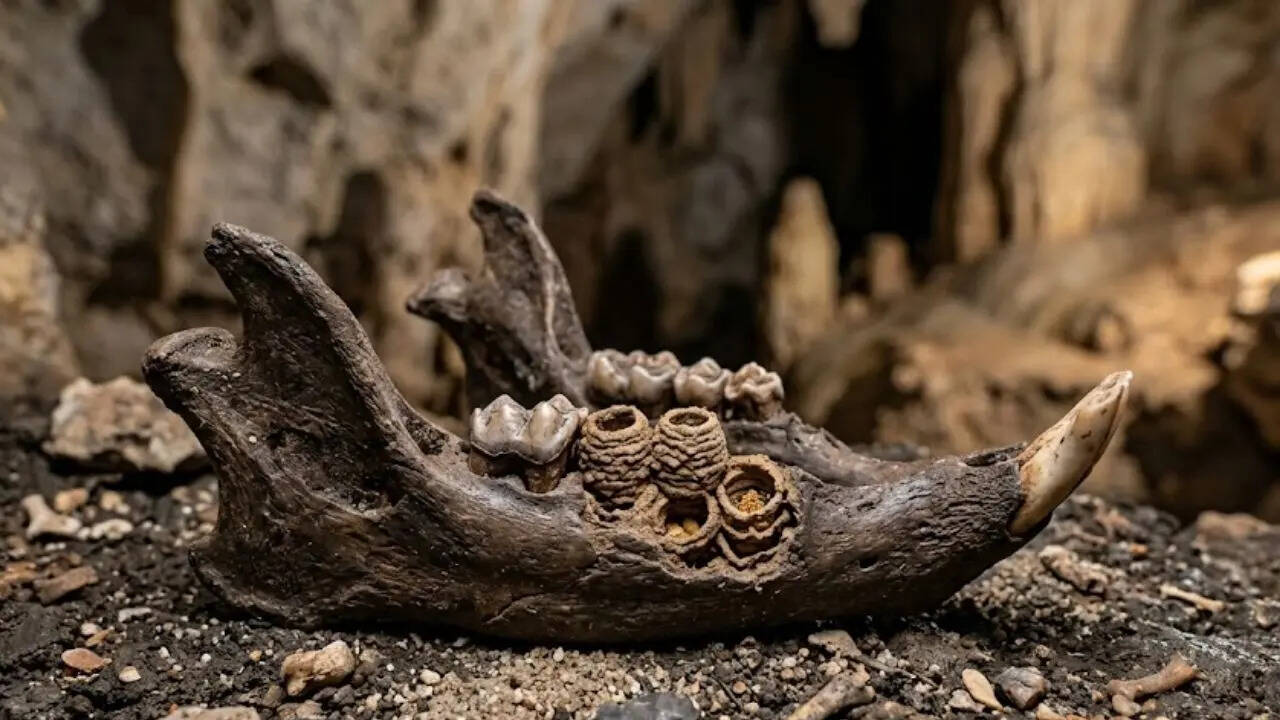
Archaeologists scouring the limestone caves of the Caribbean recently hit a wall that wasn't made of stone. For decades, the presence of specific rodent remains—specifically the teeth of the now-extinct giant hutia—was used as a definitive marker for human habitation. The logic was simple. If you find teeth in a cave, humans brought the animal there to eat it. However, a groundbreaking discovery of fossilized nesting sites has completely upended this timeline, proving these rodents weren't just prey brought in by early settlers, but long-term residents that occupied these spaces for millennia before the first human footprint touched the sand.
This shift in perspective is more than an academic spat over bones. It rewrites the ecological history of the Antilles and forces a massive recalibration of when humans actually arrived in the region. By misidentifying natural animal dens as human refuse piles, we have likely been overestimating human impact on early Caribbean biodiversity while simultaneously underestimating the complexity of the islands' original inhabitants.
The Myth of the Universal Midden
For a century, the "midden" has been the gold standard for Caribbean archaeology. A midden is essentially an ancient trash heap. When researchers found clusters of bones from Amblyrhiza inundata—a rodent that could grow to the size of an American black bear—they immediately labeled the site a kitchen. They assumed the "giant slow-moving meatloaf" was a primary food source for arriving nomadic groups.
The problem with this assumption is its human-centric bias. We looked at a pile of bones and saw a menu. New stratigraphic analysis shows these bone clusters aren't scattered haphazardly like campfire remains. Instead, they are organized in distinct, layered patterns consistent with communal nesting. These rodents weren't being eaten; they were living, breeding, and dying in these caves for generations.
Evidence Hidden in the Dirt
The breakthrough came when a team of researchers decided to look past the teeth. While teeth are hard and survive well, they don't tell the whole story. By analyzing the surrounding sediment, the team found high concentrations of calcium phosphate and specific organic markers that only occur in stable, long-term animal nesting sites.
If humans had been the ones depositing these bones, the soil chemistry would look different. We would see charcoal from fires, stone tool flakes, and a "patchy" distribution of remains consistent with seasonal hunting camps. Instead, the data shows a steady, uninterrupted accumulation of biological material spanning thousands of years. This confirms that these "miniature" mammoths of the Caribbean were the undisputed masters of the cave systems long before the first canoes arrived from the Orinoco Delta.
Why This Matters for Conservation Today
The implications of this discovery ripple out into modern environmental policy. We often talk about "pristine" environments as those untouched by humans. If these rodents were shaping the Caribbean landscape for five million years, our definition of what is "natural" for these islands has to change.
The giant hutia and its smaller relatives were "ecosystem engineers." Much like modern beavers or elephants, their nesting habits and feeding patterns dictated which plants grew and which disappeared. When we look at the modern Caribbean flora, we are looking at a landscape designed by giant rodents. Understanding that these animals were not wiped out instantly by hungry humans, but rather lived alongside them—or preceded them by much longer than we thought—changes how we approach rewilding efforts.
The Problem with the Overkill Hypothesis
The "Overkill Hypothesis" suggests that humans arrived in the Americas and Caribbean and promptly ate everything large into extinction. It is a neat, tidy story that blames human greed for every lost species. But the fossil record in these Caribbean nests tells a more complicated tale.
Many of these nesting sites show the rodents survived for centuries even after humans arrived. Their eventual extinction wasn't a sudden "blitzkrieg" of hunting. It was likely a slow grind of habitat loss, competition with invasive species like dogs and rats brought by ships, and shifting climates. By categorizing every bone pile as a human dinner, we missed the nuanced decline of these species. We ignored the possibility of a long, shared history between humans and giant rodents.
Decoding the Ancient Architecture
These nests weren't just piles of straw. The fossilized remains suggest a sophisticated use of cave geography. The rodents selected specific chambers based on temperature stability and protection from predators.
In many sites, the nests are located in the "twilight zone" of the cave—far enough in to be safe, but close enough to the entrance to allow for easy foraging. The sheer volume of material indicates that these sites were used by hundreds of animals at a time. It paints a picture of a Caribbean that was noisy, crowded, and dominated by social mammals that have no modern equivalent in the region.
A New Timeline for the Antilles
If the bones in these caves aren't human-driven, then the earliest dates for human arrival in the Caribbean need to be re-examined. We have been using these fossils to "prove" humans were present as far back as 6,000 years ago in some locations. If those fossils are actually just natural nests, the actual date of human arrival might be much more recent.
This creates a massive ripple effect in the field. Grants are awarded, books are written, and museum exhibits are built around these dates. Admitting that we might have been looking at a rodent's bedroom instead of a human's kitchen is a bitter pill for many in the archaeological community to swallow. But the data doesn't lie. The chemical composition of the floor and the lack of human artifacts in these specific layers point to a long period of "rodent-only" occupation.
The Invisible Architecture of the Past
We tend to focus on the spectacular—the gold jewelry, the pottery, the stone temples. But the true history of the Caribbean is written in the dirt and the mundane remains of its original inhabitants. These rodents built a world. They dug tunnels, cleared paths through the brush, and left behind massive biological deposits that fertilized the very soil that would later support human agriculture.
The discovery of these nests reminds us that humans are often latecomers to the party. We walked into a fully functional, highly managed ecosystem and simply took over the existing infrastructure. The caves were already homes; we just changed the locks.
Archaeologists are now tasked with going back to existing collections and re-evaluating their findings. How many other "middens" are actually nests? How many "hunting tools" are just naturally fractured rocks found near animal dens? The work is tedious, but it is the only way to build an accurate map of the past. We have to stop looking for ourselves in every pile of bones and start seeing the animals for what they were: the original architects of the islands.
The Caribbean was never a blank slate. It was a bustling, active landscape shaped by giants that we are only just beginning to understand. The next time a fossil is pulled from the red earth of a Dominican cave, the first question shouldn't be "Who ate this?" but rather "Who lived here?"
The answers we find will likely continue to surprise us, proving that the history of the world is often buried much deeper than our own egos.