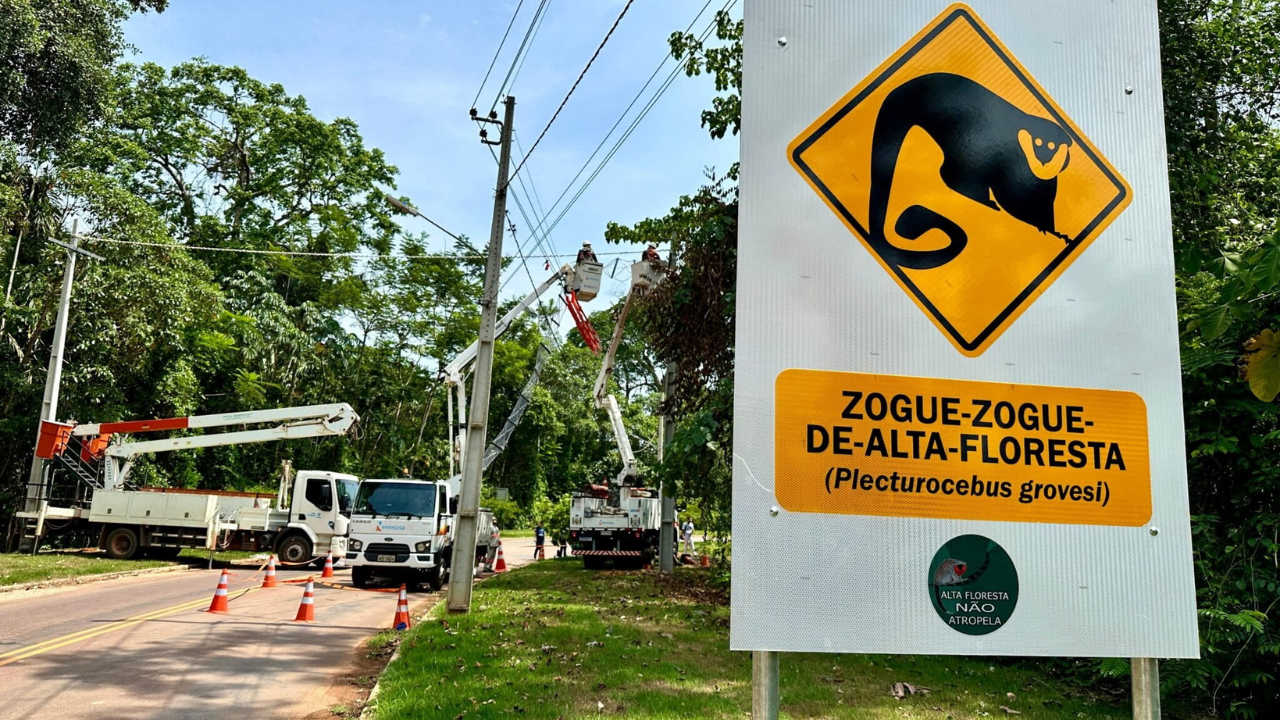
Asphalt cuts through the lungs of the Earth. When developers push highways deeper into the Brazilian rainforest, they do not just clear trees; they carve permanent fractures into ancient migratory routes. Jaguars, sloths, primates, and anteaters find themselves stranded on fatal islands of fragmented habitat. For years, the conservation community watched this carnage unfold with a sense of helpless inevitability. Roads meant death, and traffic meant slaughter.
Then came an engineering counter-offensive that actually works. Across eight Amazonian canopy rope bridges, monitoring systems logged over 15,000 wildlife crossings with a staggering metric attached: zero roadkill incidents. These structures, suspended high above the roaring tires of transport trucks and logging vehicles, prove that infrastructure and ecology can coexist without compromise. For an alternative look, read: this related article.
Yet, looking at these numbers requires a cold, investigative eye. Fifteen thousand safe passages sound like a miracle, but they represent a microscopic band-aid on a continental hemorrhage. To understand why these elevated pathways matter, we have to look past the press releases and examine the brutal mechanics of road ecology in the tropics.
The Mechanics of Fragmentation
A paved road is more than a strip of concrete. It is an impenetrable barrier for arboreal and semi-arboreal species. Animals that spend their entire lives in the upper tiers of the forest canopy refuse to touch the ground. When a two-lane highway opens beneath them, their vertical world is severed. Related analysis on this trend has been shared by BBC News.
Traditional ground-level wildlife crossings, such as underpasses and culverts, fail arboreal species completely. A howler monkey or a silky anteater will not descend to cross a subterranean concrete tunnel. They are prey the moment their feet touch the soil. Ground crossings only serve terrestrial mammals like tapirs and peccaries, leaving canopy dwellers entirely exposed.
Rope bridges bridge this literal and figurative gap. Suspended between mature trees on either side of the asphalt, these structures use heavy-duty marine-grade polymers and specialized netting to recreate the swaying stability of lianas and branches. Animals do not need to learn a new behavior; they simply recognize a highway in the air that mimics their natural environment.
Camera traps mounted on the anchor trees reveal how quickly local fauna adapt. Within weeks of installation, tamarin troops, tree porcupines, and ocelots begin utilizing the synthetic pathways. The technology is deceptively simple, relying on tension, friction, and ecological mimicry rather than heavy machinery or complex electronics.
Beyond the Numbers
Fifteen thousand crossings sounds impressive, but raw numbers can easily mask systemic failures. A critical metric missing from most corporate and governmental boasts is individual recognition. Did 15,000 different animals cross the road, or did one remarkably adventurous troop of squirrel monkeys use the same rope bridge 15,000 times?
Field biologists point out that while repeat usage demonstrates habituation and safety, true ecological restoration requires genetic exchange. If animals cross the highway to forage but return to their original fragment to breed, the population remains isolated. Inbreeding depression will still hollow out the gene pool over generations, even if every individual animal stays alive.
Furthermore, placement dictates survival. A rope bridge installed arbitrarily will sit empty for years. Engineers and biologists must map historical arboreal pathways, tracking canopy density, fruiting tree locations, and natural highway approaches before stringing a single cable. If the landing trees on either side of the road are logged next season, the bridge becomes an expensive piece of hanging trash.
The success in Brazil stems from rigorous pre-construction behavioral mapping. Researchers tracked troop movements for months before anchoring the cables. They targeted bottlenecks where the natural canopy naturally pinched close to the road corridor, minimizing the distance animals had to leap or climb onto the synthetic lines.
The Financial and Political Friction
If canopy bridges work so well, why aren't they standard issue on every tropical highway? The answer is as old as industrial development: cost and accountability.
Highway concessionaires operate on razor-thin margins and strict construction deadlines. Environmental mitigation is frequently treated as a regulatory checkbox rather than an engineering priority. Installing and maintaining aerial bridges requires specialized arborists, crane rentals, long-term monitoring equipment, and continuous liability assessments. If a poorly secured cable snaps and causes a multi-vehicle pileup on a federal highway, the legal fallout is severe.
Governments in the region often lack the enforcement mechanisms to compel private road operators to maintain these systems once the initial environmental licensing is secured. A bridge left unmonitored for five years can become choked with invasive vines, snapped by storms, or rendered invisible by fast-growing secondary vegetation.
Yet, the alternative is economically unsustainable as well. Vehicle collisions with large fauna cause catastrophic damage to transport fleets, result in human fatalities, and trigger massive public relations crises for logistics firms. When a transport truck swerves to miss a giant anteater or a tapir, the financial cost of the resulting wreck often exceeds the price tag of an entire canopy bridge network.
The Scaling Problem
Replicating these eight successful installations across the entirety of the Amazon basin is a monumental logistical challenge. The road network in the Brazilian Amazon spans tens of thousands of kilometers, cutting through indigenous territories, national parks, and unprotected frontier zones where illegal logging outpaces federal oversight.
Targeting high-mortality hotspots remains the only viable strategy. Conservation groups are currently developing predictive models using machine learning to analyze satellite imagery, traffic density data, and historical roadkill reporting. By cross-referencing these variables, researchers can pinpoint exactly where wildlife-vehicle collisions are statistically most likely to occur.
Yet data collection in the deep interior is notoriously porous. Thousands of animal strikes go unreported every year, particularly smaller birds, reptiles, and nocturnal mammals whose bodies are scavenged within hours. If the baseline data is flawed, the mitigation strategy built upon it will misfire.
The success of these eight bridges proves that we know how to stop the bleeding on specific stretches of asphalt. The technology is proven, the animals adapt readily, and the fatality rates drop to absolute zero.
The true test is not whether the ropes can hold the weight of a monkey or a sloth. It is whether political and corporate will can stretch far enough to cover the rest of the forest. Every kilometer of unmitigated highway remains a silent trap, waiting for the next migration season to claim its toll in blood and bone.