Canada has everything. It sits on the third-largest oil reserves on the planet. It’s got enough natural gas to heat half the world and more coastline than any other nation. Yet, every time global energy prices spike, we hear the same tired slogan about Canada becoming an "energy superpower." It’s a dream that feels more like a mirage the closer we get to it. While nations in the Middle East and even the United States capitalised on the recent price surges, Canada’s energy sector remains tangled in its own feet.
If you think this is just about lack of resources, you’re wrong. It's about a fundamental disconnect between what the world needs and what Canadian policy allows. The global market is screaming for stable, democratic energy. Europe wants to stop buying from autocrats. Asia wants to transition away from coal. Canada should be the first choice. Instead, we’re a country that builds pipelines at a snail’s pace and debates itself into circles while the window of opportunity slams shut.
The oil sands reality check
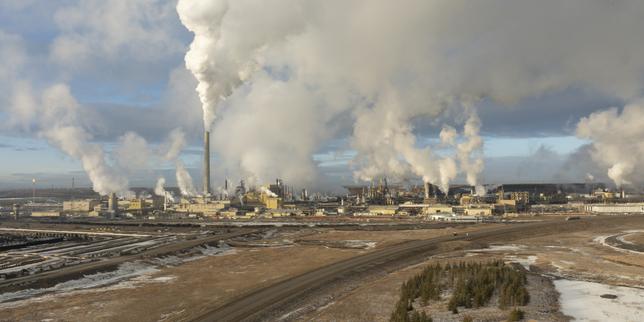
The heart of the Canadian energy dream lies in the Athabasca oil sands. It’s a massive operation. We’re talking about 160 billion barrels of proven reserves. But here’s the kicker. Extracting that oil is expensive and carbon-intensive. When oil prices are low, the math doesn't work. When prices are high, like we’ve seen recently, the profits are enormous. Suncor, CNRL, and Imperial Oil have seen record cash flows.
But where is that money going? It isn't going into massive new production projects. Investors are wary. They’ve seen projects like the Northern Gateway and Energy East die on the vine. Instead of "superpower" expansion, companies are paying down debt and giving dividends back to shareholders. They’re playing it safe because they don't trust the regulatory environment to stay stable for the twenty years it takes to recoup a multi-billion-dollar investment. You can’t be a superpower if your own industry is too scared to build anything new.
The natural gas miss
Liquefied Natural Gas (LNG) is where Canada really dropped the ball. When the war in Ukraine started, Germany came knocking. They needed gas. They needed it fast. Canada’s response was basically a polite shrug. We have zero operational LNG export terminals on the East Coast. We have one major project, LNG Canada, nearing completion on the West Coast, but it’s been a decade in the making.
Compare this to the Gulf Coast in the U.S. They built export capacity at a staggering rate. They’re now the world’s largest LNG exporter. Canada has the same gas, often at a lower cost of production, but we have no way to get it to the people who want to pay top dollar for it. We’re stuck selling almost all our exports to the U.S. at a discount. It’s a captive market. We’re essentially subsidizing American energy security while our own potential sits underground.
Environmental tension and the carbon trap
You can’t talk about Canadian energy without talking about the "cap." The federal government wants to cap emissions from the oil and gas sector. On paper, it sounds like a noble environmental goal. In practice, it’s a production cap. The industry argues that if you cap emissions too aggressively before the technology—like Carbon Capture and Storage (CCS)—is fully ready, you just end up cutting production.
The Pathways Alliance, a group of the six largest oil sands companies, has proposed a massive $16 billion CCS project. It’s supposed to be the bedrock of Canada’s "green" energy future. But the bickering over who pays for it—taxpayers or the companies—has dragged on for years. While we argue about tax credits, other countries are moving forward. We want to be the cleanest energy producer, but we’re making it so difficult to produce at all that the "superpower" title stays out of reach.
The infrastructure bottleneck
The Trans Mountain Expansion (TMX) is a perfect example of the Canadian struggle. The government had to buy the pipeline just to make sure it actually got built after Kinder Morgan walked away. It cost billions more than expected. It faced years of legal challenges and protests. It’s finally moving oil, but the drama surrounding it sent a clear message to global investors: building infrastructure in Canada is a nightmare.
It's not just oil. If we want to be a "clean" energy superpower, we need to export hydrogen, ammonia, and critical minerals for EV batteries. All of that requires rails, ports, and pipes. Our regulatory process, specifically Bill C-69, often called the "no-more-pipelines bill" by its critics, has made the path to approval longer and more uncertain. You can’t lead the world when your permit process takes a decade.
Breaking the superpower myth
Being a superpower isn't just about having the stuff in the ground. It’s about the ability to project power through trade. Right now, Canada is an energy giant with its hands tied behind its back. We have the ethics. We have the technology. We have the workforce. What we lack is a unified national will.
Western Canada and Ottawa have been at odds for so long that energy policy has become a partisan weapon rather than a national strategy. Alberta wants to pump; Ottawa wants to pivot. This internal friction is the biggest barrier to the "dream." While we fight over jurisdiction, the global energy transition is happening. Demand for oil might peak in the next decade or two. If we don't fix our export issues now, we’ll be left with "stranded assets" and a lot of missed paychecks.
To actually change the narrative, Canada needs to stop treating energy as a regional embarrassment and start treating it as a strategic asset. That means:
- Streamlining the Impact Assessment Act to give projects a "yes" or "no" in three years, not ten.
- Finalizing the Carbon Capture tax credits so the Pathways Alliance can actually start digging.
- Building more than one LNG terminal on the West Coast to reach Asian markets.
- Establishing "energy corridors" that pre-approve routes for pipelines and transmission lines to avoid constant legal battles.
The window to use our oil and gas wealth to fund the transition to a greener economy is closing. If we keep dreaming without doing, the "superpower" label will remain nothing more than a campaign slogan. Check the current regulatory filings for major projects in your province. See how many are actually moving versus how many are stuck in "consultation" hell. That’s the real barometer of Canada’s energy future.