Mainstream foreign policy analysts have a predictable coping mechanism when world events break their neat little spreadsheets. They call them "footnotes."
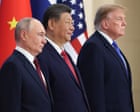
Look at the prevailing media consensus surrounding the trilateral summit between Xi Jinping, Donald Trump, and Vladimir Putin. The pundit class took one look at the lack of a 400-page signed treaty, checked their watch, and declared the whole thing political theater. A photo op. A footnote in history.
They are dead wrong. And that exact brand of lazy, bureaucratic myopia is why Western strategists keep getting blindsided by realities they refused to see forming right in front of them.
If you measure geopolitical power by the number of sub-committees formed or the length of a joint communiqué, you are still fighting the Cold War with a slide rule. In high-stakes statecraft, the absence of public paperwork is not proof of failure. Often, it is proof that the real deals were too sensitive to put on a press release.
The Bureaucratic Delusion of Modern Punditry
For decades, Washington’s foreign policy establishment—often called the Blob—has operated on a rigid set of institutional assumptions. To them, diplomacy only counts if it follows the post-1945 multilateral playbook. They want working groups. They want ratified accords. They want predictable, incremental concessions vetted by three layers of deputy assistant secretaries.
When Trump, Xi, and Putin sit in the same room without a pre-baked multilateral framework, the establishment panics. Since they cannot categorize the meeting using their standard diplomatic taxonomy, they dismiss it as inconsequential.
I have spent twenty years watching institutional analysts make this exact mistake in sovereign risk assessment and geopolitical forecasting. I have seen multinational boards blow hundreds of millions of dollars on emerging market expansions because their advisors dismissed informal leadership handshakes as "non-binding noise." Those boards waited for the official regulatory white paper. By the time the paper was published, the local strongmen had already carved up the market behind closed doors.
Great power politics does not run on municipal zoning rules. It runs on
When three leaders who hold near-absolute executive leverage over their respective nations' nuclear arsenals, energy supplies, and trade routes meet face-to-face, nothing about it is a footnote. The meeting itself is the message. It signals a structural shift away from rule-based multilateralism toward direct, transactional
Why the "Nothing Happened" Narrative Fails Basic Logic
Let’s dismantle the competitor's core premise. The argument that the summit was a footnote rests on three pillars:
- No binding arms control treaties were signed.
- No immediate ceasefire or territorial resolution was announced.
- Each leader walked away spinning a different narrative to their domestic audience.
Look closely at those three points. Every single one of them is a feature of transactional diplomacy, not a bug.
First, binding treaties are dying across the globe because legislative ratification is nearly impossible in polarized democracies and irrelevant in autocracies. In the modern era, executive understandings—quiet agreements on red lines, sanction carve-outs, and deconfliction zones—carry far more immediate weight than a treaty sitting unratified in a Senate committee for ten years.
Second, major geopolitical resets rarely happen on camera. Think back to the history the pundits claim to know so well. When Henry Kissinger flew to Beijing in 1971, the immediate public output was a vague, two-paragraph announcement. Analysts at the time questioned whether anything substantive had occurred. Yet that brief, unscripted opening altered the global balance of power for half a century.
Third, the fact that Trump, Xi, and Putin each told their domestic audiences a different story is the ultimate proof of a successful transactional summit. In classic diplomatic theory—specifically Robert Putnam’s
What Was Actually on the Table
To understand why this summit matters, you have to stop looking at the podium and start looking at the leverage points each man brought into the room. None of these three leaders wastes travel time on vanity projects when domestic pressures are mounting.
1. The Energy and Currency Chessboard
Putin’s primary currency is no longer just hydrocarbons; it is geopolitical disruption and raw commodities priced outside the Western financial architecture. Xi holds the manufacturing base and the consumer market that keeps the Russian economy breathing, yet Beijing faces severe domestic headwinds and cannot afford a total rupture with Western export markets. Trump holds the keys to the U.S. dollar system, tariff walls, and energy dominance.
When these three sit together, they are not discussing abstract democratic values. They are pricing risk. They are testing the boundaries of secondary sanctions, Arctic shipping lanes, and global energy supply chains. Even a tacit understanding to avoid triggering an accidental escalation in a major maritime chokepoint changes the calculus for global shipping insurers and sovereign wealth funds overnight.
2. The Illusion of the "Axis"
Western commentators love to lump Moscow and Beijing together as an unbreakable bloc. That is lazy analysis. Russia and China have centuries of border friction, competing interests in Central Asia, and fundamentally different economic needs. China wants stability to sell goods; Russia thrives on chaos to drive up commodity prices.
By stepping directly into a trilateral setting, Trump disrupted the bilateral echo chamber between Xi and Putin. You do not break up a tightening partnership by lecturing both parties from across an ocean. You break it up by inserting yourself into the room and reminding both sides that they have competing options. Putting Xi and Putin in a position where they have to manage each other's reactions in front of an unpredictable American president introduces immediate friction into their "no limits" partnership.
3. Nuclear Deconfliction in a Post-Treaty World
With traditional arms control frameworks crumbling, the risk of miscalculation between the world's three largest nuclear powers is higher than it has been since the early 1980s. Hypersonic delivery systems, space-based assets, and cyber warfare have compressed decision-making timelines from hours to minutes.
You cannot solve that with a 200-page verification protocol in Geneva anymore; the technology moves too fast. Direct, leader-to-leader communication establishing personal accountability and clear red lines is the only circuit breaker left. Dismissing a direct conversation between the three men who control those launch codes as a "footnote" is an exercise in breathtaking arrogance.
Answering the Questions Analysts Are Too Afraid to Ask
When readers search for the fallout of this summit, they are usually fed sanitized talking points. Let’s strip away the diplomatic jargon and answer the real questions driving the debate.
Did Trump "give away" leverage just by showing up?
This is the oldest fallacy in Washington. The idea that talking to adversaries is a "concession" only makes sense if you believe your own leadership is too weak to hold the line in a room. Great powers do not lose leverage by communicating; they lose leverage when they allow their adversaries to monopolize the diplomatic channel. Refusing to talk is not a strategy. It is an abdication of statecraft.
Does this mean the end of traditional American alliances?
It means the end of free-riding. Allies in Europe and the Indo-Pacific have spent decades assuming Washington would absorb infinite security costs while they underinvested in their own defense. A trilateral summit signals to every capital from Brussels to Tokyo that the United States will prioritize its core national interests directly with other major powers. Smart allies will use this wake-up call to build real deterrence. Weak allies will complain about diplomatic etiquette.
Who actually "won" the summit?
Nobody won, and everybody bought time. In geopolitics, time is the most expensive asset on the board. Putin bought breathing room from total economic isolation. Xi bought a temporary buffer against escalating trade friction while dealing with domestic economic restructuring. Trump bought leverage over both men while signaling to voters and markets that he can manage great-power competition without sleepwalking into a multi-front war.
The Downside of Personalist Statecraft
Let’s be brutally honest about the risks here, because pretending this approach has no flaws is just as dishonest as calling it a footnote.
Personalist diplomacy—where massive geopolitical weight rests on the direct rapport and transactional instincts of three individual leaders—is inherently fragile. When agreements are built on personal understandings rather than codified institutional treaties, they carry an expiration date.
If one leader faces a sudden domestic crisis, loses power, or simply decides the math has changed, those unwritten understandings evaporate instantly. There is no bureaucratic ballast to keep the ship steady when the captain changes course. Furthermore, bypassing traditional diplomatic channels creates massive blind spots. Without technical experts vetting the fine print, two leaders can walk out of the same room with completely opposite interpretations of what they just agreed to—a misunderstanding that can trigger a crisis six months down the line.
That fragility is precisely why the summit is so consequential. We have entered an era where global stability is no longer underwritten by slow-moving institutions, but by high-wire acts between individual strongmen and transactional executives.
How to Read Geopolitics Without Getting Played
If you are an investor, a business leader, or simply someone trying to understand where the world is actually heading, stop reading commentary that grades summits like high school debate tournaments.
Apply three rules to filter out the noise:
- Watch capital flows, not press conferences. If sovereign wealth funds, defense contractors, and commodities traders shift their positions in the weeks following a summit, something real happened in that room—regardless of what the pundits say.
- Track what doesn't happen. In transactional diplomacy, the biggest concessions are negative actions. A canceled military drill, a delayed tariff, a sudden quiet spell in cyber intrusions, or a stalled sanctions package tells you far more than a joint statement ever will.
- Ignore moralizing commentary. Analysts who evaluate foreign policy based on whether a meeting "validated" an adversary are doing public relations, not strategic analysis. Power respects power, and survival requires engagement.
History rarely announces its turning points with a brass band and a neatly bound treaty. More often, a new era begins quietly, behind closed doors, while the experts outside are busy writing it off as nothing at all.