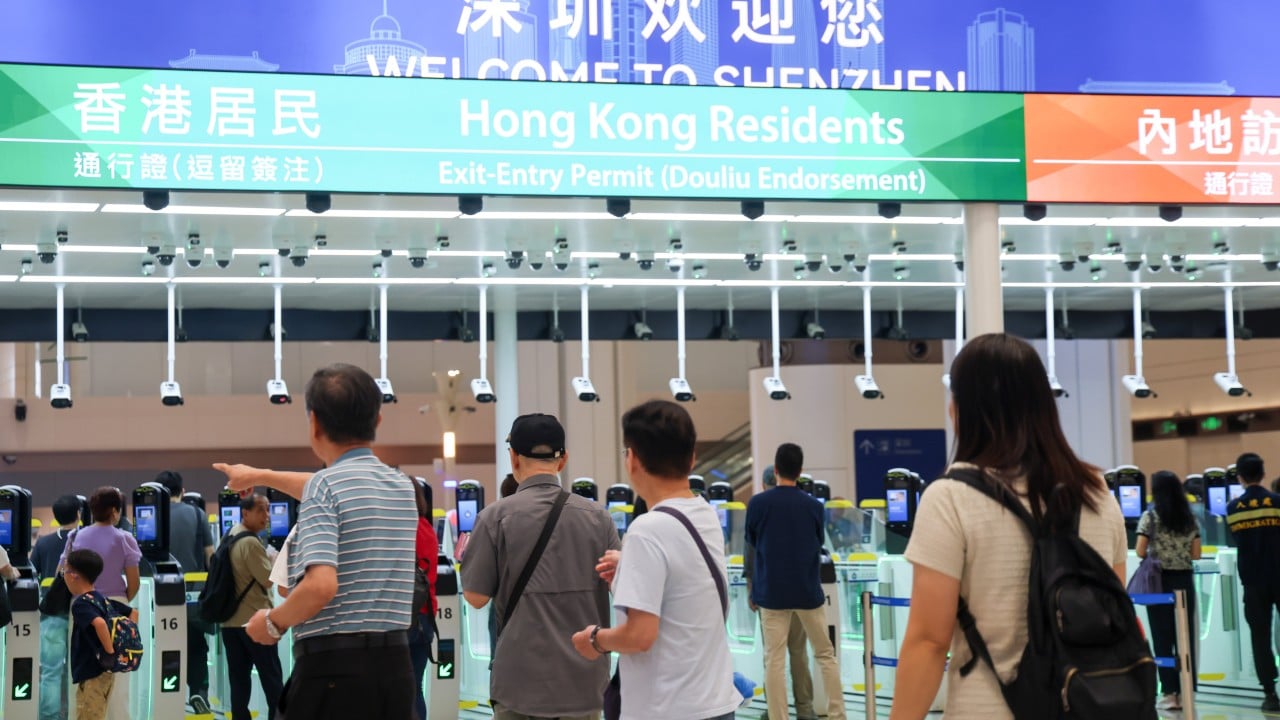
A quiet border crossing before a holiday surge is not a failure. It is Tuesday.
Stop treating an empty concourse on a random weekday as a verdict on a mega-checkpoint. Every time a new transit hub opens or enters a transitional phase, travel reporters walk through a calm hall, snap a photo of a sparse queue, and file a story about eerie calm ahead of the rush. Lazy consensus loves a neat contrast. Quiet now versus chaos later. If you found value in this piece, you should check out: this related article.
That framing gets border economics backward. Infrastructure is built for peak load, not average Tuesday afternoon mood lighting. When a crossing like Huanggang Port sits calm before a holiday peak, it usually means one of three things: travelers are timing their crossings around peak bottlenecks, feeder transit and commercial habits are still adjusting, or surge capacity is doing its exact job by absorbing volume without turning into a sardine tin.
What Calm at a Border Actually Means
Travelers and pundits confuse throughput with foot traffic. Throughput is how many people and vehicles a facility can process per hour without choking. Foot traffic is just bodies in a room. A crowded hall with sluggish immigration lanes looks busy on camera, yet it moves fewer people per hour than a wide, fast hall with minimal dwell time. For another angle on this development, see the latest coverage from National Geographic Travel.
In transport planning, peak-hour demand dictates design standards. Airports, bridges, and border checkpoints are sized for holiday spikes, shift changes, and weekend waves, not quiet mid-week lulls. Calling a facility quiet before a rush because it is not overflowing today is like calling a fire sprinkler system useless because the office is not on fire at 2 p.m.
I have watched logistics operators and retail chains blow serious money misreading early lull periods at major crossings. They see light queues during off-peak windows and assume demand is weak, so they under-staff counters, delay shuttle partnerships, or cut regional inventory. Then Friday afternoon or a public holiday hits, volumes stack up across a narrow window, and their lean setup buckles.
On the flip side, I have seen teams over-correct in the opposite direction—hiring excess support staff and staging extra stock weeks before a holiday wave, only to watch payroll and holding costs bleed margins while crossings stay smooth until the actual travel window opens.
Why Holiday Cross-Border Rushes Behave Differently
People ask the wrong question when they look at a calm crossing before a holiday. They ask, "Why is it so quiet right now?" The sharper question is, "When does the actual surge compress into the calendar, and which direction moves first?"
Cross-border holiday travel between Hong Kong and mainland hubs does not arrive as a flat, polite trickle. It bunches. Outbound waves often spike right after work on the eve of a break or early on day one, while return waves bunch tightly into the final afternoon before work or school resumes. A quiet morning two days out tells you almost nothing about what happens when ten thousand people try to cross inside a three-hour window.
Common Questions People Ask Before a Holiday Crossing
- "Does a quiet port mean travelers are avoiding it?" Not necessarily. A calm hall can reflect fast processing, off-peak timing, or incomplete awareness of new layouts and transport links. Treating quietness as rejection is a classic attribution error.
- "Should I show up hours early if it looks quiet now?" Showing up way too early during a calm period wastes time in a half-empty terminal. Showing up late during a true holiday bottleneck wastes even more time in a packed queue. Timing beats guesswork every time.
- "Do quiet checkpoints stay quiet once holidays start?" Rarely across every hour of the holiday. Even well-run crossings experience spikes when rail, bus, and private car arrivals collide at the exact same time.
What Heavyweight Mobility Experts Get Right
Urban mobility researchers and transport economists—figures such as Robert Cervero on transit-oriented accessibility and Moshe Ben-Akiva on discrete choice travel behavior—have spent decades showing that travelers adapt to congestion, transfer friction, and travel-time reliability. People do not pick a crossing in a vacuum. They weigh door-to-door time, luggage hassle, last-mile connections, and predictability.
A seemingly quiet checkpoint can quietly win on dwell time and flow. If travelers clear checks quickly and connect cleanly to onward rides, they do not linger in big, photogenic crowds. Less crowding inside the hall can actually signal better spatial design or staggered arrivals rather than a ghost town.
Imagine a scenario where a new or upgraded checkpoint opens with wide halls, clearer signage, and faster automated or streamlined lanes, while older crossings nearby remain gridlocked at peak hours. On a slow day, the new hall looks underused. During a holiday surge, travelers who test it once and save forty minutes word spreads fast—and the quiet hall flips into a primary relief valve.
The Catch With Betting on Calm
Here is the honest downside to my own contrarian take: sometimes a quiet port really is just quiet.
A facility can sit calm ahead of a holiday because feeder transport feels awkward, signage confuses first-timers, nearby dining or retail options are sparse, or commuters have deep muscle memory tied to older routes. Habit is sticky. Changing how millions of people cross a border takes more than concrete and turnstiles; it takes reliable buses, clear transfers, and repeated positive trips.
If you treat every quiet crossing as a hidden efficiency miracle, you can get burned by genuine friction that keeps travelers away. The discipline is separating smooth flow from low demand. Watch dwell times, transfer links, and peak-hour bottlenecks over several holiday cycles before declaring victory or doom.
How to Play Cross-Border Holiday Travel Smarter
- Track peak windows, not mid-week lulls: Judge any crossing by how it handles Friday evenings, holiday eves, and Sunday return peaks, not a calm off-peak hour.
- Audit the transfer, not just the hall: Check how easily you get from the checkpoint exit to a taxi, bus, train, or car—bottlenecks outside the terminal often hurt more than lines inside.
- Keep a backup route in your back pocket: Never rely on a single crossing during peak holiday hours when weather, transit delays, or sudden surges can reshuffle queues in twenty minutes.
- Time your crossing off-cycle when possible: Shifting travel by two hours on either side of the main holiday wave usually beats hunting for a "secret" empty border.
A calm hall before a holiday is a snapshot of one moment, not a prophecy of the rush. Watch the peak hours, not the empty room.