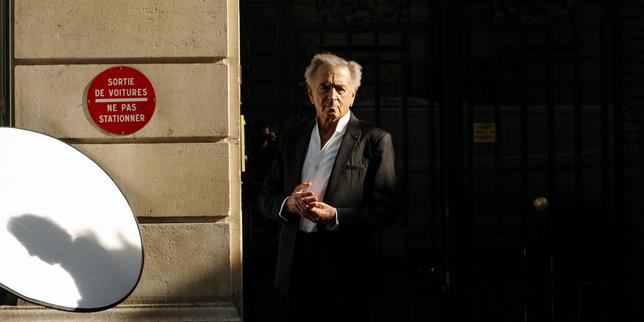
Call him an influencer diplomat. Call him a jet-setting moralist. Call him an 832-page memoirist still refusing to exit stage left at 77.
Just don't call him a diplomat.
When articles frame Bernard-Henri Lévy as an "influenceur diplomate", they repeat a convenient Parisian parlor myth: that proximity to heads of state, front-row seats at geopolitical crises, and rapid-fire op-eds amount to statecraft. They do not. A diplomat negotiates binding commitments under a mandate, carries sovereign weight, and absorbs the blowback when talks collapse. A public intellectual who flies from a television studio in Paris to a war zone or a presidential palace carries a camera, a notebook, and a well-tailored shirt.
That label is lazy shorthand. Worse, it blinds readers to the real mechanics of modern foreign policy—and to what Lévy actually is. He is not a shadow ambassador. He is a high-wattage agenda-setter and moral entrepreneur who operates in the gap between media spectacle and official power.
The "Diplomat" Myth and the Reality of Leverage
Diplomacy is measured in treaties, ceasefires, sanctions regimes, and verifiable concessions. Influence, by contrast, is measured in attention, framing, and access. Conflating the two turns serious foreign policy analysis into celebrity spotting.
Over five decades—from covering the 1971 war in Bangladesh to filming in Bosnia, Libya, Iraq, and Ukraine—Lévy has repeatedly positioned himself near consequential events and powerful leaders. Critics caricature him as a theatrical tourist of tragedy. Admirers treat his access as proof of real geopolitical clout.
Both sides miss the point. Access is not leverage. Getting a president on the phone or appearing alongside officials at a diplomatic event does not mean you wrote the policy memo or bore the strategic cost of the outcome. In international relations, real leverage requires coercive power, institutional authority, or control over material resources. Without those levers, an outsider's influence depends almost entirely on whether elected leaders find a moral narrative useful at a given moment.
Thought Experiment: Imagine a scenario where a prominent essayist convinces a Western government to back a foreign intervention, and six months later the local coalition fractures into rival militias. The essayist writes another book or op-ed arguing the West stopped too soon. The foreign ministry spends the next decade managing displaced populations, broken institutions, and domestic political fallout. Who was doing diplomacy, and who was doing commentary?
🔗 Read more: The Map Makers of Podgorica
That asymmetry explains why the "influencer diplomat" tag flatters the medium while distorting the work. An influencer optimizes for visibility and urgency. A diplomat has to live with the morning after.
Why You're Asking the Wrong Question About Public Intellectuals
Readers who search for Bernard-Henri Lévy usually ask two predictable questions: Did he really influence Western intervention? and Is he a serious thinker or a media spectacle?
Both questions set a trap.
Ask Did he influence intervention? and you either overstate a single voice inside a complex chain of intelligence assessments, alliance politics, and military calculations—or you dismiss his role entirely because he holds no cabinet portfolio. Neither answer captures how elite opinion circulates in democracies. Public intellectuals rarely single-handedly flip a national security council. Instead, they help shift the Overton window among journalists, lawmakers, and donors, making certain actions feel morally urgent rather than merely optional.
Ask Serious thinker or media spectacle? and you force a false binary. Lévy rose to prominence in the 1970s among the Nouveaux Philosophes with a sharp break from Marxist illusions, and he has published dozens of books and essays across philosophy, literature, and politics. At the same time, he has never shied away from the spotlight, television debates, or high-profile appearances. Being visible does not automatically invalidate an argument, just as being obscure does not make a writer right.
What People Also Ask—And the Brutal Answers
Does a public intellectual actually shape foreign policy?
Sometimes around the edges, rarely at the core. When a crisis is ambiguous and domestic leaders are looking for moral cover or public momentum, vocal advocates can help frame the stakes. When hard strategic interests collide—energy security, alliance credibility, troop deployments, or escalation risks—hard power and bureaucratic calculus dominate. Anyone who claims a columnist runs foreign policy is selling drama, not analysis.
Why does Bernard-Henri Lévy provoke such fierce reactions?
Because he refuses to stay in a neat lane. He writes dense philosophical prose and appears on prime-time broadcasts. He champions liberal interventionism in an era deeply skeptical of foreign wars. He moves seamlessly between literary circles, political salons, and conflict zones. People who resent the French intellectual establishment see him as its most polished caricature; supporters see a rare figure willing to argue unpopular positions in public rather than hide behind academic detachment.
Is "influencer" even an accurate word for someone active since the 1970s?
It is an anachronism dressed up as modern insight. Calling a veteran writer and filmmaker an "influencer" projects contemporary social-media mechanics backward onto a career built on print essays, books, cinema, and broadcast television. It captures the attention economy part of his public persona, yet it flattens decades of ideological combat and Cold War and post-Cold War debates into a marketing buzzword.
How to Read Geopolitical Commentators Without Getting Played
I have watched media teams, startups, and advocacy groups burn millions of dollars confusing founder visibility with market authority. They hire recognizable names, book high-status panels, and mistake applause in an echo chamber for real institutional traction. Geopolitics punishes that mistake far harder than business.
To separate signal from noise when reading any high-profile foreign policy voice, run every claim through four strict filters:
- Separate moral clarity from strategic feasibility. Identifying an injustice is step one. Explaining how a policy achieves a sustainable outcome without triggering worse violence is step two. Never treat passion as a substitute for logistics.
- Track who pays the cost. Ask who absorbs the risk if the recommended move goes sideways—local civilians, frontline soldiers, taxpayers, or the commentator moving on to the next crisis.
- Check institutional backing. Distinguish between someone speaking purely from personal conviction and someone backed by diplomatic channels, intelligence briefings, or accountable state institutions.
- Audit track records over five-year windows. Anyone can look prescient for a week. Look at how a commentator's prescriptions held up after the cameras left and the second- and third-order effects arrived.
The Blind Spot in My Own Argument
There is a real risk in pushing this critique too far. If you dismiss every non-official voice as "mere commentary," you hand a monopoly on truth to ministries, bureaucracies, and official spokespeople.
History shows how dangerous that is. Official diplomats and state institutions routinely get blinded by groupthink, sunk costs, or domestic politics. Independent reporters, writers, and witnesses sometimes spot atrocities early, challenge stale consensus, or force uncomfortable questions into public view when official channels stay quiet. Calling out the "diplomat" label should never become an excuse to ignore inconvenient arguments just because the person making them has a flair for publicity.
What Serious Observers Should Do Instead
Stop grading public intellectuals on whether they act like ambassadors. Grade them on whether their arguments survive contact with facts, incentives, and consequences.
Read the primary reporting from the ground. Compare rival analysts with opposing blind spots. Demand concrete mechanisms whenever someone calls for action. And keep your eyes on the people who actually hold the levers of power—because the man on the stage is rarely the one signing the order.