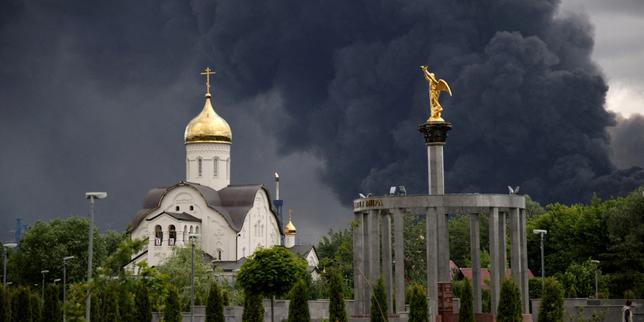
Power grids do not negotiate. They operate on frequency, voltage, and the relentless physics of supply and demand. When a missile hits a transformer substation in Kharkiv or a combined heat and power plant in Kyiv, the resulting darkness is absolute, indifferent to diplomatic signals or provisional ceasefires. Kyiv's calculus regarding a potential pause in long-range drone and missile strikes against Russian energy infrastructure hinges entirely on a reciprocal guarantee from the Kremlin to spare Ukraine's collapsing electrical grid from winter annihilation.
This transactional diplomacy under fire exposes a bitter reality. Both belligerents understand that an unprotected winter grid equals societal displacement on a biblical scale. Yet, trusting a mutual moratorium on strategic bombardment ignores a decade of broken Minsk protocols and violated memorandums.
The Winter Threshold and the Cost of Thermal Collapse
Energy warfare in Eastern Europe has evolved from a tactical sideshow into the primary axis of strategic attrition. Moscow spent the previous years methodically mapping Ukraine's high-voltage transformer nodes, thermal generation stations, and gas storage facilities. The objective was never merely military disruption. The campaign aims to induce a freezing demographic crisis, driving millions of refugees westward while starving industrial production.
When Ukrainian long-range strikes began biting back, targeting oil refineries, fuel depots, and export terminals inside Russian territory, the economic friction finally registered in Moscow. A barrel of refined fuel delayed or destroyed represents direct revenue loss and domestic logistical strain.
Strategic infrastructure targeting is an escalation ladder with diminishing returns for both sides, yet neither capital can afford to dismount first without verifiable guarantees.
The proposal to halt reciprocal strikes on critical energy targets sounds pragmatic on paper. In practice, enforcement remains an operational nightmare. How does an intelligence directorate verify that a drone launched toward an oil storage depot in Bryansk was dispatched before or after a whispered deadline? How do you monitor high-voltage lines running through contested airspace?
Friction Points in Mutual Deterrence
Military history is littered with failed truces born of asymmetric capabilities. Ukraine relies heavily on asymmetric long-range systems, specifically domestically produced long-range loitering munitions, to equalize a disparity in heavy artillery and air defense interceptors. Pausing strikes against Russian refineries deprives Kyiv of its most effective economic leverage mechanism.
Meanwhile, Russia possesses thousands of cruise and ballistic missiles alongside Iranian-designed Shahed-type drones. A temporary halt favors the side with industrial depth and vast stockpiles unless stringent, third-party verification protocols are enforced. Without neutral observers stationed at launch sites and power facilities, any energy truce decays into a race to rearm and reposition before the next barrage.
The civilian population bears the true cost of this tactical maneuvering. Every hour spent negotiating protection for electrical substations is an hour spent shivering in unheated apartments while repair crews work under air raid sirens.
The Illusion of a Clean Break
War cannot be neatly compartmentalized. Energy grids feed railway systems, military communications, and munitions factories. Striking a power station is striking a military logistics hub, regardless of how many civilian apartments share the same circuit.
Proposing an energy moratorium acknowledges a grim stalemate. Neither side can achieve total military victory in the immediate term, and both face severe logistical constraints. But agreements forged under the barrel of an Iskander missile rarely outlive the first tactical setback on the front lines.
The cold remains the most reliable arbiter in this conflict. Until durable deterrence replaces fragile promises, the transformers will hum, the drones will fly, and the grid will remain on the front line.