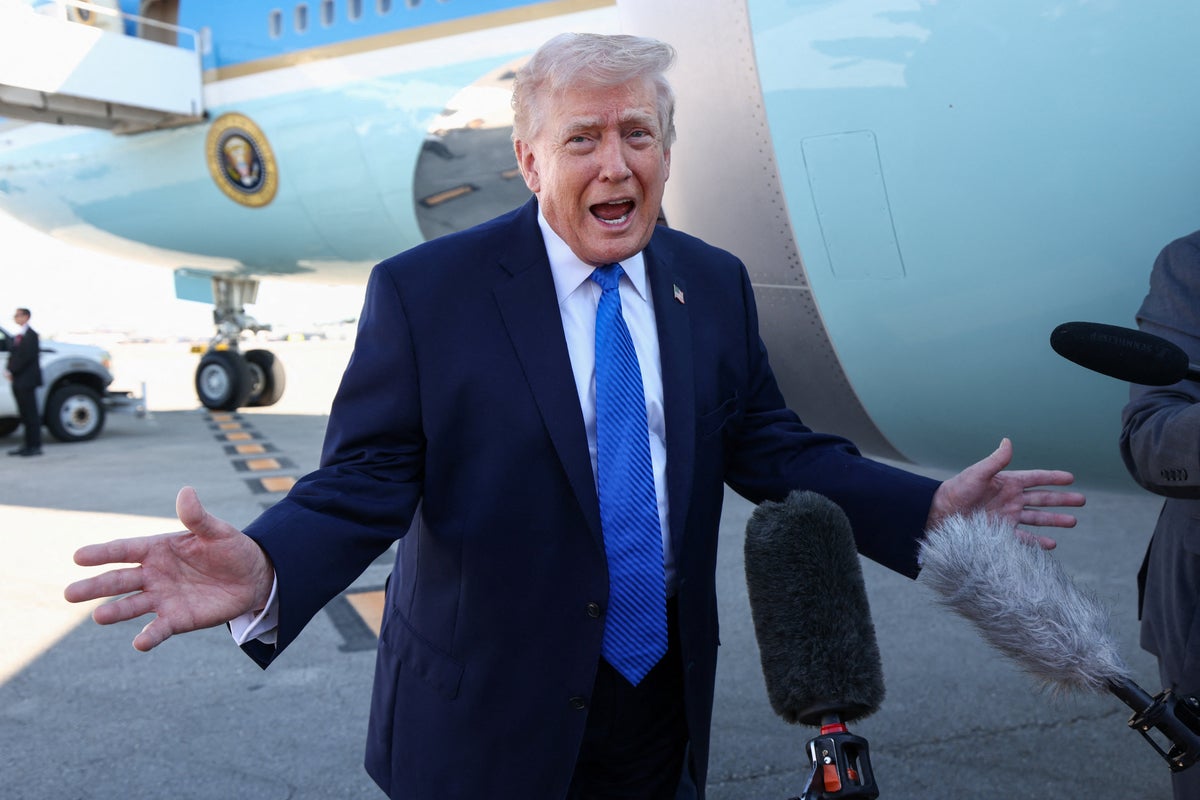
Donald Trump has scaled up his use of profanity and highly erratic tangents during his 2024 campaign rallies, a shift that conventional political analysts view as a sign of cognitive decline or a loss of discipline. That interpretation misses the operational reality of modern political communication. The escalation of explicit language and off-script monologues is not an accident; it is a deliberate strategy designed to dominate the 2024 media cycle, break through voter apathy, and project an image of unvarnished authenticity that his base contrasts directly with the scripted nature of traditional politicians.
To understand why this works, one must look past the shock value and examine the mechanics of political grievance. The modern media environment is oversaturated, and traditional campaign messaging struggles to capture sustained public attention. Trump recognizes this limitation. By integrating vulgarity and unpredictable narratives into his public appearances, he ensures that his events remain unmissable television for supporters and critics alike. For another perspective, see: this related article.
The Strategic Shift From Scripted to Unfiltered
For decades, American political campaigns operated under strict rules of decorum. Speechwriters crafted every sentence, and candidates rarely strayed from the teleprompter. Trump dismantled this framework in 2016, but his recent performances represent an even sharper break from tradition.
Political scientists who track campaign language note that the frequency of explicit words in Trump's speeches has risen significantly compared to his previous campaigns. This change coincides with a broader shift in his rally structures. A standard political speech lasts roughly 45 minutes and follows a predictable arc. Trump's current rallies frequently exceed 90 minutes, turning into expansive performance art pieces where policy announcements are buried beneath personal grievances, pop culture references, and explicit attacks on his opponents. Further analysis on this matter has been provided by The New York Times.
This is not a symptom of a campaign spiraling out of control. It is an intentional effort to maintain a permanent state of friction. Friction generates engagement. When Trump uses a vulgarity to describe a political rival or a trade policy, he is performing a calculated act of rule-breaking. For his core constituency, every broken norm is proof that he is fighting against an establishment they distrust. The vulgarity is interpreted not as a lack of manners, but as a sign of honesty.
Breaking Through the Noise Barrier
The primary challenge for any political campaign in the current era is getting noticed. Voters are bombarded with content from streaming services, social media, and 20-hour news networks. Standard policy proposals regarding tax brackets or regulatory reform do not command attention in a hyper-fragmented information ecosystem.
Trump’s tangents serve as a highly effective mechanism for hijacking the news cycle. When he spends fifteen minutes discussing a fictional character like Hannibal Lecter, windmills, or the logistics of electric boats, he creates an immediate media frenzy.
- The Media Loop: News outlets rush to report on the bizarre nature of the comments.
- The Fact-Check Cycle: Opponents spend days explaining why the claims are inaccurate.
- The Result: The entire political conversation centers on Trump’s chosen topics, starving his opponents of oxygen and coverage.
This tactic forces the opposition to play on a field he defines. While critics focus on correcting the details of his tangents, the broader message reaches his audience intact: Trump is entertaining, unpredictable, and completely unbothered by elite opinion.
The Contrast Game and the Illusion of Authenticity
Voters across the political spectrum express deep cynicism toward mainstream politicians, who are often viewed as overly managed products of focus groups and consultants. Trump leverages this cynicism by presenting himself as the exact antithesis of the polished candidate.
The Corporate Politician Versus the Reality Star
Consider the stark difference in presentation styles. A typical candidate delivers a sanitized, safe message designed to minimize risk. Trump offers a live television event where anything can happen. His use of profanity acts as a linguistic shortcut to establish a connection with working-class voters who use similar language in their daily lives. It strips away the sterile distance that usually exists between a presidential candidate and the electorate.
When he veers off-script to mock an opponent or recount a personal anecdote, it reinforces the perception that he is speaking his mind in real time, rather than delivering a pre-approved script. This gives his audience a sense of intimacy. They feel they are seeing the real person, a powerful psychological asset in an era where voters value authenticity above almost all other traits.
The Legal and Financial Pressures Driving the Escalation
It is impossible to analyze Trump's current rhetorical style without accounting for the intense personal pressure he faces. With multiple criminal indictments and massive civil judgments hanging over him, the 2024 campaign is not just a bid for power; it is an existential defense strategy.
The anger evident in his recent speeches reflects a candidate who feels cornered. This anger resonates deeply with a base that already feels alienated by economic shifts and cultural changes. By framing his personal legal battles as an attack on his voters, Trump turns his grievances into a shared mission. The profanity becomes a weapon of defiance against a judicial system he claims is weaponized against him.
This high-stakes environment has altered his risk tolerance. In previous cycles, campaign advisors could occasionally persuade him to moderate his tone to appeal to moderate suburban voters. Today, those guardrails are largely gone. Trump believes that his path to victory relies on maximizing voter turnout among his base, and nothing drives turnout like intense emotional provocation.
The Risks of Rhetorical Exhaustion
While this strategy delivers undeniable benefits in terms of media dominance and base mobilization, it carries substantial risks that could jeopardize his electoral chances. The most significant threat is voter fatigue.
A tactic that felt shocking and subversive in 2016 can feel repetitive and exhausting eight years later. Independent and moderate voters who are critical to winning swing states may find the constant barrage of profanity and disjointed narratives alienating. Instead of seeing a strong leader challenging the system, they may see a chaotic figure incapable of focusing on the country’s pressing problems.
Furthermore, this style makes it difficult for the campaign to execute a coherent policy message. When Trump spends the majority of a speech airing personal grievances, his positions on the economy, immigration, and foreign policy get pushed to the margins. This leaves a vacuum that his opponents can fill with their own narratives.
The reliance on unstructured, lengthy performances also increases the likelihood of genuine gaffes that cannot be easily spun as deliberate strategy. Confusing names, misstating basic facts, or delivering incoherent sentences can alienate swing voters who are looking for stability and competence in the executive office.
The Transformation of Political Discourse
Trump’s rhetorical choices are fundamentally altering the broader landscape of American political communication. The boundary between entertainment and politics has dissolved entirely. Future candidates from both parties will look at the success of this approach and adapt it for their own purposes.
We are already seeing down-ballot candidates adopt a more aggressive, unpolished style in an effort to replicate Trump's success. The standard for what is considered acceptable public discourse has shifted permanently. This is not merely a reflection of one man's personality; it is a structural evolution in how political power is sought and maintained in a media-saturated society where attention is the ultimate currency.
The true test of this strategy will not be found in the commentary of shocked pundits or the fact-checks of mainstream media outlets. It will be determined by whether this raw, chaotic style can still compel millions of voters to turn out on election day, or if the spectacle has finally pushed past the point of diminishing returns. The campaign is betting everything on the idea that in a world of manufactured political figures, the loudest, most unfiltered voice will always win the crowd.