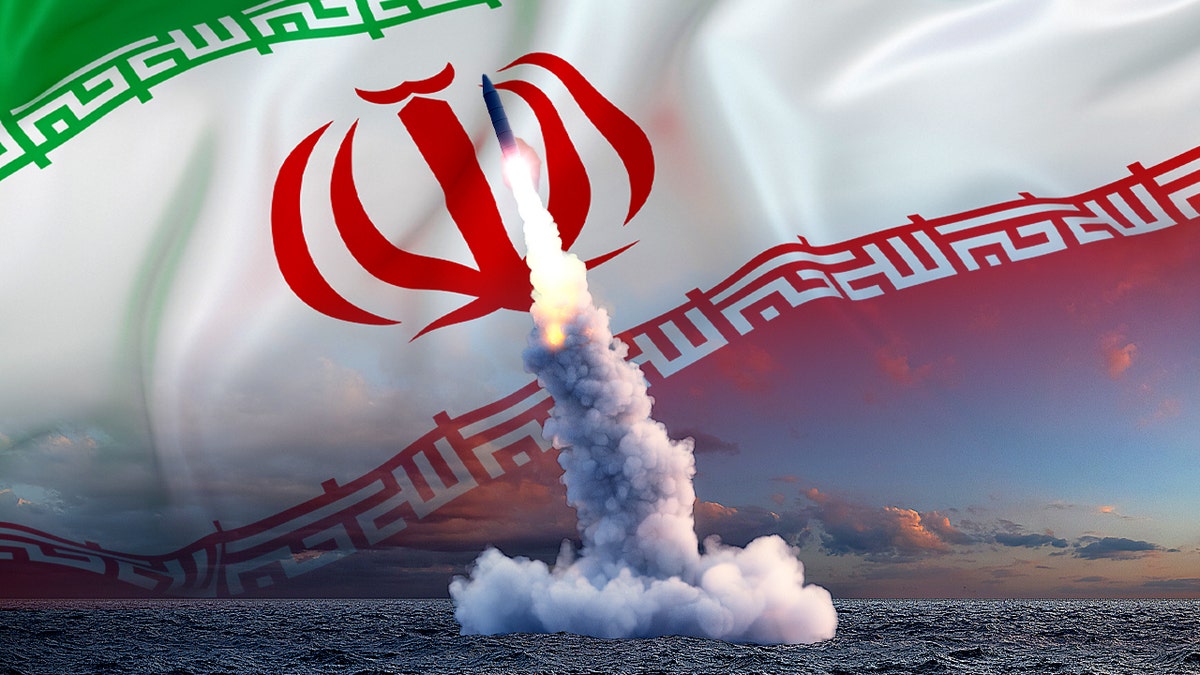
The pundits love a good "quagmire" narrative. It’s the safe, comfortable bet for any analyst who wants to look serious without actually doing the math. When the media dissected the Trump administration’s stance on Iran, they defaulted to a tired script: Iran is a mountainous fortress, its proxies are everywhere, and any conflict would inevitably spiral into a repeat of the Iraq War.
They are wrong. Not because war is easy, but because they are measuring the wrong metrics. If you liked this article, you might want to read: this related article.
The "cakewalk" debate is built on a fundamental misunderstanding of modern kinetic reality. Critics argue that Iran’s geography and "asymmetric capabilities" make it an untouchable hegemon in the Middle East. This ignores the fact that in a high-intensity conflict, the goal isn't to occupy every square inch of the Iranian plateau. It’s to break the regime's ability to project power. If you stop trying to win a 20th-century counter-insurgency and start looking at 21st-century strategic paralysis, the "impossible war" starts to look very different.
The Geography Myth: Mountains Don't Stop Missiles
The most common argument against a decisive strike on Iran is the terrain. Analysts point to the Zagros Mountains and claim that ground an invasion is "logistically impossible." For another perspective on this story, refer to the recent coverage from TIME.
Here is the truth: No one is planning a 1944-style amphibious landing on the Iranian coast to march on Tehran.
Modern warfare against a state like Iran isn't about boots on the ground; it's about the systematic dismantling of dual-use infrastructure. When you control the air and the electromagnetic spectrum, mountains are just scenic backdrops for the destruction of integrated air defense systems (IADS).
I have watched defense contractors pitch "impenetrable" systems for decades. They all have a shelf life. Iran’s S-300 batteries and domestic variants like the Bavar-373 are formidable on paper, but they rely on a centralized command structure that is vulnerable to electronic warfare and cyber-kinetic offsets. Once the "eyes" of the regime are poked out, the mountains become a prison for their remaining conventional forces, not a shield.
The Proxy Bugaboo: Fear of the "Gray Zone"
The second pillar of the "it’s too hard" argument is Iran’s network of proxies—Hezbollah, the Houthis, and various PMFs in Iraq. The conventional wisdom says that the moment a spark hits Iran, the entire Middle East goes up in flames.
This assumes these groups are mindless drones controlled by a button in Tehran. They aren't. They are rational actors with their own local interests. While they receive funding and hardware from the Islamic Revolutionary Guard Corps (IRGC), their primary goal is survival and local dominance.
If the head of the snake is being hit with devastating precision, many of these "loyal" proxies will hedge their bets. We saw a version of this after the Soleimani strike. There was a lot of noise, a few symbolic gestures, but no regional apocalypse. Why? Because Hezbollah knows that if they go all-in for a crippled patron, they lose Lebanon. The Houthis know they lose their leverage in Yemen.
The "asymmetric threat" is a deterrent only as long as you refuse to call the bluff. Once the conflict scales, the utility of a proxy decreases because they cannot defend the Iranian heartland from a standoff range of 1,000 miles.
The Strait of Hormuz: The Economic Suicide Note
"Iran will close the Strait of Hormuz and tank the global economy."
This is the favorite talking point of the "de-escalation at any cost" crowd. It’s a terrifying thought—until you realize that Iran needs the Strait open more than anyone else.
Iran’s economy is a fragile, oil-dependent machine kept on life support by illicit exports. Closing the Strait is the equivalent of a person under siege deciding to weld their own front door shut and set the house on fire. Yes, oil prices would spike. Yes, there would be global ripples. But the primary victim would be the Iranian state’s remaining revenue streams.
Furthermore, the U.S. Fifth Fleet isn't just sitting there for the scenery. The technical ability to mine the Strait exists, but the technical ability to clear those mines via autonomous underwater vehicles (UAVs) and dedicated minesweepers has surged in the last decade. A closure would be a temporary tactical headache, not a permanent strategic shift.
The Internal Collapse Variable
The biggest blind spot in conventional analysis is the Iranian people. Critics of a hardline approach claim that outside pressure "rallies the population around the flag."
This is a lazy projection of Western nationalism onto a country where the regime is increasingly viewed as an occupying force by its own youth. From the 2022 protests to the constant localized strikes, the internal friction in Iran is at an all-time high.
A conflict doesn't need to end in a "cakewalk" victory to be effective. It only needs to create enough of a power vacuum for the internal contradictions of the IRGC’s rule to shatter. When the Basij can’t get paid because the banking servers are dark and the oil terminals are smoldering, their loyalty will vanish.
The mistake is thinking we have to build a new government. We don't. We just have to stop the current one from functioning.
The Precision Revolution vs. The Numbers Game
We still talk about war as if we’re counting tanks and divisions. That’s 1990s thinking.
The real math of a conflict with Iran involves $P_{k}$ (Probability of Kill) of long-range munitions and the saturation of sensor-to-shooter loops.
$$P_{k} = 1 - (1 - p)^n$$
Where $p$ is the probability of a single munition destroying the target and $n$ is the number of munitions. When you can deliver $n=10$ with sub-meter accuracy from a platform the enemy can't even see, the "strength" of their 500,000-man army becomes irrelevant. They are just targets waiting for a coordinate.
The "cakewalk" comment was likely hubris, but the panicked reaction to it was based on an obsolete understanding of power. We are told that Iran is a regional titan that can't be touched without starting World War III. In reality, it is a hollowed-out revolutionary state that relies on the West’s fear of "instability" to maintain its shadow empire.
Stop measuring the size of the mountains and start measuring the latency of the kill chain. The difficulty isn't the terrain or the proxies—it's the lack of will to acknowledge that the "untouchable" enemy is actually a glass cannon.
The "cakewalk" wasn't a lie because it was hard; it was a lie because it suggested we'd need to walk at all. In the next era of conflict, we won't be walking. We'll be deleting.
Stop asking if we can win a war in Iran. Ask why we’ve spent twenty years pretending the regime is more stable than a house of cards in a wind tunnel.