Global health organizations are running the exact same play they used in 1995, 2014, and 2018. They convene an Emergency Committee under the International Health Regulations (IHR). They issue a declaration of a Public Health Emergency of International Concern (PHEIC). They issue boilerplate "Temporary Recommendations" urging cross-border cooperation, enhanced surveillance, and community engagement.
It feels organized. It looks authoritative.
It is completely disconnected from the reality on the ground in the Democratic Republic of the Congo (DRC) and Uganda.
Treating the 2026 Ebola Bundibugyo outbreak as a standard regulatory challenge is a critical mistake. The traditional top-down containment model does not work for this specific virus, in this specific region, at this specific moment. By relying on centralized decrees and generic border restrictions, international authorities are draining resources from the only strategies that actually save lives.
We need to stop managing outbreaks through committee minutes and start confronting the biology and economics of the frontline.
The Myth of the Uniform Ebola Threat
The international response framework treats "Ebola" as a singular, monolithic monster. This is scientifically lazy.
The Ebola virus genus contains distinct species with radically different clinical profiles. The Zaire ebolavirus is the headline-grabber, boasting mortality rates that can skyrocket up to 90%. Because of this extreme lethality, it burns through host populations rapidly, making it easier to track and isolate. Furthermore, we have viable medical countermeasures for Zaire, including the Ervebo vaccine and monoclonal antibody treatments like Ebanga and Inmazeb.
Bundibugyo ebolavirus is an entirely different beast.
First identified in 2007 in the Bundibugyo District of Uganda, this species generally exhibits a lower case fatality rate, often hovering around 30% to 40%. Centralized health agencies mistakenly view this lower mortality rate as a reason to lower their guard. In reality, it makes the virus far more dangerous to contain.
When a pathogen kills fewer hosts and manifests with milder initial symptoms, it mimics common regional miseries like malaria, typhoid, or advanced bacillary dysentery. Infected individuals remain mobile for longer. They travel across the porous, heavily forested border between western Uganda and eastern DRC. They visit local markets. They seek care from traditional healers rather than high-security isolation centers.
The current institutional playbook relies on rapid identification via PCR testing at centralized hubs. But when the clinical presentation of Bundibugyo blends seamlessly into the baseline background of tropical illness, active surveillance networks miss the signal entirely. By the time a cluster triggers an official IHR alert, the virus has already established deep, quiet chains of transmission.
Border Controls are an Expensive Illusion
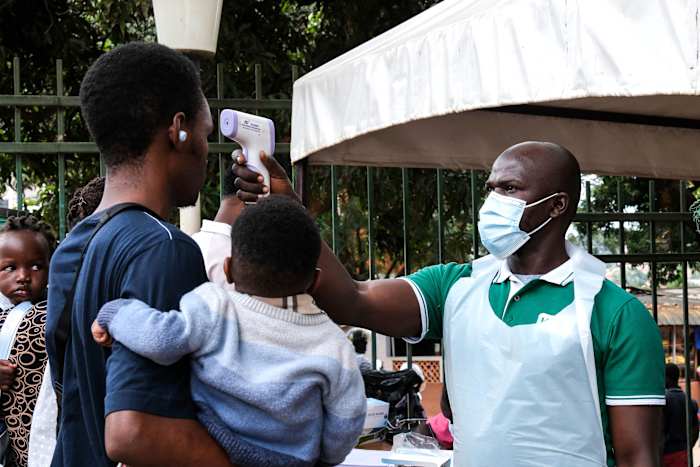
The standard response to a cross-border outbreak involves a flurry of directives aimed at tightening border screening. Committees call for thermal imaging, health declaration forms, and temporary checkpoints along the DRC-Uganda frontier.
This policy ignores the basic geography and economy of the Albertine Rift.
I have spent years analyzing health delivery systems in conflict-affected zones. I have stood at the official border crossings between Uganda and the DRC. These formal checkpoints are a regulatory theater. The actual border spans hundreds of miles of dense terrain, punctuated by hundreds of informal, unmonitored footpaths used daily by traders, farmers, and displaced populations escaping regional militia violence.
An informal trader carrying cassava flour from Beni to Kasindi is not going to wait in a four-hour queue at an official crossing to get their temperature checked by a bureaucrat in a pristine white coat. They will take the path through the brush.
When international bodies pressure local ministries to enforce strict border controls, two negative outcomes inevitably follow:
- Resource Diversion: Scant logistical resources—vehicles, fuel, PPE, and trained personnel—are pulled away from local clinics where patients actually present with symptoms, and are wasted on maintaining empty checkpoint lines.
- Underground Spreading: Heavy-handed enforcement criminalizes movement. If a trader feels feverish but needs to cross the border to feed their family, they will actively avoid any contact with health officials, driving the outbreak further underground.
Willingness to cooperate cannot be coerced by border police. If your containment strategy requires an impoverished population to choose between starvation and compliance, your strategy will fail every single time.
The Failure of the Vaccine Promise
Whenever an Ebola outbreak hits the news cycle, the immediate public clamor is for a vaccine. The institutional response routinely promises that "investigational protocols" and "ring vaccination deployment" are being evaluated.
Let us be completely honest about the state of therapeutics in 2026: there is no approved, highly effective vaccine for the Bundibugyo species.
The Ervebo vaccine, which was a true triumph of science during the West African and Kivu outbreaks, targets the glycoprotein of the Zaire species. It offers no cross-protection against Bundibugyo. While candidate vaccines utilizing viral vectors (like chimpanzee adenovirus or vesicular stomatitis virus platforms) exist in various stages of development, they are not ready for mass deployment.
The institutional obsession with a technological savior creates a dangerous waiting game. Local authorities delay aggressive, basic public health measures because they are holding out hope for a shipment of experimental doses that cannot scale in time to alter the outbreak's trajectory.
Worse, the talk of experimental trials fuels deep-seated local skepticism. When outside teams arrive with cooler boxes filled with unapproved drugs, it triggers memories of historical medical exploitation. In areas like North Kivu and Ituri, which have endured decades of armed conflict and systemic neglect, the sudden appearance of foreign scientists bearing syringes looks less like humanitarian aid and more like bioprospecting.
De-Centering the Isolation Center
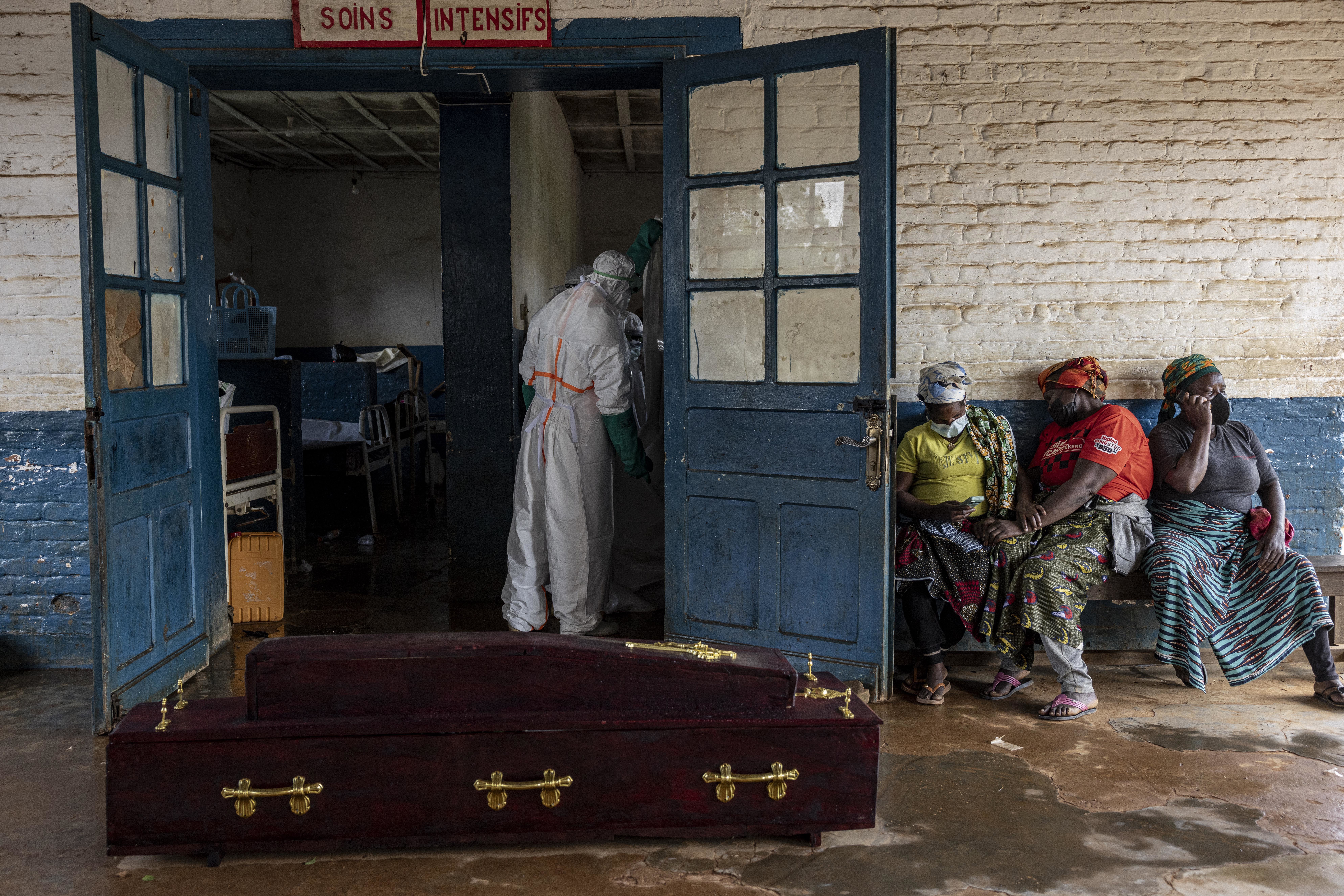
The core pillar of the traditional response is the Ebola Treatment Unit (ETU). These are massive, bio-secure tents managed by international NGOs and central ministries. They are designed to keep the virus in and the public out.
They are also terrifying.
Imagine a scenario where a village elder falls ill. He is removed from his family by people wearing positive-pressure suits that obscure their faces. He is taken to a fenced compound where his relatives cannot touch him. If he dies, his body is buried in a plastic bag by strangers, violating generations of sacred burial rites.
To the community, the ETU is not a place of healing; it is a destination for dying.
This terror drives a predictable, catastrophic cycle: patients hide their symptoms until they are in the terminal phases of the disease. They contaminate their households, their caregivers, and their local community health workers long before they ever see the inside of an ETU.
We must dismantle the centralized ETU model and shift to decentralized, community-managed isolation pockets. This means training and equipping local nurses and traditional healers—the people the community already trusts—with basic personal protective equipment and supportive care tools.
If a patient can receive oral rehydration therapy, paracetamol, and dignity within their own community layout, the incentive to hide the illness disappears. The mortality rate of Bundibugyo drops significantly with basic, early supportive care alone. You do not need a multi-million-dollar, air-conditioned isolation tent to administer intravenous fluids and keep a patient clean. You need a reliable supply chain of clean water, giving local healthcare workers the tools to do their jobs without dying in the process.
The Real Priorities
If the standard institutional recommendations are a dead end, what actually works? We must invert the current funding priorities completely.
| Current Institutional Priority | The Contrarian Reality |
|---|---|
| Centralized PCR Lab Testing hubs | Distributed Rapid Diagnostic Tests (RDTs) at the village level |
| Strict Border Checkpoints & Thermal Screening | Unconditional funding for local clinic nurse salaries |
| Mass International NGO Deployment | Direct cash transfers to affected families to offset quarantine losses |
| High-Security Isolation Units (ETUs) | Home-and-village supportive care kits with PPE |
We must stop treating the local population as a risk factor to be managed and start treating them as the primary shield against transmission.
This requires an uncomfortable admission from international agencies: you cannot control an outbreak from an office in Geneva or an operations center in Kampala. You can only support the people who are already on the front lines. Pay the local nurses who haven't seen a government paycheck in six months. Supply the rural clinics with soap, clean gloves, and clean water. Leave the thermal cameras at home.
The current epidemic will not be stopped by temporary recommendations or high-level declarations. It will be stopped when we abandon the illusion of centralized control and fund the mundane, unglamorous essentials of rural healthcare. Stop trying to manage the map, and start supporting the clinic.