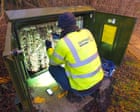
You probably don't think about the physical wires running under your street until your internet cuts out. But right now, old telephone infrastructure is turning into a massive financial asset. BT is sitting on track for an estimated two billion pound windfall by digging up and selling its redundant copper cabling.
The timing couldn't be better. While the artificial intelligence boom and renewable energy transition drive global commodity markets wild, Britain's largest telecom provider is quietly tearing out the legacy network that built modern communications.
The Great Infrastructure Swap
For decades, twisted copper pairs carried voice calls and dial-up internet across the UK. Today, Openreach—BT’s infrastructure arm—is ripping out those lines to replace them with full-fibre broadband targeted at thirty million homes by the end of the decade.
This transition leaves behind an enormous amount of metallic waste. Instead of leaving it underground to rot, BT set up forward sale agreements with EMR, the country's largest cable granulation company. The numbers involved are staggering. BT pocketed an initial hundred and five million pounds in 2024, followed by another ninety-nine million pounds upfront for thousands of tonnes of stripped metal.
Recovered volumes are scaling up fast. Openreach pulled nearly ten,000 tonnes of copper out of the ground in the single year leading up to March, nearly triple the recovery rate from previous cycles. Total recovery has already crossed 22,000 tonnes since the programme ramped up. Executives estimate the network holds up to 200,000 tonnes of high-grade recyclable material waiting to be mined over the next decade.
Why Everyone Wants Copper Right Now
Commodity markets are experiencing a severe supply crunch. Ratings agencies like S&P Global project that global demand will double from twenty-five million metric tonnes to roughly fifty million by 2035.
AI data centres require massive amounts of electrical wiring, cooling infrastructure, and power distribution grids. Add the electrification of transport and renewable energy grids into the mix, and copper behaves less like an industrial byproduct and more like precious bullion. Prices recently touched record highs near fourteen thousand dollars per metric tonne.
When BT started this initiative, the metal hovered around eight thousand five hundred dollars a tonne. That price inflation changes the math entirely. Initial market valuations placed the total stash at one and a half billion pounds. Current spot and forward prices push the potential value past the two billion pound mark.
Operational Realities and Cable Theft
Getting millions of pounds worth of metal out of the ground is not entirely straightforward. Openreach faces constant logistical hurdles, labour requirements, and security risks.
Cable theft remains a persistent headache. Organized thieves frequently target exposed infrastructure or underground routes, forcing telecom operators to invest heavily in tracking technology and network monitoring. While switching to fibre naturally reduces the risk on active lines because the glass strands hold zero scrap value, legacy copper still sitting in dormant ducts attracts criminals.
Processing the material also requires specialized industrial partners. Granulating thousands of miles of insulated wire into pure, high-grade copper ready for manufacturing demands heavy industrial processing, which explains why BT relies on multi-year forward contracts rather than trying to play the daily commodities market alone.
What This Means for Telecom Strategy
Legacy infrastructure usually represents a liability. Maintenance costs drag down balance sheets as customer bases migrate to modern alternatives. BT managed to flip a retirement headache into a cash cow simply because the broader technological shift toward artificial intelligence created an unexpected hunger for raw materials.
Other telecom operators across Europe are watching closely. Networks built in the mid-twentieth century contain millions of tonnes of hidden metal. Companies that move aggressively to extract and monetize their redundant physical assets stand to offset the steep capital expenditures required for modern fibre and 5G rollouts.
If you manage industrial assets or telecom infrastructure, take a close look at what you consider trash. Sometimes the old wires in the ground are worth more than the digital data that replaced them.