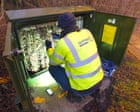
The outrage machine is spinning at maximum velocity. Headlines scream that BT is bullying vulnerable citizens, holding grandmothers hostage, and tearing out the copper lifelines of the nation just to hit a corporate migration milestone. Consumer watchdogs clutch their pearls. Pompous op-eds argue that forcing people off legacy voice networks into digital-first setups is an act of digital cruelty.
It is absolute nonsense.
I have watched telecom boardrooms stall for two decades, terrified of their own shadow, paralyzed by the screech of activists who want the clock to stop spinning. BT is not bullying anyone by pushing the digital landline transition. They are dragging a kicking, screaming public past a cultural nostalgia trap and into the twenty-first century.
Let us strip away the sentimentality and look at the engineering reality. Copper public switched telephone networks are rotting artifacts. They are power-hungry, maintenance-heavy ghosts of a mechanical era that cost a fortune to keep on life support. Keeping two parallel communications networks running simultaneously—one for data and one for century-old analog voice—is the corporate equivalent of maintaining a stable of carriage horses next to a modern highway because some people are scared of internal combustion.
The critics want you to believe this is corporate greed. They point to temporary service pauses and clumsy communication rollouts as proof of bad faith. They miss the broader picture entirely.
The Great Copper Delusion
For years, telecom providers indulged a myth. They pretended that consumers could cling to nineteenth-century analog architecture forever while expecting the speeds, security, and flexibility of modern fiber and voice-over-IP networks.
When copper lines break down during storms, floods, or simple age-related decay, repair times stretch into weeks. Parts are manufactured by specialty shops because the industrial base moved on thirty years ago. The switching exchanges themselves smell of damp cardboard and burning insulation. Yet, the moment a carrier tries to pull the plug, the narrative pivots to victimhood.
BT is pausing and restarting implementations because they botched the execution of a necessary medicine. Their PR strategy was timid. They tried to be polite about an unavoidable industrial evolution. That was their mistake. You cannot politely dismantle a national infrastructure monopoly without inviting a populist riot.
By framing this as bullying, the media protects a dangerous status quo. Analog landlines do not fail gracefully. When the power grid drops or a cabinet floods, traditional copper lines depend on copper-fed exchange power which is increasingly unstable. Digital voice services running through modern fiber routers paired with proper battery backups offer far greater reliability. But nobody wants to talk about battery backups because it ruins the simple narrative of evil corporations picking on the elderly.
The Real Cost of Stagnation
Let us talk about what happens when you pander to technological stagnation.
I have seen utility companies spend millions propping up legacy systems because a vocal fraction of their customer base refuses to change a habit. That capital does not materialize out of thin air. It gets siphoned away from rural fiber expansion, cybersecurity hardening, and network redundancy. Every dollar spent maintaining an analog copper switch for someone who refuses to plug an adapter into their modern router is a dollar not spent securing the network against state-sponsored actors.
The consumer groups arguing against the digital landline switch are operating on a fundamental misunderstanding of resource allocation. They want infinite backward compatibility. That is not how engineering works.
If you own a car from 1920, you do not expect the government to keep a blacksmith on every street corner forging custom leaf springs at taxpayer expense. You accept that parts become scarce, maintenance becomes expensive, and eventually, the vehicle belongs in a museum rather than the fast lane of the motorway.
Why do we apply a different standard to telecommunications?
Because voice telephony was wrapped in the language of public utility and social welfare. That framing made sense in 1950. It is an active hazard in 2026.
The Accessibility Smokescreen
The most dishonest argument deployed against BT involves accessibility. The opponents claim that digital landlines fail the vulnerable, particularly the elderly and those with medical pendants or alarm systems.
Here is the truth nobody wants to print. The old copper network was already failing these exact same groups during power outages. Traditional wired phones without external local power also drop dead when the local exchange loses mains power unless they are old-school rotary beasts tied directly to a heavy central battery bank.
The real issue is not the technology itself; it is the transition protocol.
BT stumbled by assuming that consumers would figure out the adapter wiring, the battery backup requirements, and the digital routing on their own. They treated a massive infrastructure migration like a software update. That was arrogant. But the solution to a clumsy rollout is not halting the migration; it is aggressively funding white-glove migration services, free hardware upgrades, and mandatory home installation support for every household that needs it.
Instead, critics demand that we stop the whole thing. They want to preserve the museum piece because it feels cozy.
Unconventional Truths About Modern Infrastructure
If we are going to fix how the public perceives these mega-migrations, we have to stop treating consumers like delicate porcelain that will shatter at the sight of a fiber optic cable.
- Nostalgia is not a network strategy. Emotional attachment to the ring of an old bell-pepper telephone does not generate bandwidth, reduce latency, or stop cyberattacks.
- Friction is inevitable. Any transition from analog to digital at a national scale will cause friction. Pretending we can execute a zero-friction replacement of a nation's nervous system is magical thinking.
- Slow transitions kill. Dragging out a sunset period for legacy tech for a decade creates a zombie infrastructure. It keeps maintenance teams trapped in the past while new vulnerabilities pile up in the unmonitored corners of the old network.
BT should accelerate the timeline, double the field support budget for vulnerable households, and stop apologizing for moving forward.
The digital landline push is not bullying. It is overdue overdue surgery. And if you are still crying over your copper wire, you are mourning a ghost.