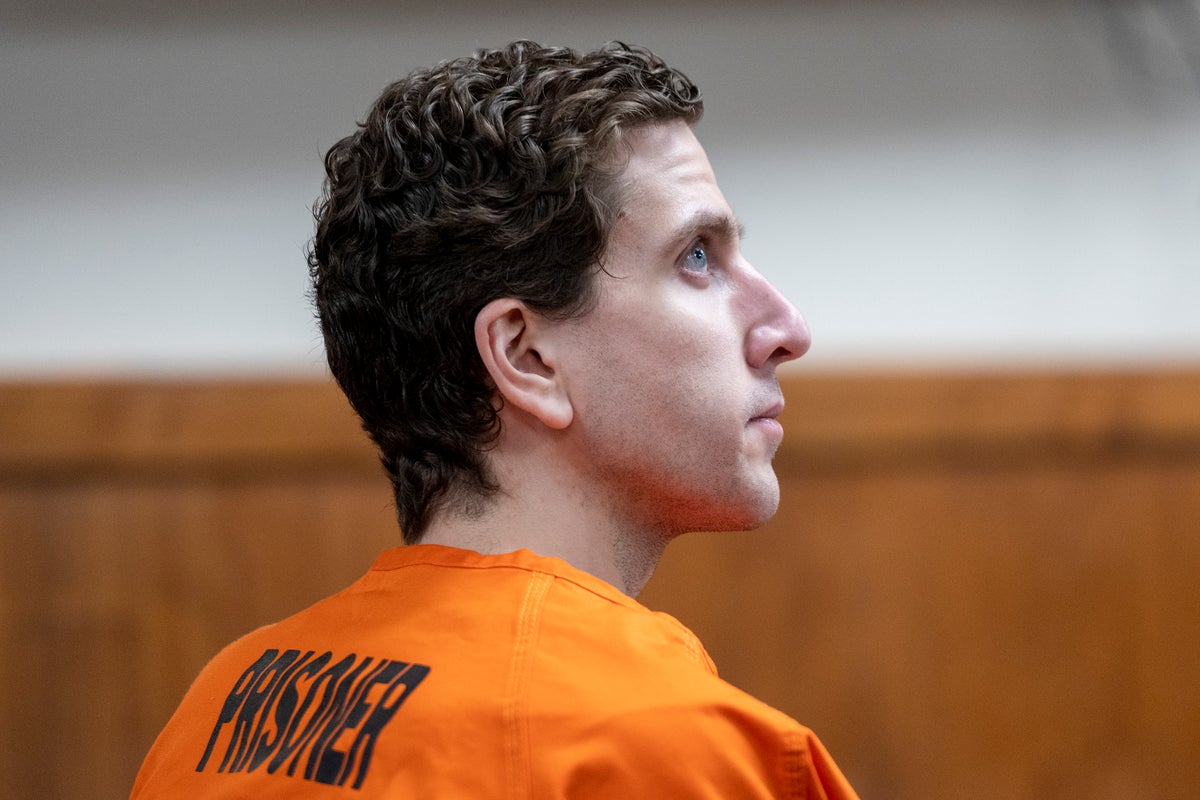
Maryann Kohberger didn’t see a monster when police swarmed her Pennsylvania home in the early hours of December 30, 2022. She saw her son. While the rest of the world looked at Bryan Kohberger and saw the man accused of the brutal stabbing deaths of four University of Idaho students, his mother reportedly stood her ground. According to new details emerging from Howard Blum’s book When the Night Comes Falling, her first instinct wasn't just shock. It was a fierce, defensive conviction that the authorities had the wrong guy. She told investigators they’d made a "really bad mistake."
It’s a reaction that feels almost impossible to swallow if you’ve followed the trail of DNA evidence, cell tower pings, and that white Hyundai Elantra. But it opens a window into the psychological wall families build when the unthinkable knocks on their door.
The Moment the Front Door Came Down
Imagine the scene at the Kohberger residence in Chestnuthill Township. It’s the middle of the night. Windows are shattered. Flashbangs go off. This wasn't a polite knock. It was a tactical takedown. For Maryann and Michael Kohberger, this was a sudden, violent intrusion into their quiet lives.
When your child is arrested for a quadruple homicide, your brain doesn't just process the facts. It glitches. Maryann’s reported comment about a "bad mistake" isn't just a quote for a headline. It’s a snapshot of a mother trying to reconcile the Bryan she raised with the Bryan being handcuffed in front of her. She wasn't looking at the evidence from the Moscow, Idaho crime scene. She was looking at the kid who’d just driven cross-country with his dad.
Blum’s reporting suggests Maryann was vocal. She wasn't just crying in a corner. She was challenging the validity of the entire operation. It highlights a massive disconnect between the forensic reality of the FBI and the emotional reality of a parent.
The Shield of Parental Denial
Why would she say that? It’s easy to call it delusion, but psychologists often point to a "protective blindness." To Maryann, Bryan was a PhD student. He was a guy who struggled with weight and social cues but was finally finding his footing in academia. The idea that he could walk into a house and commit a crime that grisly doesn't fit the internal narrative.
We’ve seen this before in high-profile cases. The families of serial killers or mass shooters often remain the last holdouts. They look for any other explanation. A setup. A clerical error. A case of mistaken identity. When she told police they were wrong, she was likely clinging to the version of Bryan that existed before November 13, 2022.
But the "mistake" she referenced wasn't just about Bryan’s character. It reflected a deep-seated belief that the police were rushing to judgment. In her eyes, the tactical team wasn't catching a killer—they were destroying an innocent family.
The Evidence That Doesn't Care About Feelings
While Maryann was protesting, the prosecution was building a mountain. You can’t ignore the DNA found on the Ka-Bar knife sheath. It’s the anchor of the case. Investigators didn't just stumble onto Bryan; they tracked him through genetic genealogy, a method that’s basically changed the game for cold cases and fresh ones alike.
Then you have the car. That white Elantra wasn't just a random vehicle. It was seen circling the King Road house multiple times. It was the digital breadcrumbs of his phone pings. Even if his phone was turned off during the actual window of the murders, the "before" and "after" patterns were enough to paint a target on his back.
Maryann’s defense of her son doesn't change the forensic trail. It just makes the human tragedy of the case even heavier. It’s two different worlds colliding: one built on laboratory results and the other on twenty-eight years of memories.
A Family Caught in the Crossfire
The Kohberger family has since retreated into a necessary silence. They’ve asked for privacy, which they’ll never truly get. Their lives are effectively over in the public eye. Every detail of their history is being mined for "red flags." Did they see his weird behavior? Did they know about his late-night drives?
If the reporting in Blum’s book is accurate, it shows a family that was completely blindsided. They weren't hiding a killer. They were living with a son they thought they knew. The tragedy in Moscow claimed four young lives, but the ripple effect has decimated the lives of those associated with the accused as well.
The legal process is moving at a snail’s pace. Trials of this magnitude take years. Every motion, every delay, and every new book release keeps the wound open. For Maryann Kohberger, that "really bad mistake" she yelled about in December 2022 has become her life's permanent backdrop.
Watching the Trial Move Forward
The defense is currently picking apart the DNA evidence. They’re challenging how the genetic genealogy was used. They’re trying to create the "mistake" that Maryann insisted was there from the start. It’s a standard legal strategy, but for the Kohberger family, it’s a lifeline.
If you’re following this case, stop looking for a simple answer. It’s a mess of forensic tech and raw human emotion. The trial will eventually lay everything bare, but the scars for the victims' families—and the family of the accused—are permanent.
Keep an eye on the upcoming hearings regarding the change of venue. The defense wants the trial moved out of Latah County, arguing that the local jury pool is too biased. It’s a move that could shift the entire energy of the proceedings. If you want to understand the mechanics of the defense, look into the specific motions filed regarding the "Igg" (Investigative Genetic Genealogy) data. That’s where the real fight is happening. Forget the headlines for a second and read the court transcripts if you want the truth. It’s uglier and more complex than any book can capture.