Venture capital firms are pouring hundreds of millions of dollars into autonomous threat detection systems validated on the front lines in Ukraine, betting that battlefield survival will translate directly into highly lucrative NATO contracts. It is a high-stakes gamble based on a fundamental assumption that technology forged in the world's most intense electronic warfare environment can be easily institutionalized, certified, and scaled for Western militaries.
The assumption is deeply flawed. While startups like Dropla Tech, Surtr, and UADamage are proving that edge-AI and multi-sensor fusion can save lives right now, the path from a mud-splattered trench to a multi-year Pentagon or European defense ministry contract is blocked by bureaucratic inertia, rigid procurement rules, and a vast cultural chasm between Silicon Valley speed and military acquisition cycles. Investors are realizing that the hard part isn't surviving Russian jamming. The hard part is surviving Brussels and Washington.
The Illusion of the Frictionless Battlefield Upgrade
Silicon Valley has long dreamed of software-defined warfare. For decades, the traditional defense industry relied on massive hardware platforms with proprietary code built over fifteen-year timelines. War altered that schedule completely. Today, software updates are pushed to autonomous drones and threat detectors weekly, sometimes daily, to counter rapid changes in adversary electronic countermeasures.
Consider the current influx of capital. Funds like Warsaw-based Expeditions recently raised a €197 million fund specifically targeting defense and industrial resilience. Kyiv-based MITS Capital and D3 are actively deploying millions into companies whose main selling point is that their code has already been tested in active combat.
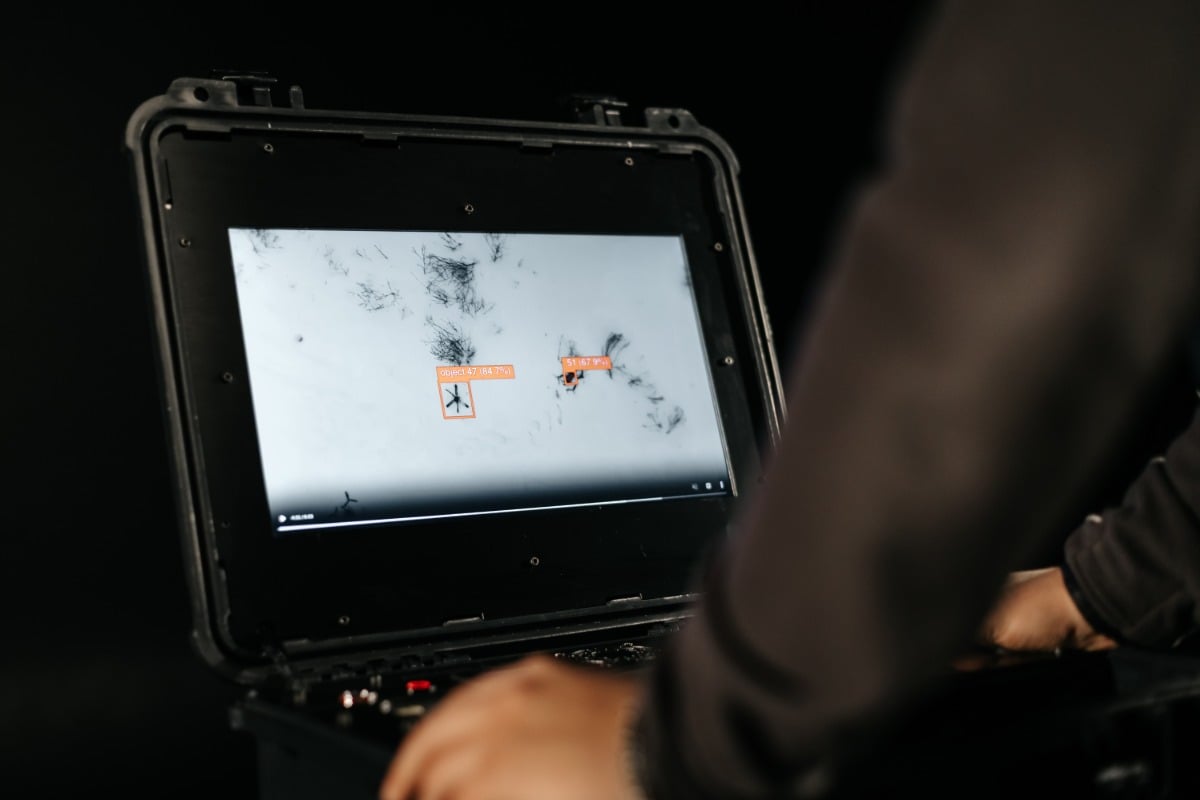
One prominent example is Dropla Tech, a Danish-Ukrainian startup specializing in edge-AI explosive threat detection systems. Their system analyzes drone imagery to locate unexploded ordnance in environments where GPS and satellite communication are completely blocked. Over a single year, the company scaled its confirmed threat detections from a few hundred to more than 5,000, maintaining a claimed accuracy rate above 90%.
Another is US-based Surtr, which recently deployed its ParallaxOS software for testing via the Ukrainian Brave1 defense initiative. ParallaxOS takes chaotic, real-time data streams from acoustic sensors and optical cameras, fusing them on a single tactical map to track enemy first-person view drones within milliseconds.
The data is undeniable. The systems work. But venture capital requires massive commercial scale to return its funds, and that scale cannot be achieved on a wartime budget alone.
The Paperwork Fortress Threatening Defense Startups
The disconnect begins the moment a startup attempts to transition from the Ukrainian Ministry of Defense to a NATO member's procurement office.
Wartime procurement is transactional and immediate. If a tool works, commanders find a way to get it to the front lines. NATO procurement, conversely, is an exercise in risk mitigation and administrative compliance. A threat detector that successfully spots thousands of mines in Kherson cannot simply be purchased by the German Bundeswehr or the US Army. It must first undergo years of testing to comply with standardization agreements.
These requirements are not just about safety. They are bureaucratic moats designed to protect incumbent defense contractors who know how to navigate thousands of pages of regulatory filings.
A startup engineering team of fifteen people can easily rewrite an image-recognition algorithm over a weekend to bypass a new type of signal jamming. However, that same team cannot survive a three-year auditing process required to secure a formal program of record. Venture capital funds operate on ten-year lifecycles. They expect exponential growth. When a portfolio company spends three years waiting for a single government official to sign an authorization form, the fund's internal rate of return plummets.
The Messy Reality of Frontline Data
There is a technical crisis brewing underneath the marketing hype of wartime testing.
Artificial intelligence models depend entirely on the data used to train them. The data coming out of current active conflict zones is incredibly messy, hyper-specific, and rapidly expiring. An AI threat detector trained to recognize specific Russian mine models or artillery signatures in the mud of eastern Europe may perform poorly in the desert environments of North Africa or the dense jungles of the Indo-Pacific.
Furthermore, the sensors used to capture this data on the cheap are often consumer-grade components. Western militaries require military-grade, ruggedized hardware with strict supply chain provenance to ensure no adversarial components are embedded in the systems.
When a startup strips out its cheap, off-the-shelf components to meet Western security standards, the underlying software must be recalibrated. The performance metrics changes. The cost skyrockets. Suddenly, the cheap, highly effective threat detector that cost $5,000 to build in a workshop outside Kyiv becomes a $75,000 piece of equipment requiring specialized maintenance training. The cost advantage evaporates.
The Sovereign IP Tug of War
A deeper geopolitical tension is emerging over who actually owns the intellectual property generated in these collaborative defense hubs.
Ukraine has recently taken steps to open a controlled export framework for its domestic defense technology, allowing local companies to seek international revenue. This is a necessary step for economic survival, but it creates friction with foreign backers. Western venture funds frequently insist that companies incorporate in Delaware, London, or Copenhagen to protect investor rights and ensure clear intellectual property ownership under Western legal jurisdictions.
Governments fighting for national survival are understandably reluctant to see their most critical technological breakthroughs exported entirely to foreign corporate entities. They want manufacturing facilities, engineering jobs, and tax revenue to remain domestic.
This creates a complicated structure. Startups are forced to build transnational corporate structures, operating dual headquarters and splitting engineering teams across borders. Dropla Tech operates as a Danish-Ukrainian hybrid. Terma, a Danish defense giant, partnered with Ukrainian drone specialist Odd Systems for joint research and development. These structures look good on paper, but they introduce massive legal overhead, complex export control compliance issues, and constant friction over which government has final say over the technology's export destinations.
The Coming Shakeout in Defense Venture Capital
The money will not last forever.
We are currently witnessing the peak of the defense tech hype cycle. Generalist venture funds that previously focused on enterprise SaaS or consumer apps have rushed into defense technology, drawn by dramatic headlines and the moral clarity of supporting a democracy under siege. They are writing checks based on wartime usage metrics without understanding the grim realities of peacetime defense acquisition.
A correction is inevitable.
When the initial wave of seed-stage capital runs out, these startups will face a severe funding gap. Institutional growth-stage investors require predictable revenue pipelines, clear gross margins, and a diversified customer base. Relying on short-term government grants or emergency wartime procurement funds does not constitute a sustainable business model.
The companies that survive this transition will not necessarily be the ones with the most advanced algorithms. They will be the ones that master the unglamorous mechanics of Western defense compliance. They will hire veteran military procurement officers instead of more software engineers. They will focus on building interoperable software modules that can be plugged directly into existing, heavily funded Western defense programs rather than trying to sell standalone, proprietary hardware platforms.
Investors who expect quick, software-style exits in the defense sector are in for a brutal awakening. Building a company that protects lives requires navigating a system explicitly designed to slow things down, minimize risk, and protect entrenched interests. The technology has proven it can survive the battlefield. Now it must prove it can survive the bureaucracy.