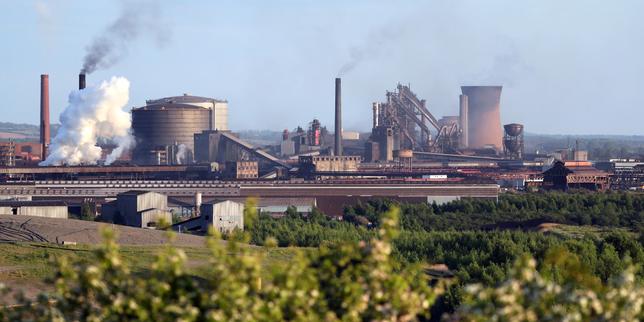
The British state has officially entered the steel business, marking one of the most drastic industrial interventions in modern British history. On 16 July 2026, the government formally took British Steel into public ownership, striping control from its Chinese owner, Jingye Group, following fifteen months of emergency state-funded life support. The move, executed via the newly enacted Steel Industry Nationalisation Act, aims to protect the nation's remaining domestic capacity for producing virgin steel from raw materials. Without this intervention, the blast furnaces in Scunthorpe would have cooled permanently, destroying four thousand jobs and leaving the country entirely reliant on foreign imports.
To understand how Britain reached the point of expropriating a major foreign investor, one has to look past the political speeches. This was not a pre-planned socialist triumph, but a desperate rescue mission born of geopolitical panic and decades of industrial neglect. If you liked this post, you might want to check out: this related article.
Why the state had to seize Scunthorpe
The immediate crisis began in April 2025. Jingye Group, which bought British Steel out of liquidation in 2020, threatened to walk away from its UK operations. The Chinese conglomerate was unwilling to continue funding the massive losses of the Scunthorpe plant without extraordinary government subsidies to transition to cleaner electric arc furnaces.
Faced with the immediate threat of a shutdown, Parliament passed emergency special measures. For over a year, the taxpayer quietly kept the lights on. The state injected over 484 million pounds of working capital just to maintain basic operations and keep the coke ovens burning. For another perspective on this event, check out the latest update from Business Insider.
A cold blast furnace is a dead blast furnace. If the Scunthorpe furnaces had been allowed to cool, the structural damage to the refractory linings would have been irreversible. The UK would have lost its only remaining capability to make virgin steel from iron ore and coal. This prospect terrified defense officials and infrastructure planners alike.
The illusion of private rescue
When Jingye Group acquired British Steel in 2020 for a nominal 50 million pounds, it was celebrated as a private sector salvation. The Chinese group promised a 1.2 billion pound investment to modernise the facilities.
The reality was far messier. Global energy markets became incredibly volatile. The price of metallurgical coal and industrial electricity in the UK soared, making British-made steel structurally uncompetitive against cheaper imports from countries with lower environmental standards and subsidized energy.
Jingye soon realised that running Scunthorpe was a financial black hole. Negotiations over a state-backed decarbonisation package dragged on for years. The Chinese group wanted hundreds of millions in taxpayer cash but refused to guarantee long-term employment or maintain the blast furnaces during the transition.
By early 2025, the relationship had completely broken down. The government realised that giving more cash to a foreign conglomerate with no binding commitments was politically untenable. Nationalisation became the only path left to prevent a catastrophic industrial collapse.
The raw strategic math of virgin steel
Critics of the buyout point to the declining economic weight of the steel sector. In 2000, steelmaking accounted for 0.25 percent of British gross domestic product. Today, that figure has shrunk to less than 0.1 percent.
But looking only at GDP contributions misses the strategic vulnerability. Steel is the foundation of national resilience. Without domestic virgin steel, the UK is exposed to volatile international supply chains for critical infrastructure.
Why recycled steel is not enough
Many observers ask why the UK cannot simply rely on electric arc furnaces that melt down domestic scrap metal. The answer lies in the chemistry of high-specification steel.
- Purity levels: Electric arc furnaces run on recycled scrap, which contains trace copper, tin, and other contaminants that are extremely difficult to remove.
- Critical applications: For high-stress applications, including submarine hulls, railway tracks, structural beams for high-rise buildings, and nuclear power plant components, engineers require the extreme purity that can only be achieved by refining iron ore in a traditional blast furnace.
- National security: Relying entirely on imports for virgin steel means that in a geopolitical crisis, Britain’s defense and transport sectors could be held hostage by foreign supply lines.
The diplomatic fallout with Beijing
The expropriation of Jingye Group has created a diplomatic headache. The Chinese government has already warned the UK to act prudently and declared it will protect the interests of Chinese enterprises abroad.
Under the new legislation, an independent valuer will determine whether any compensation is payable to Jingye. This process is bound to be highly contentious. In its accounts, Jingye has maintained that British Steel is a highly valuable asset. Yet, the UK government will counter that the company was essentially insolvent and only survived because of nearly half a billion pounds of taxpayer-funded life support.
Paying a massive compensation package to a Chinese conglomerate using British taxpayer money would be politically explosive for the incoming administration. Conversely, refusing to pay could invite retaliatory measures against British firms operating in China, further complicating an already tense bilateral relationship.
The crushing price tag of going green
The act of nationalisation is merely the end of the beginning. The state now owns an aging, heavily polluting asset that loses money on every tonne of steel it produces.
The immediate challenge is decarbonisation. The Scunthorpe blast furnaces are among the largest single sources of carbon emissions in the UK. Keeping them running in their current form is completely incompatible with the nation's legally binding climate targets.
Transitioning the site to electric arc technology will cost well over a billion pounds. While electric arc furnaces emit a fraction of the carbon dioxide, they require vast amounts of electricity. The UK has some of the highest industrial electricity prices in Europe, meaning the state-owned enterprise will still face severe competitive disadvantages.
Furthermore, electric arc furnaces require far fewer workers than traditional blast furnaces. The government now faces a painful paradox. It nationalised the company to save four thousand jobs, but to make the business commercially viable and green, it will eventually have to eliminate a significant portion of that workforce.
A brutal industrial reality check
The nationalisation of British Steel represents a profound shift in British economic policy, abandoning decades of reliance on free-market solutions for heavy industry. But public ownership does not magically erase the structural challenges of high energy costs, cheap global overcapacity, and the immense capital requirements of the green transition. The British taxpayer is no longer just a spectator in the global steel wars. The taxpayer is now the owner, the financier, and the ultimate risk-bearer of an industry fighting for its survival.