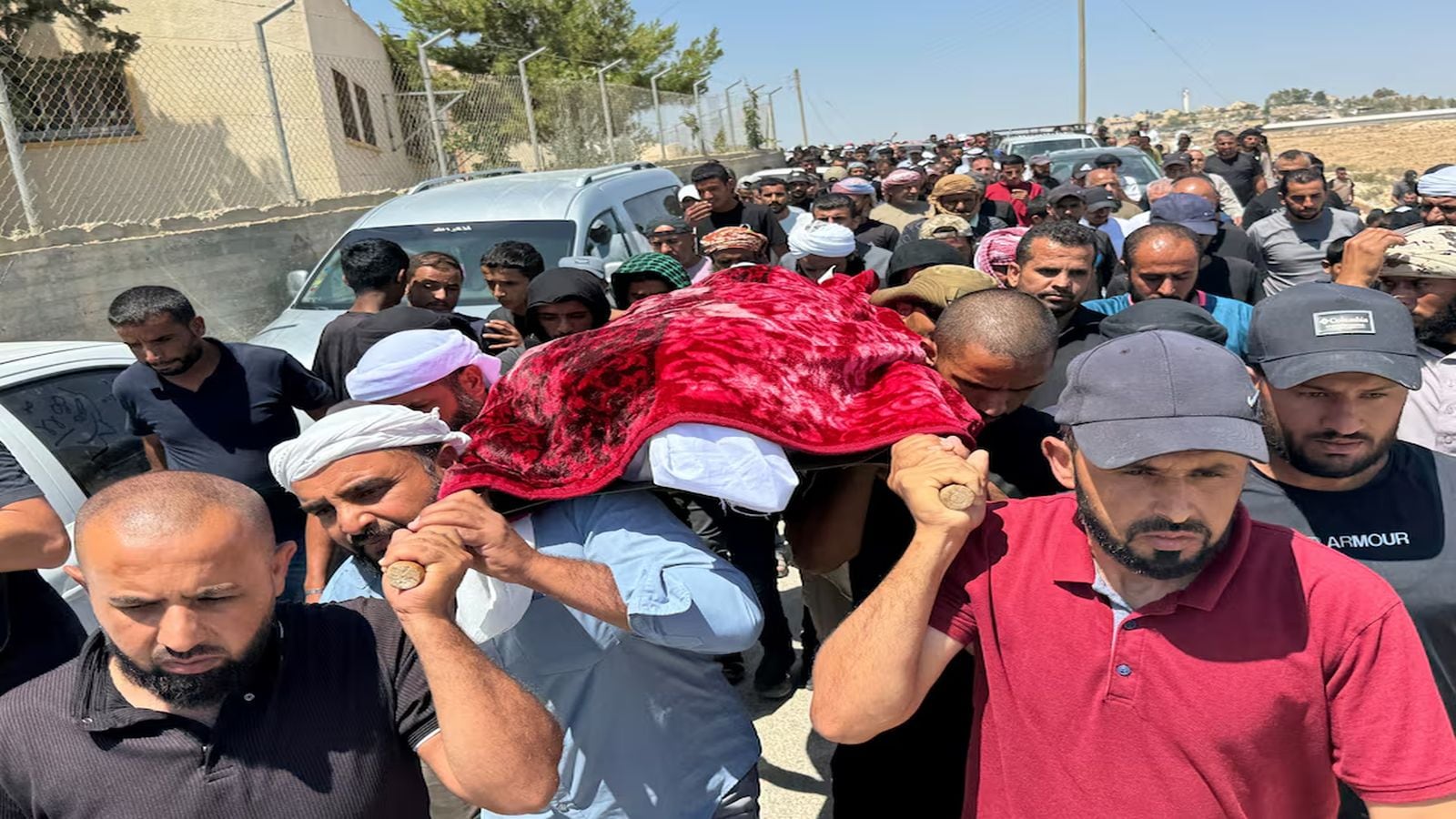
When an Israeli civilian is formally indicted for killing a Palestinian, the legal system moves with a specific, calculated gravity that rarely breaches the surface of everyday military occupation. In the case of the fatal shooting of Palestinian activist Awdah Hathaleen in the occupied West Bank, Israeli prosecutors took the unusual step of charging an Israeli settler with homicide. This rare indictment breaks a long-standing pattern of impunity that has defined the West Bank judicial landscape for decades. Yet, looking past the headline reveals a much darker, systemic architecture of enforcement, political pressure, and structural failure.
For years, human rights organizations, international observers, and Palestinian families have pointed to a glaring double standard in the West Bank. Two parallel legal systems govern the same patch of land. Palestinians living under military rule face swift, draconian detention and military courts with a conviction rate hovering near absolute certainty. Settlers, by contrast, are subject to Israeli civil law, managed by police forces that frequently treat extremist violence as a low priority. When an indictment materializes, it is typically treated as a watershed moment. Observers cheer the accountability. Veterans of the beat know better. For a different view, check out: this related article.
Understanding why this specific indictment happened requires looking at the convergence of international scrutiny, domestic political calculations, and the sheer visibility of the incident. Too often, legal action in high-profile West Bank killings functions as a pressure valve rather than a structural fix.
The Anatomy of Impunity in the West Bank
To grasp the weight of this indictment, one must examine the baseline. Statistics compiled by organizations like Yesh Din, an Israeli human rights group that tracks law enforcement failures in the territories, paint a grim picture. The vast majority of investigative files opened by Israeli police regarding settler offenses against Palestinians are closed without an indictment. Cases vanish into a bureaucratic void. Witnesses fail to show up for interrogations, forensic evidence is poorly collected, and local law enforcement agencies are stretched thin or ideologically disinclined to pursue suspects living within their own communities. Similar insight on this trend has been published by The Guardian.
Consider how these investigations typically unfold. A violent clash erupts near a West Bank outpost. Palestinian residents or activists record the confrontation, capturing faces, license plates, and sometimes the moments of lethal force. They bring this evidence to local police stations, often escorted by Israeli human rights defenders or international volunteers to ensure the complaint is even logged.
Then comes the waiting period. Months pass. Files gather dust. By the time a suspect is questioned, the trail has gone cold. The official explanation from authorities usually cites evidentiary hurdles or uncooperative witnesses. But behind those bureaucratic excuses lies an environment of intimidation. Witnesses face social ostracization, travel restrictions, or direct threats from radical elements within the settler movement.
When an indictment breaks this mold, it usually means the external pressure was simply too high to ignore.
When International Eyes Force the Hand of Justice
Global diplomacy plays an outsized role in domestic Israeli legal decisions regarding the territories. Foreign governments, particularly key allies in Europe and North America, have grown increasingly vocal about the rise in extremist settler violence. Sanctions, visa bans, and sharp diplomatic rebukes have shifted from hypothetical threats to actual policy instruments.
When a killing draws immediate international media attention and threatens diplomatic standing, the calculus changes inside the justice ministry. Prosecutors find themselves under a microscope. They must demonstrate that the state does not systematically shield violent actors from accountability.
Yet, treating this indictment as proof of a functioning corrective mechanism misses the forest for the trees. A single prosecution does not dismantle an entrenched system. It acts as an isolated data point designed to deflect systemic criticism. If the state wants to prove its commitment to the rule of law, indicting one individual in a high-profile case is the path of least resistance. It satisfies the immediate demand for justice without forcing a reckoning on the broader policies that allow outposts to expand and radicalization to flourish unchecked.
The Dual Legal Reality
The core engine driving conflict in the West Bank is the application of two entirely separate legal frameworks. Two people can stand fifty yards apart on a dusty hillside, throw rocks or fire weapons, and face radically different futures based entirely on their identity documents.
An Israeli citizen enjoys the protections of democratic civil law, even when operating in occupied territory. This means access to due process, limitations on detention periods, and representation by civilian defense attorneys. A Palestinian neighbor lives under military orders issued by the commander of the Central Command. These military orders cover everything from political assembly to land use, carrying severe penalties and utilizing courts where acquittal is a statistical anomaly.
This asymmetry creates a powerful psychological and physical deterrent. Palestinians understand that seeking legal redress through Israeli authorities is an uphill battle fraught with peril. Filing a complaint often requires entering heavily fortified military bases or police stations located inside settlements, exposing the complainant to potential harassment or arrest on secondary charges.
Meanwhile, violent extremist factions within the settler movement operate with the quiet confidence born of historical impunity. They know that even if an investigation begins, the odds are heavily in their favor. The rare indictment serves as the exception that proves the rule. It highlights how unusual it is for the state to police its own citizens when those citizens are advancing a nationalist project on disputed land.
Inside the Courtroom and Beyond
What happens after the gavel falls in these rare trials? Indictments generate headlines, but convictions and meaningful sentences are another matter entirely. Defense attorneys representing accused settlers often employ aggressive tactics, challenging the legitimacy of the investigation, questioning the reliability of Palestinian eyewitnesses, and framing the actions of their clients as acts of self-defense amid a hostile environment.
Judges must navigate a deeply polarized political landscape. The pressure from political figures who view settlers as pioneers is palpable. Even within the judicial branch, differing philosophies regarding security and national identity influence how evidence is weighed. A trial can drag on for years, public interest wanes, and the initial shock of the headline fades into legal obscurity.
If the accused is eventually convicted, the sentence handed down often fails to reflect the gravity of taking a human life. Plea bargains frequently reduce charges from murder to manslaughter or lesser offenses, citing mitigating circumstances or the psychological strain of living in a friction zone.
This is the reality of the West Bank judicial apparatus. It is bureaucratic, political, and profoundly unequal.
The Broader Horizon of Conflict
The killing of Awdah Hathaleen and the subsequent prosecution of an Israeli settler cannot be divorced from the broader geopolitical transformation of the West Bank. Over the past several years, the landscape has shifted dramatically. Outposts that once consisted of a few tents have morphed into permanent, electrified agricultural farms backed by state funding and protected by military patrols.
The friction points have multiplied. Activists who document land loss and settler expansion find themselves on the front lines of a quiet war of attrition. They do not just face the threat of violence; they face a complex web of legal restrictions designed to limit their presence on their own ancestral lands.
When violence flares and a life is lost, the state responds with targeted measures. It isolates the incident. It treats the perpetrator as a rogue actor rather than a product of a state-sanctioned movement. This framing allows the underlying architecture of occupation and settlement expansion to remain untouched, functioning smoothly day after day, year after year.
The Final Reckoning
Journalists and analysts often search for turning points. We look for the single indictment, the landmark court ruling, or the sharp diplomatic memo that signals a permanent change in direction. History suggests caution. Systems built on structural inequality rarely reform themselves from the inside out simply because a spotlight is shined upon them.
The indictment of an Israeli settler for killing a Palestinian activist is a notable moment in a judicial system defined by silence. It proves that under extreme pressure, the machinery of the state can move toward accountability. But it remains a drop of water in an ocean of institutionalized bias. Until the core inequalities of the legal architecture are dismantled, until the dual system of law is replaced by equal justice for everyone living between the river and the sea, these rare indictments will remain nothing more than exceptions designed to preserve the rule.