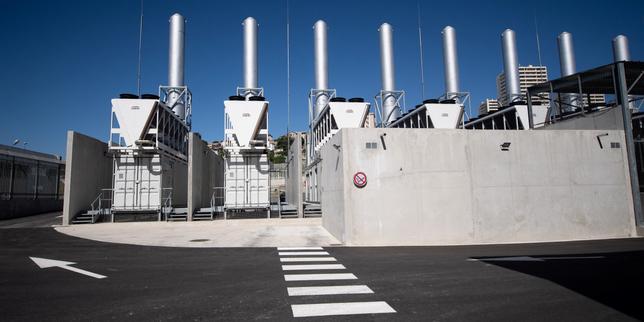
Europe just committed five billion euros to build seven massive artificial intelligence factories. This initiative arrives late, chased by heavy skepticism from venture capitalists and hardware engineers alike. The continent aims to close a brutal technology gap with the United States and China. Yet throwing public funds at massive computing infrastructure ignores structural failures that money alone cannot fix.
Brussels announced the funding package to secure regional sovereignty over foundational artificial intelligence models. Policymakers hope these mega-factories will provide local startups and researchers with the raw computational power required to train massive machine learning systems. Without domestic infrastructure, European enterprises remain dependent on foreign cloud providers. That vulnerability troubles national security advisors across every major capital from Paris to Berlin.
Money flows easily through bureaucratic pipelines. Engineering talent requires a different kind of cultivation entirely.
The Compute Bottleneck Nobody Mentions
Building a data center requires concrete, copper, and cooling systems. More importantly, it requires an uninterrupted, massive supply of electrical power. European energy markets operate under heavy regulatory constraints and steep pricing structures compared to North America or parts of Asia.
Training advanced neural networks demands thousands of specialized semiconductors running continuously for months. These chips generate extreme heat and consume megawatts of electricity. When a single facility draws as much power as a mid-sized city, grid stability becomes an urgent concern.
Energy prices across the continent remain volatile due to geopolitical shifts and transition mandates. Heavy industry already struggles with utility costs. Adding massive artificial intelligence clusters to strained power grids creates a direct conflict between consumer energy needs and technological ambition.
Why Subsidies Rarely Build Ecosystems
Governments love ribbon cuttings. A grand facility with flashing server racks looks exceptional on evening news broadcasts. Infrastructure without a self-sustaining commercial ecosystem remains an expensive monument to state planning.
Venture capital funding for software and hardware innovation in Europe trails far behind American markets. Talented engineers graduate from elite universities in Zurich, London, and Paris, only to pack their bags for Silicon Valley. They leave because compensation packages, risk tolerance, and private investment pools dwarf anything available locally.
Subsidizing hardware does not automatically create breakthrough algorithms. Compute capacity without elite research culture yields expensive idle silicon.
The Regulatory Anchor
Compliance officers often outnumber software developers in European technology firms. The artificial intelligence regulatory framework passed by the European Union imposes strict compliance mandates on high-risk models, data governance, and transparency.
Proponents argue these rules protect citizens from algorithmic bias and privacy abuses. Critics argue the compliance overhead strangles fast-moving startups before they can scale. A small engineering team spending half its budget on legal counsel cannot compete with well-funded foreign rivals iterating at breakneck speed.
Navigating twenty-seven distinct legal interpretations of continental directives creates friction. Technology moves at the speed of silicon. Bureaucracy moves at the speed of compromise.
Where the Seven Mega Factories Will Live
Location matters. The distribution of these seven facilities reflects political negotiation rather than pure technical efficiency.
Every member state wants a piece of the prestige. Spreading resources across multiple jurisdictions satisfies political stakeholders. It also dilutes the density required to build a truly world-class cluster.
Concentration breeds excellence. Silicon Valley succeeded because talent, capital, venture firms, and academic institutions occupied the same geographic footprint. Fragmenting five billion euros across seven distinct regions risks creating seven underfunded nodes instead of one globally competitive powerhouse.
The Semiconductor Supply Chain Reality
Europe wants sovereign compute capacity. The continent possesses ASML, a Dutch powerhouse manufacturing the lithography machines required to print advanced chips. That single asset represents a massive strategic advantage.
Print capability means little if the raw silicon wafers, advanced packaging facilities, and designer firms reside elsewhere. Foundational chip design happens mostly in American boardrooms. Fabrication happens in Taiwan and South Korea.
A data center is only as sovereign as its supply chain. If geopolitical trade tensions escalate, a European mega-factory filled with foreign-designed processors remains vulnerable to external shocks.
The Human Capital Drain
Silicon requires operators. Running advanced machine learning clusters demands specialized systems engineers who understand distributed computing, thermal dynamics, and low-latency networking.
Universities across the continent produce brilliant mathematicians and computer scientists. Retention remains the chronic wound. Technology giants from Seattle and Beijing recruit aggressively at European labs, offering salaries that local research institutions cannot match.
Tax structures and compensation caps in certain European nations make it difficult to grant equity that actually converts into life-changing wealth. When a startup cannot offer competitive stock options, top-tier talent looks elsewhere.
What Success Actually Requires
If this five billion euro initiative is to avoid becoming a fiscal sinkhole, the strategy must shift from real estate to operational velocity.
Compute allocation cannot depend on bureaucratic committees meeting quarterly to review grant applications. Startups building foundational models need instant access to processing power based on merit and technical execution.
Procurement processes must mirror the agility of the private sector. If a research lab has to wait eighteen months for municipal zoning approval to upgrade a cooling tower, the underlying technology becomes obsolete before the servers turn on.
Bridging the Industrial Gap
Traditional European industries like automotive, aerospace, and pharmaceuticals possess proprietary data sets that technology companies would envy. Connecting those legacy sectors directly with artificial intelligence research creates a genuine competitive moat.
Germany builds exceptional automobiles. France excels in energy infrastructure. Switzerland leads in pharmaceuticals. Integrating artificial intelligence directly into these industrial giants provides a captive market for local compute infrastructure.
Yet traditional manufacturers remain culturally conservative regarding software adoption. Legacy management teams often view machine learning as an IT expense rather than a core operational driver.
The Global Stakes
The race for artificial intelligence supremacy is not a polite academic exercise. Economic dominance over the next three decades depends on who controls the underlying cognitive infrastructure.
China utilizes state-directed capital to secure energy, compute, and talent with terrifying focus. The United States leverages private market liquidity and unmatched venture capital networks to fund continuous experimentation.
Europe sits in the middle, trying to regulate an industry it hopes to dominate while underfunding the commercial engines that drive it.
Five billion euros is a statement of intent. Against the hundreds of billions deployed by private enterprises in North America, it is a drop in the ocean.
The hardware will be built. The buildings will stand. Whether the brilliant minds remain inside them to turn raw electricity into intelligence is a question no grant application can answer.