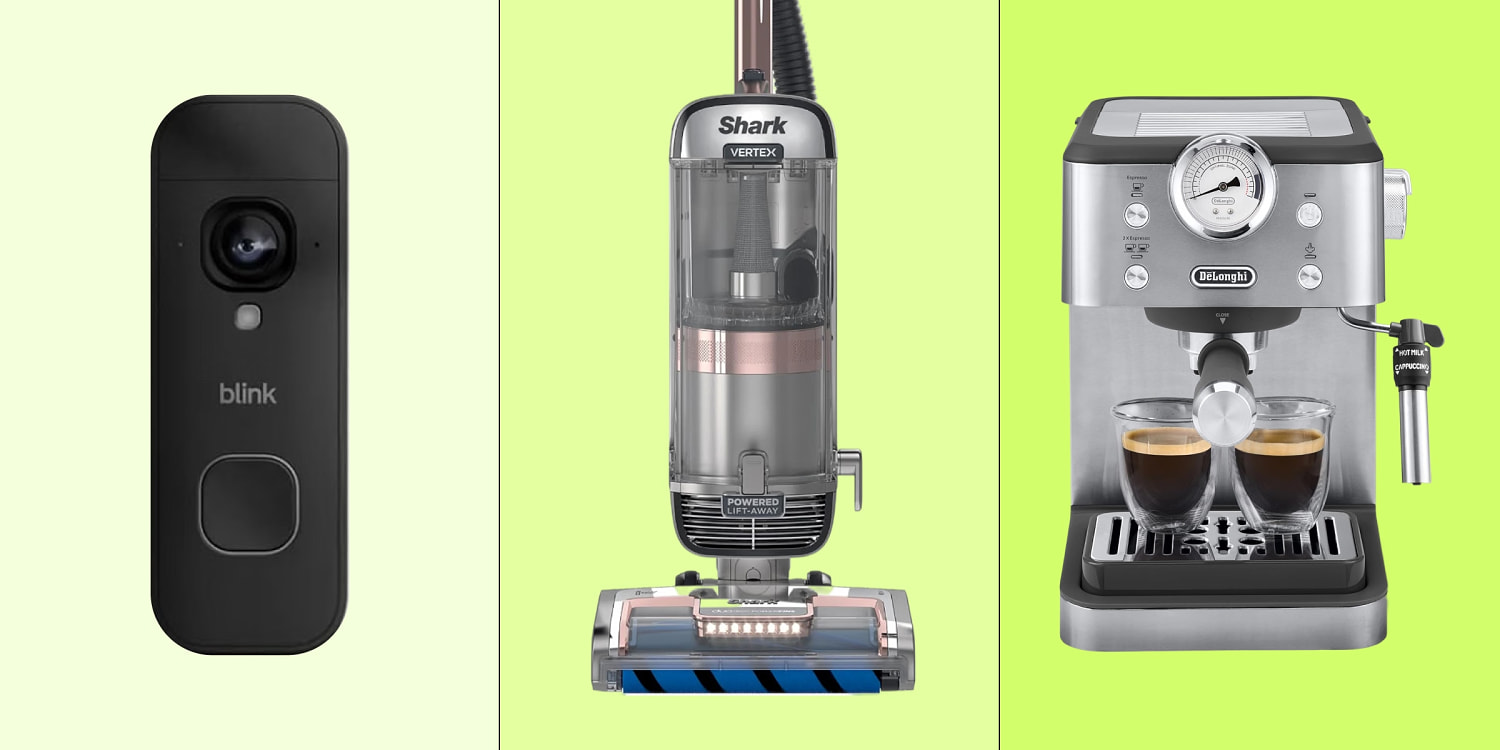
Most early Black Friday deals are mathematical illusions designed to capture your credit card before you have a chance to compare prices. If you want actual savings right now, skip the generic doorway banners and focus exclusively on three categories where retailers are genuinely forced to liquidate inventory early: last-generation flagship televisions, overstocked small kitchen appliances, and outgoing wireless earbuds. Everything else is largely a psychological warm-up act engineered to drain your holiday budget while protecting corporate profit margins.
Walk onto any major retail website in late October or early November and you will be greeted by a wall of crimson badges screaming about historic markdowns. Traditional shopping guides eagerly round up dozens of these listings, presenting them as curated treasures handpicked by alleged experts. What those glossy roundups routinely omit is the financial architecture behind those links. When a media outlet publishes a list of forty-plus early Black Friday deals, they are rarely evaluating price history or manufacturing quality. They are monetizing urgency through affiliate commissions.
Retailers understand this dynamic intimately. By launching "early" sales weeks ahead of the actual Friday after Thanksgiving, big-box stores smooth out their supply chain bottlenecks and lock in Q4 revenue before competitors can undercut them. For the consumer, this creates a minefield of artificial anchor pricing, derivative hardware models, and manufactured scarcity. Navigating this environment requires stripping away the marketing paint and looking directly at how retail pricing actually works.
The Anatomy of a Fake Markdown
To understand why so many early Black Friday deals fail the basic math test, you have to look at the Manufacturer's Suggested Retail Price, or MSRP. In modern consumer electronics and home goods, the MSRP is rarely a reflection of what an item actually sells for during a normal week in July. It is a fictional ceiling established specifically so the retailer can claim a massive percentage discount during promotional windows.
Consider a hypothetical example of a mid-range cordless stick vacuum. The manufacturer sets the official MSRP at $499. Throughout the spring and summer, the machine routinely sells on major e-commerce platforms for $349. When November arrives, the retailer slaps a "Black Friday Early Access" banner on the product page, strikes through the $499 price, and advertises it for $329. You are led to believe you are saving $170. In reality, you are saving $20 off the standard street price, and you are being pressured into buying it immediately under the false pretense of a once-a-year windfall.
This practice, known in retail circles as reference price inflation, is completely legal in most jurisdictions as long as the item was offered at the higher price for a minimal, technical window of time. Sometimes that window occurs on an obscure regional site or during a brief off-peak period when nobody was buying.
How Dynamic Pricing Traps Early Shoppers
Algorithms now adjust online prices millions of times a day based on inventory levels, competitor stock, and even your browsing behavior. When you click on an early Black Friday deal roundup, you are entering an ecosystem where prices fluctuate by the hour.
Retailers frequently employ a tactic called price pulsing. They will drop the price of a popular air fryer or gaming headset for six hours to trigger deal-tracking bots and get featured on major shopping blogs. Once the traffic surges and the affiliate links go live, the algorithm nudges the price back up by fifteen or twenty percent. Thousands of shoppers click through, see the red "Deal" badge still active, and purchase the item without realizing the actual floor price expired hours earlier.
The Derivative SKU Trap
If the price itself isn't a mirage, the product might be. One of the oldest, most persistent tricks in the Black Friday playbook is the creation of derivative SKUs—products manufactured exclusively for the holiday sales season that look identical to flagship models on the outside while cutting critical corners on the inside.
If you see a massive 65-inch 4K television from a tier-one brand advertised at an unbelievably low price during an early sale, check the model number down to the very last letter. A standard year-round model might end in a sequence like UN65CU8000. The Black Friday special might end in UN65CU800D or UN65CU7900. To the naked eye on a compressed webpage thumbnail, the televisions are twins.
Behind the bezel, the story changes entirely. Derivative holiday models frequently feature:
- Reduced HDMI ports, dropping from four down to two, leaving you scrambling if you own a soundbar and a gaming console.
- Slower internal processors, which turns navigating streaming apps into a sluggish, frustrating chore within six months.
- Lower peak brightness panels, meaning HDR content looks washed out in any room with natural sunlight.
- Cheaper Wi-Fi chips, restricting the television to older wireless standards that buffer constantly on high-bitrate 4K streams.
These units are not defective, nor are they strictly scams. They are value-engineered commodities built to hit a specific promotional price point while preserving the manufacturer's profit margin. Retailers love them because they can advertise a doorbuster price without cannibalizing sales of their high-margin core lineup.
Where the Real Early Value Actually Hides
Despite the noise, genuine bargains do exist before Thanksgiving. You just have to know where the financial pressure points sit for manufacturers and distributors. Retailers do not drop prices out of seasonal generosity; they drop prices when holding onto inventory becomes more expensive than liquidating it.
Outgoing Audio and Wearable Tech
Consumer tech runs on ruthless annual or bi-annual refresh cycles. When a major audio brand releases a new generation of noise-canceling headphones in late summer or early autumn, the previous generation becomes dead weight in warehouse space. Early November is the exact moment distributors pull the trigger on aggressive clearance pricing for these outgoing models.
Because audio engineering moves incrementally rather than exponentially, last year's flagship earbuds or over-ear headphones typically deliver ninety-five percent of the acoustic performance and noise cancellation of the brand-new release, often at forty to fifty percent off their original launch price. This is one of the few sectors where buying early carries virtually zero risk of regret, because once those remaining warehouse pallets clear out, the product is gone for good.
Overstocked Kitchen Countertop Appliances
Small kitchen appliances—espresso machines, high-end blenders, stand mixers, and multi-cookers—have massive retail markups built into their standard pricing. Manufacturers frequently overproduce these items in anticipation of Q4 gifting demand. When retail buyers order conservatively due to broader economic tightening, manufacturers are left sitting on excess stock.
To move those units before storage fees eat their margins, brands authorize steep, genuine discounts early in the season. Unlike televisions, kitchen appliance manufacturers rarely produce cheaper derivative models for Black Friday. The stand mixer or burr coffee grinder you buy during an early November promotion has the exact same motor, gears, and warranty as the one sold at full price in April.
Last-Generation Flagship Televisions
While budget Black Friday TVs are full of compromises, genuine flagship OLED and Mini-LED televisions from the prior model year follow a completely different trajectory. High-end display technology depreciates rapidly once the new spring lineup hits showroom floors. By November, any remaining stock of last year's top-tier panels hits rock-bottom pricing. Retailers know that tech-savvy buyers will not pay near-retail prices for a twelve-month-old display, forcing them to slash margins to clear floor space.
The Affiliate Machine Behind "Expert" Lists
When you read an article promising the "best early Black Friday deals handpicked by an expert," you are looking at a commercial storefront disguised as journalism. Modern digital publishing relies heavily on commerce content. When you click a link in one of those lists and buy a toaster, the publisher collects a percentage of the sale—usually anywhere from three to ten percent, depending on the retailer and product category.
There is nothing inherently wrong with affiliate revenue; it funds a massive portion of the internet. The problem arises when the financial incentive dictates the editorial selection.
A genuine bargain on an obscure, unbranded mechanical keyboard that offers a two percent commission will rarely make the cut on a mainstream shopping roundup. Instead, editors are incentivized—often through automated dashboards that highlight high-commission items—to push expensive, recognizable brand-name products with higher payout rates, regardless of whether the current discount is actually competitive. Furthermore, many retailers offer temporary commission bumps during early Black Friday windows, effectively bribing publishers to feature mediocre deals prominently at the top of their pages.
How to Audit Any Deal in Sixty Seconds
You do not need an insider's press pass to beat the retail algorithms. You just need to strip away the retailer's framing and verify the data independently before entering your payment details.
- Pull the raw price history. Never trust the strikethrough price on a product page. Copy the exact product URL or model number and run it through a dedicated third-party price tracker. Look at the twelve-month graph, not the thirty-day window. If the current "Black Friday" price matches the price from a random Tuesday in August, close the tab.
- Isolate the exact model number. Copy the full alphanumeric string from the specifications table—not the marketing title—and paste it into a search engine. Check if that exact string appears on the manufacturer's official website and look at the review dates. If the model only appeared online in October of the current year, you are looking at a holiday-specific derivative build.
- Check the return window policy. Many retailers quietly alter their return policies on deep-discount doorbusters, shrinking the standard thirty-day window down to fourteen days, or tacking on restocking fees for opened electronics. Conversely, reputable retailers extend their holiday return policies starting in early November, allowing returns through January. Verify which bucket your item falls into before buying.
- Compare total cart value, not unit price. Retailers love to lure you in with a loss-leader price on a primary device while gouging you on the mandatory proprietary accessories, extended warranties, or shipping thresholds. A great deal on a gaming console or smart home hub evaporates the moment you pay full retail price for an extra controller or proprietary power cable.
The Psychological Trap of Manufactured Scarcity
The ultimate weapon in the early Black Friday arsenal is not price; it is anxiety. Countdown timers ticking down the seconds on a webpage, red text warning that "only 4 left in stock," and badges declaring "selling fast" are all engineered to bypass your rational decision-making process and trigger loss aversion.
In behavioral economics, loss aversion dictates that the pain of losing out on a perceived bargain is psychologically twice as powerful as the pleasure of gaining an actual discount. Retailers exploit this hardwired human vulnerability relentlessly. Even when an item has millions of units sitting in regional fulfillment centers, an e-commerce interface can artificially throttle stock visibility to create the illusion of an imminent sellout.
The reality of modern retail is that true sellouts are exceptionally rare outside of niche collectibles, limited-edition footwear, and brand-new gaming hardware. If you miss an early November sale on a robot vacuum, a mattress, or a pair of headphones, that exact same price—or a slightly better one—will almost certainly reappear during Thanksgiving week, Cyber Monday, or the mid-December clearance push.
Stop treating early Black Friday roundups as treasure maps and start viewing them as corporate press releases. Bookmark the specific items you actually need right now, record their baseline prices in a simple spreadsheet, and let the retail algorithms fight for your business on your timeline, not theirs.