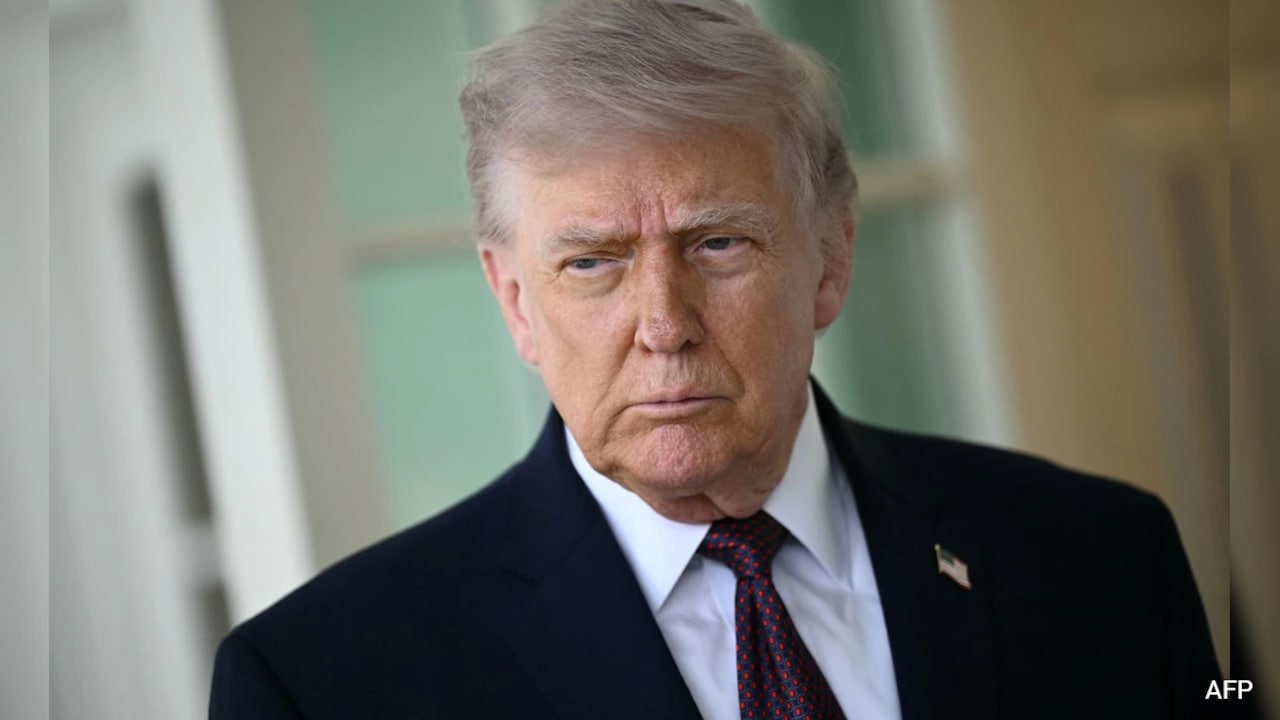
The federal appeals court ruling that forced the removal of Donald Trump’s name from the Kennedy Center facade on Friday night marks the climax of a chaotic bureaucratic putsch. While casual observers viewed the midnight scramble of construction crews as a standard partisan skirmish over public real estate, the reality runs far deeper. This was a systematic attempt to weaponize a national cultural monument, dismantle its independence, and use a multi-billion-dollar infrastructure project to mask an unprecedented institutional takeover.
When a panel of the U.S. Court of Appeals for the D.C. Circuit issued a swift, one-page denial of the Justice Department’s emergency stay request, it did more than just enforce a 7 p.m. deadline. It exposed a desperate, eleventh-hour legal gamble designed to outrun a scathing 94-page district court opinion. For months, the newly installed leadership of the performing arts venue operated under the assumption that raw executive pressure could override statutory law. They found out otherwise.
The crisis began in earnest early last year when the White House orchestrated a sweeping purge of the center’s board of trustees. Long-serving, bipartisan members were summarily ousted and replaced with highly partisan loyalists. By December, this newly configured board took the extraordinary step of voting to rename the venue "The Donald J. Trump and The John F. Kennedy Memorial Center for the Performing Arts."
The rebranding was executed with astonishing speed. Signage appeared on the building the very morning after the vote, a logistical feat that Justice Department lawyers later conceded required purchasing and preparing the heavy exterior lettering weeks before the board had even formally met to deliberate.
This was never about a simple honorific. Renaming the center was the opening salvo in a broader strategy to reshape the institution’s core purpose. Soon after taking the reins, the new board, led initially by Richard Grenell and later by Matt Floca, sought to alter the facility's programming. Avant-garde theater and traditional orchestral lineups were pressured to make room for events tailored to the administration's political circle, including a high-profile documentary premiere for the first lady.
More damaging still was the administration's sudden announcement that the entire complex would close for two years for a massive, $1.8 billion renovation. Executive director Matt Floca claimed in court filings that the building was in a state of advanced decay, citing failing roof panels and water seeping into electrical vaults. He argued that keeping the venue open during construction would be irresponsible, and warned that losing the Trump name would destroy fundraising efforts and render the institution financially nonviable.
The artistic and architectural communities saw the closure as an entirely different mechanism. Prominent figures alleged that the two-year shutdown was an artificial pause designed to break the contracts of recalcitrant staff, clear out non-compliant performance groups, and permanently alter the venue's cultural identity. Steven Holl, the renowned architect who designed the center’s 2019 expansion, went public, calling the structural panic an absurd cover-up and stating flatly that the claims of catastrophic physical deterioration were untrue.
The institutional blowback was immediate and severe. Rather than stabilizing the center, the renaming triggered an unprecedented exodus. Audiences revolted, driving ticket sales to their lowest levels in years. Top-tier artists, including musician Béla Fleck, actor Issa Rae, and author Louise Penny, abruptly canceled scheduled appearances. A highly anticipated run of the musical Hamilton was pulled by its producers in protest.
Worse for the venue’s operational stability, key creative leadership walked out. Longtime artistic consultants like Ben Folds and Renée Fleming resigned their positions. Jean Davidson, the executive director of the National Symphony Orchestra, chose to abandon the capital entirely, taking a position at an arts center in Los Angeles rather than preside over what staffers described as an environment of intense political cronyism.
The legal undoing of this takeover came from within the board itself. Representative Joyce Beatty, an Ohio Democrat serving as an ex-officio board member, filed a lawsuit after she was repeatedly muted during virtual board meetings while trying to voice opposition to the renaming.
Her lawsuit forced a judicial review that the administration’s lawyers were completely unprepared to win. In late May, U.S. District Judge Christopher Cooper issued a definitive ruling that dismantled the board's entire legal premise. Cooper pointed out that the National Cultural Center was explicitly renamed by an act of Congress in 1964 to serve as a living memorial to the assassinated president.
"Congress gave the Kennedy Center its name," Cooper wrote with unmistakable clarity, "and only Congress can change it."
Cooper’s ruling did not just order the removal of the signage; it also blocked the planned two-year shutdown. He noted that the board had been completely derelict in its duties, accepting a one-sided presentation regarding the building's physical condition while entirely ignoring its statutory obligation to keep the national memorial open to the public.
The emergency appeal denied on Friday night was an attempt to freeze that order. Government lawyers tried to claim that changing the name back and forth during a lengthy appeals process would cause mass public confusion and alienate donors who had pledged money specifically to the Trump brand. They even included clauses in donation agreements stating that if the name were removed, the center would be forced to return millions in contributions.
The appellate court was unimpressed by these manufactured high stakes. The three-judge panel, which included a jurist appointed by Trump himself, rejected the stay without a single noted dissent. Attorneys for the opposition correctly identified the late-night filing as an attempt to run out the clock and force a de facto delay.
As a summer thunderstorm rolled over the Potomac on Friday evening, workers in yellow vests stood on scaffolding, preparing to pry the brass lettering from the marble facade while a crowd gathered below to watch. The physical letters may be coming down, but the deeper systemic damage to the nation's premier arts institution will take years to repair. A major cultural venue cannot be treated like a branding asset or a personal fiefdom without breaking the very mechanism that allows it to function.