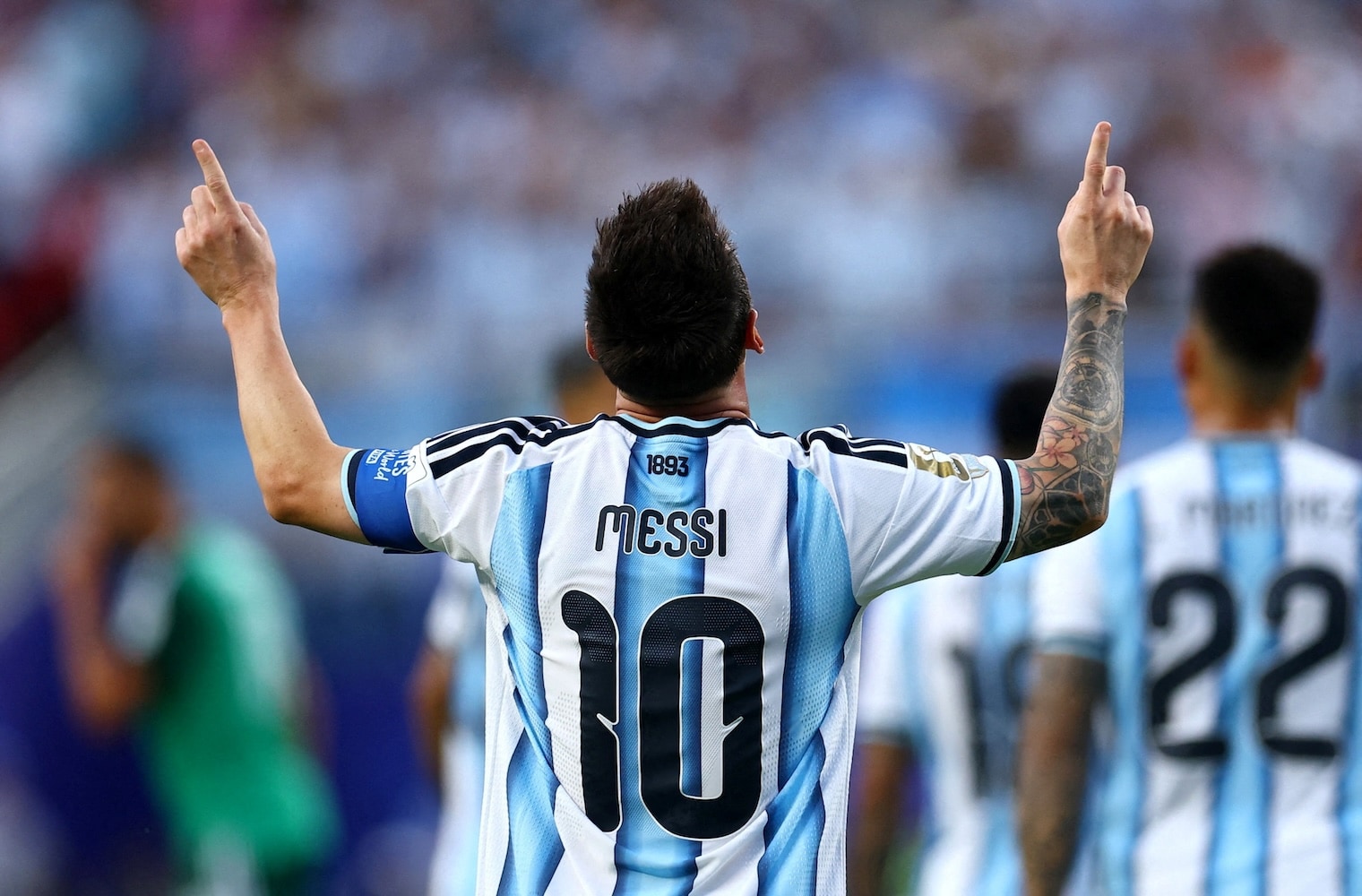
Alexis Mac Allister spilled the tactical open secret of Argentinian football following a recent national team match. "We have to build a team so that Messi feels comfortable," the midfielder admitted. While the statement sounds like standard locker room deference to the greatest player of a generation, it actually exposes a systemic tactical trap that has plagued Argentina for over a decade. It is a philosophy that brought them a World Cup in 2022, but one that threatens to paralyze the squad as they transition into a brutal new era.
The primary issue is not whether Messi deserves a bespoke system. He does. The real problem lies in how this hyper-fixation on one man’s comfort zone actively stifles the development of the elite young talent surrounding him, creating a fragile tactical ecosystem that collapses the moment the maestro has an off night or faces an opponent capable of isolating him.
The Architect’s Dilemma
Building a football team around a single focal point is a calculation of diminishing returns. In his prime, Messi compensated for a lack of defensive work rate with unprecedented offensive output. Today, the math is different. At this stage of his career, accommodating Messi requires ten other players to absorb a massive physical workload to cover the spaces he vacates out of possession.
This creates a tactical paradox. To keep Messi comfortable, Argentina must field a midfield of ultra-functional workhorses rather than dynamic, vertical playmakers.
Consider the tactical profile required to support this structure. Midfielders like Mac Allister, Rodrigo De Paul, and Enzo Fernández are forced to play a hybrid role. They cannot simply occupy their natural zones; they must constantly shift to patch the holes left on the right flank or in the central press. This is exhausting work. It limits their own ability to crash the box or dictate the tempo of the game on their own terms. They become custodians of the system rather than protagonists.
When Lionel Scaloni first took over the national team, this extreme specialization was a necessity. The squad lacked a cohesive identity, and rallying around Messi’s remaining peak years was the fastest route to silverware. It worked spectacularly in Qatar. But football moves fast. The tactical blueprints used in 2022 are already archived material, and opponents have spent years studying how to disrupt the specific passing lanes designed to feed Argentina's captain.
The Cost of Tactical Deference
When a squad’s primary directive is to make one player comfortable, individual initiative dies. We see this manifested in a predictable attacking pattern. Players who dominate for their European club teams—taking risks, driving at defenders, shooting from distance—suddenly become incredibly conservative when wearing the Albiceleste. They look for Messi first, second, and third.
The Passing Trap
Data from recent tournament cycles reveals a telling trend in passing networks. When Messi is on the pitch, the share of progressive passes directed toward the right-half space increases by an asymmetrical margin.
- Predictability: Opposing managers no longer need to guess where the danger originates. They simply deploy a low block that cuts off the diagonal lanes from the left channel to Messi's preferred receiving zones.
- Stagnation: Young wingers and forwards stop making vertical runs behind the defensive line because the system favors short, rhythmic passes to feet that allow Messi to orchestrate from a standstill.
- Physical Burnout: The heavy burden of tracking back falls entirely on the remaining midfielders, leading to second-half fatigue against high-pressing European or South American opponents.
This deference creates a psychological safety net that quickly turns into a cage. If the team struggles, the default reaction is to hand the ball to the number ten and watch. This structural codependency was visible during Argentina's recent sluggish tournament outings, where possession looked neat but lacked any real penetration until a moment of individual magic broke the deadlock. Relying on magic is not a sustainable sporting strategy.
The Evolution of the Modern Press
International football has shifted toward high-intensity, synchronized pressing systems that leave no room for defensive passengers. Elite teams defend with eleven men. When one player is systematically exempted from the press, the entire defensive block must shift to compensate, leaving exploitable space on the opposite flank.
European powerhouses have spent the last five years perfecting the art of overloading the spaces created by a drifting playmaker. If Argentina faces a side with elite, athletic full-backs, the burden on Argentina's right-sided central midfielder becomes untenable. He is forced to choose between tracking an overlapping runner or staying compact in the center. It is a lose-lose scenario that high-level tacticians exploit with ruthless efficiency.
Mac Allister’s comment implies that the team must continue to mold itself around this singular axis. But doing so ignores the reality of the talent currently emerging from Argentina's youth ranks. The country is producing a new generation of direct, high-pressing, physically imposing players who thrive in chaotic, transitional football. Forcing these players into a rigid, slow-tempo possession system designed for a different era is an analytical mistake.
The Post-Comfort Horizon
The hard truth is that Argentina needs to learn how to make Messi uncomfortable if they want to survive the upcoming cycle. He needs to be challenged to adapt to a modern, collective pressing structure, even if it means reducing his minutes or changing his role to that of an elite impact sub or a strict penalty-box predator.
This is a cultural hurdle as much as a tactical one. In Argentina, questioning the system built around Messi is viewed as heresy. The memory of the World Cup triumph provides a shield against criticism. However, football history is littered with champions who failed to evolve because they fell in love with the formula that won them their last trophy.
The current framework is unsustainable. The physical demands of the modern game will eventually break a midfield that spends 90 minutes running for two people. To avoid a painful regression, the coaching staff must shift the narrative away from making a single player comfortable and toward maximizing the collective ceiling of the entire squad. The transition must begin now, while the team still has the cushion of recent success, rather than in the middle of a tournament crisis when it is already too late.