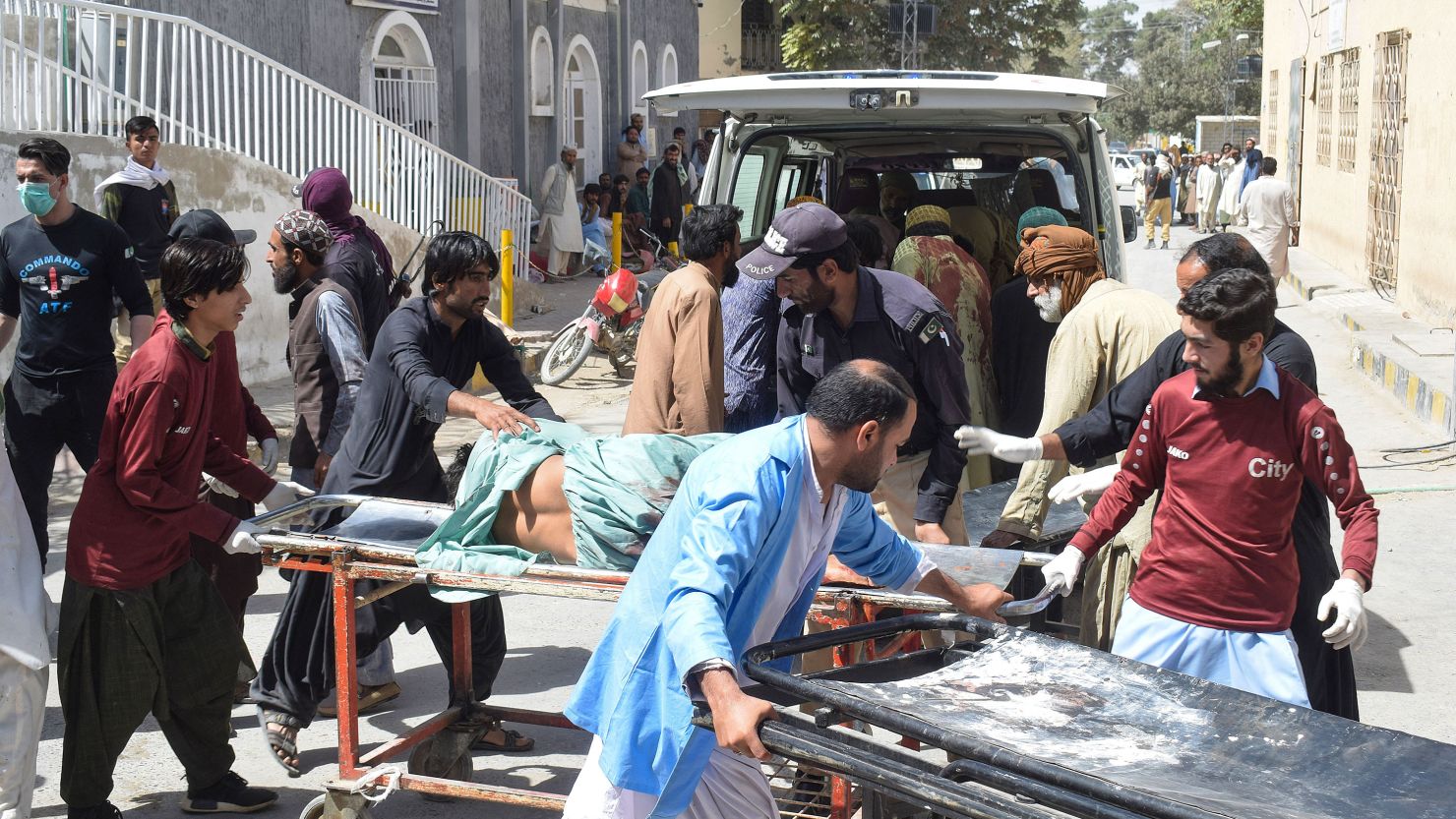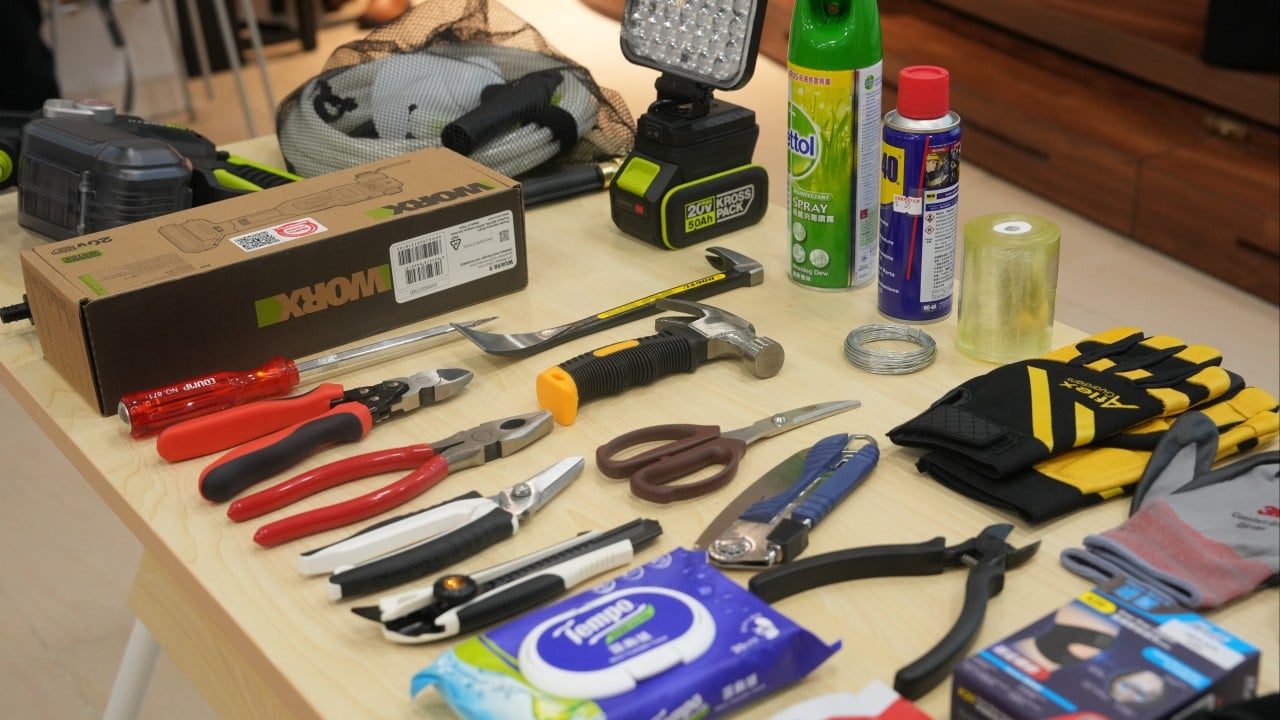
Returning to a home gutted by fire is not a homecoming. It is a forensic audit of everything you used to be. For the residents of Wang Fuk Court, the shock of the initial blaze has now curdled into a grueling confrontation with bureaucracy, toxic residue, and the structural integrity of their future. While standard advice tells you to bring a mask and a pair of gloves, the reality of fire recovery demands a much more aggressive strategy. You are entering a crime scene where the primary culprit is airborne particulate matter and the secondary threat is an insurance industry designed to wait you out.
Survival in the aftermath requires an immediate shift from victim to project manager. You must secure the perimeter, document every square inch of charred property before a single broom touches the floor, and prepare for a long-term battle with invisible contaminants that standard cleaning supplies cannot touch.
The Toxic Legacy of Modern Construction
When a high-rise unit burns, it isn't just wood and paper fueling the flames. We live in boxes filled with treated polymers, flame-retardant foams, and synthetic textiles. When these materials reach combustion point, they release a chemical cocktail that clings to surfaces long after the smoke clears.
In the specific context of the Wang Fuk Court incident, the heat intensity suggests that PVC piping and cable insulation likely off-gassed hydrogen chloride. This gas, when mixed with the humidity common in Hong Kong, becomes hydrochloric acid. It doesn't just smell bad; it eats through the motherboards of your electronics and the structural metal reinforcements within your walls.
If you walk into your unit and see a fine, grey-black dust, do not assume it is simple soot. That is a biohazard. Bringing a standard N95 mask is the bare minimum, but for a prolonged assessment, you need a P100 respirator. Anything less allows sub-micron particles to enter your bloodstream through your lungs. This isn't about being overly cautious. It is about acknowledging that the environment inside a fire-damaged flat is fundamentally hostile to human biology.
The Insurance Trap and the Documentation War
Insurance companies stay profitable by minimizing payouts. They rely on the fact that most homeowners are too traumatized to properly document their losses. They want you to start throwing things away. They want you to "tidy up" because a clean room looks less expensive to fix than a blackened one.
Before you move a single piece of debris, you must record a continuous video walkthrough of the entire premises. Narrate as you go. Open every drawer. Point the camera at the ceiling corners to show where smoke has bypassed the visible surfaces.
Pro-tip from the field
Do not settle for the "standard" cleaning service provided by your building management or a basic insurance contractor. These crews are often trained for "visible" cleanliness. You need a restoration specialist who uses thermal fogging or ozone generators to neutralize odors at the molecular level. If the smell remains, the chemicals remain.
If you find that your policy has gaps—which many high-rise residents do—you are suddenly looking at out-of-pocket costs that can easily exceed the price of a mid-range vehicle. Structural repairs in a building like Wang Fuk Court are complicated by shared utility shafts. If the fire damaged the vertical plumbing or electrical risers, your individual unit cannot be fully restored until the entire building’s core is certified. This is where the bureaucracy becomes a second disaster.
The Structural Integrity Lie
Building inspectors will often give a "green light" for re-entry once the immediate danger of collapse is ruled out. This is a low bar. For the resident, the concern isn't just whether the floor will hold; it’s whether the heat has compromised the tempered strength of the window frames or the seals of the external masonry.
Extreme heat causes concrete to undergo a process called spalling. The water trapped inside the concrete expands, causing the surface to crack and pop. Even if the wall looks solid, its load-bearing capacity might be degraded. You need to look for "spider-webbing" in the plaster and any discoloration of the concrete. If you see exposed rebar that has turned a blueish-grey tint, that metal has been weakened by heat.
The Logistics of Displacement
Living out of a suitcase while your home is a construction zone is a test of psychological endurance. The residents who navigate this best are those who treat their temporary housing as a base of operations rather than a waiting room.
- Mail Redirection: Do this on day one. You cannot afford to miss utility bills or legal notices because they are sitting in a charred mailbox.
- Power Down: If the fire didn't take out your electricity, the fire department likely did. Do not attempt to flip the breakers back on yourself. Moisture from fire hoses combined with damaged insulation creates a high risk of arc flashes.
- The Humidity Factor: Hong Kong’s climate is the enemy of a fire-damaged home. Ash is acidic. When ash meets 80% humidity, it becomes a corrosive paste. If your windows are gone and the air is getting in, your "surviving" appliances are dying by the hour.
The Psychological Toll of the "Smell of Fire"
There is a specific olfactory trigger associated with house fires that lingers in the brain's limbic system. Long after the walls are repainted, that faint scent of burnt plastic can trigger a fight-or-flight response. This is why "good enough" cleaning is a failure.
You must strip the unit down to the studs. Porous materials like drywall and insulation act as sponges for smoke. If you try to paint over smoke-damaged walls with regular latex paint, the oils in the soot will eventually bleed through, and the smell will return every time the weather gets hot. You must use a specialized, oil-based primer designed to seal in odors.
Managing the Building Management
Wang Fuk Court is a collective living environment. Your recovery is tied to your neighbors. If the unit below you has standing water from the fire hoses that hasn't been extracted, you are going to have a mold problem within 48 hours. This is the "hidden" disaster of fire fighting. More property is often destroyed by water than by flame.
Demand to see the building management's plan for the common areas. If they aren't cleaning the ventilation ducts for the entire floor, your clean apartment will be re-contaminated the moment you turn on your air conditioning. You are paying management fees; this is the time to leverage that contract.
The Inventory of the Unseen
Make a list of every document you lost. Birth certificates, passports, property deeds, and tax records. Replacing these is a full-time job. In Hong Kong, the process for replacing a lost HKID or passport is straightforward but time-consuming. However, replacing professional certifications or older property records can take months.
Do not overlook your digital life. Hard drives and laptops that were in the "cool" parts of the fire may still be salvageable, but do not turn them on. The heat may have softened the solder or warped the platters. Take them to a data recovery specialist who can extract the information in a controlled environment.
The Finality of the Clean Out
There comes a point where you have to decide what is worth saving. Most people try to save too much. They hold onto soot-stained books or clothing that will never truly be clean. This is a mistake. The emotional weight of keeping "reminders" of the fire is a burden you don't need.
If it’s porous and it smells like smoke, throw it away. The cost of professional restoration for a $500 suit is often more than the suit is worth, and the result is rarely perfect. Focus your resources on the items that are truly irreplaceable—photos, heirlooms, and legal documents. Everything else is just "stuff" that is now carrying a toxic load.
The Professional Path Forward
Unless you are a trained professional, do not attempt to DIY a fire restoration. You will miss the soot inside the electrical outlets. You will miss the mold growing behind the baseboards. You will breathe in particulates that will haunt your health for a decade.
Hire a certified industrial hygienist to test the air quality before you move back in. It is a small price to pay for the certainty that your home is no longer a health hazard. If the insurance company refuses to pay for the test, pay for it yourself and use the results as leverage for a larger settlement.
The recovery at Wang Fuk Court will not be measured in weeks. It will be measured in the months of persistent pressure you apply to contractors, insurers, and building officials.
Stop viewing your home as a sanctuary for a moment and start seeing it as a recovery project that requires your absolute, unsentimental oversight.