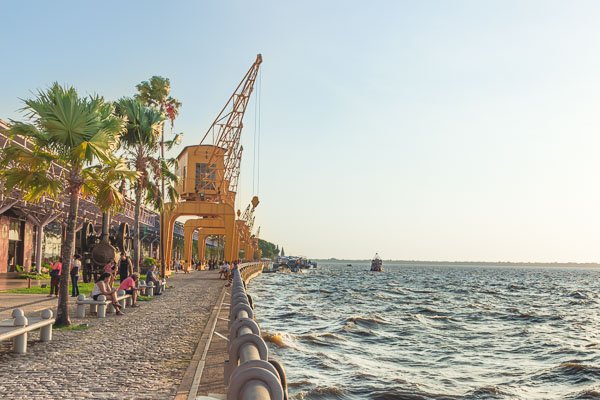
Pope Francis recently stood on the Canary Islands docks to condemn global indifference toward migrating people, a move that directly challenges European Union border policies. While media coverage focused heavily on the visual spectacle of the pontiff praying over the Atlantic, the actual crisis in the archipelago is driven by a complex web of shifting maritime routes, geopolitical deals in North Africa, and a severely strained local infrastructure. The real story is not just the papal reprimand, but how this small Spanish archipelago became the deadliest border crossing in the world while continental Europe looked the away.
The Canary Islands route is currently the main entry point for irregular migration into Spain. As Mediterranean routes face heavier policing and stricter Frontex interceptions, human smuggling networks have pivoted toward the open Atlantic. This shift has turned a relatively quiet tourist destination into a frontline humanitarian zone.
The Deadly Shift to the Atlantic Route
Smugglers are forcing people into overcrowded wooden boats called cayucos. These vessels launch from the coasts of Senegal, Mauritania, and Morocco, attempting to hit a tiny cluster of islands in a vast, treacherous ocean.
If a boat misses the islands, it drifts into the open Atlantic. Most are never seen again.
The mechanics of this journey explain the surging death toll. Unlike the shorter Mediterranean crossings where land is often visible, the Atlantic route requires navigating strong Saharan winds and volatile ocean currents. A minor engine failure or a miscalculation in fuel can doom a vessel within hours. Local rescue services are overwhelmed, frequently forced to choose which distress signal to answer first when multiple boats appear on radar simultaneously.
European border enforcement choices actively shape these migration patterns. When Spain and Italy tightened controls in the Mediterranean through bilateral agreements with Libya and Morocco, they did not stop the desperation driving people to leave. They merely redirected the flow. The Atlantic route is the direct consequence of a fortified Mediterranean, proving that border security measures often displace human movement rather than suppress it.
The Geopolitical Deals Fueling the Influx
To understand why the Canary Islands are bearing this burden, look at the shifting political landscape of Northwest Africa. European nations frequently use financial aid to turn transit countries into external border guards.
Spain relies heavily on cooperation from Rabat and Nouakchott. When relations between Madrid and these capitals strain, departures from the African coast spike. Conversely, when aid packages are signed, departures temporarily drop. This reality turns human beings into geopolitical leverage.
Mauritania as the New Buffer Zone
Mauritania has become the primary launching pad for cayucos heading to El Hierro, the smallest and westernmost of the Canary Islands. The European Union recently pledged hundreds of millions of euros to Mauritania to help curb this traffic. However, this strategy has major flaws.
- Displacement: Increased patrols around Nouadhibou simply push smuggling networks further south into Senegal, lengthening an already perilous journey.
- Lack of Oversight: Funneling millions into foreign security apparatuses offers no guarantee of human rights protections for intercepted migrants.
- Economic Drivers: Local fishing economies in Senegal and Mauritania are collapsing due to industrial overfishing by foreign fleets, leaving young people with few viable livelihoods beyond migration or smuggling.
The Local Infrastructure Collapse
The Canary Islands cannot handle the sheer volume of arrivals. On islands like El Hierro, the migrant population frequently outnumbers local residents in specific villages. Local officials are dealing with a logistical nightmare that continental authorities largely ignore.
The most severe strain is on the regional juvenile care system. Under Spanish law, autonomous communities hold sole responsibility for unaccompanied minors. The Canary Islands government is currently caring for thousands of minors over their actual capacity. Temporary reception centers, setup in repurposed schools and military barracks, are completely full.
Political gridlock in Madrid prevents a sustainable solution. The Spanish parliament failed to pass a reform of the immigration law that would force other regions of Spain to accept a mandatory distribution of unaccompanied minors. Wealthier regions on the mainland often refuse to take their share, leaving the islands isolated. This political abandonment creates a volatile environment where local resources are depleted, and anti-immigrant sentiment begins to take root in a historically welcoming population.
The Financial Network Behind the Voyages
Migration is a multi-million-euro industry for criminal syndicates operating out of Dakar and Saint-Louis. These organizations operate with sophisticated logistics, managing supply chains of fuel, outboard motors, and GPS equipment.
A single spot on a cayuco can cost anywhere from 1,000 to 3,000 euros. For families in rural Senegal, this requires pooling community resources or selling land. The smugglers use this capital to buy larger boats and higher-horsepower engines, allowing them to launch multiple vessels simultaneously to confuse coastal radars.
Targeting the financial structures of these networks is difficult because the money rarely passes through formal banks. Instead, smugglers utilize informal cash transfer networks, making the funds nearly impossible to trace or freeze. Arresting low-level boat captains does nothing to disrupt the syndicates, as these operators are easily replaced by desperate individuals offered free passage in exchange for steering the boat.
The Strategic Illusion of Temporary Containment
The European Union's current approach treats the Canary Islands as a giant holding pen. The goal is to process arrivals on the islands and prevent them from reaching mainland Europe, where they could move freely across Schengen borders.
This containment strategy mimics the failed hotspot approach used on Greek islands like Lesbos. By keeping people confined to the periphery, central European governments can pretend the crisis is contained. It is a policy of geographic segregation that externalizes the humanitarian costs to island communities and border guards who are left to deal with the psychological fallout of retrieving bodies from the sea.
The Pope’s public criticism hit a nerve because it exposed the hypocrisy of European nations that champion human rights globally while funding policies that lead to mass drownings at their own borders. Moral declarations alone will not fix the structural failures of EU asylum policy. Without a mandatory, pan-European system for distributing arrivals and creating legal, regulated pathways for labor migration, the Atlantic route will continue to claim lives. The cayucos will keep launching because the alternative for the people on board—poverty, political instability, and ecological collapse at home—remains far more terrifying than the open ocean.