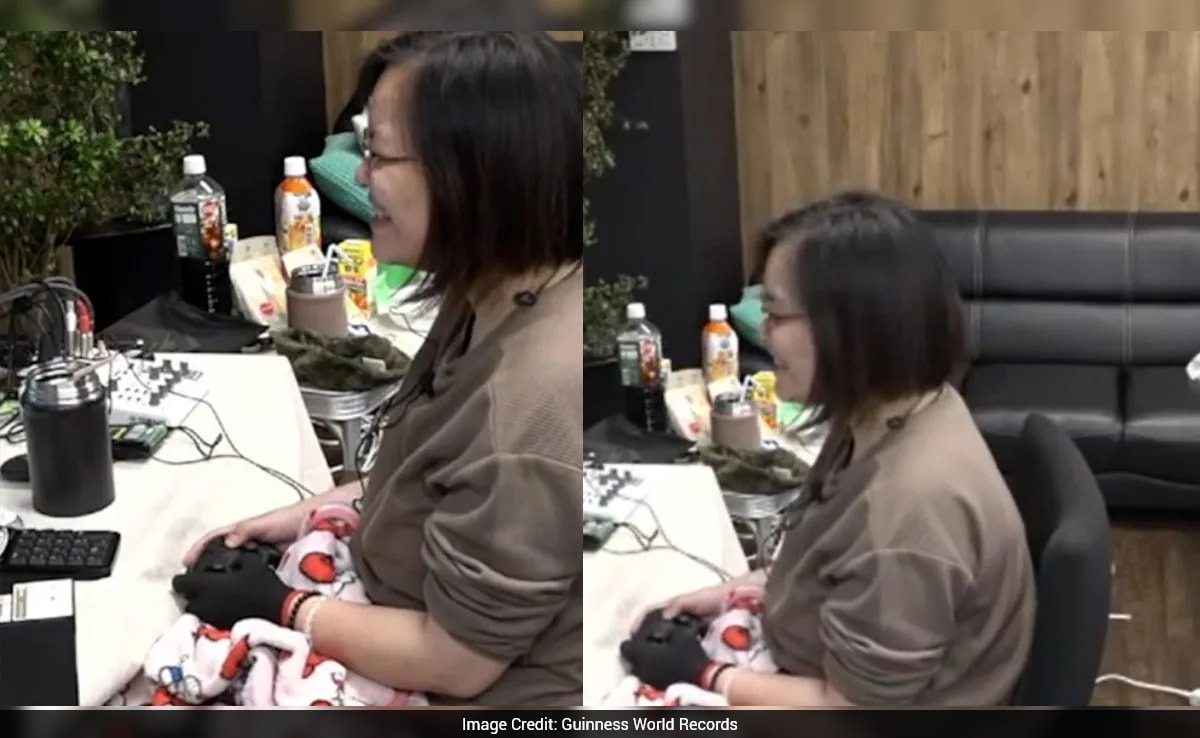
Kinako, a Japanese gaming streamer, recently pushed the boundaries of human endurance by playing the Super Mario series for over 60 consecutive hours. While the headlines focus on the novelty of a Guinness World Record, the reality of the achievement is a grim study in sleep deprivation and physiological strain. This was not a casual weekend marathon. It was a calculated, grueling assault on the central nervous system that highlights the growing obsession with extreme endurance in the live-streaming industry.
The feat took place over three days of relentless platforming. To understand the scale, one must look past the colorful pixels of the Mushroom Kingdom and toward the biological breaking point of the player.
The Biology of the Sixty Hour Wall
The human body is not wired for sixty hours of sustained cognitive demand. By the forty-hour mark, the brain begins to enter a state of microsleep, where the mind shuts down for seconds at a time even while the eyes remain open. For a speedrunner or a high-level player, this is a death sentence for precision.
Precision matters. In titles like Super Mario Bros. 3 or Super Mario World, the margin for error is measured in frames. As Kinako pushed into the second night, her reaction times likely slowed from the average 200 milliseconds to something resembling a person with a blood-alcohol content of 0.10%.
Research into prolonged wakefulness shows that after 48 hours, the glucose metabolism in the brain drops significantly. The prefrontal cortex, responsible for decision-making and executive function, essentially begins to brown out.
Sensory Overload and Cognitive Fatigue
The auditory stimulus of Mario’s world is a constant loop of upbeat, high-frequency synthesized music. After fifty hours, this isn't entertainment. It's a psychological stressor.
- Auditory Hallucinations: It is common for marathon gamers to report hearing game sounds—coins clinking or jump effects—even when the game is muted.
- Visual Burn-in: Staring at a high-contrast monitor for three days causes significant retinal fatigue and can lead to temporary blurred vision.
- Motor Function Decay: The repetitive motion of thumb-pressing leads to acute tendonitis or "Nintendinitis," a term coined in the 80s that remains medically relevant today.
Why the Record Matters to the Streaming Economy
Why do it? The answer isn't just a plaque from Guinness. It is the brutal math of the attention economy.
In a saturated market, streamers must find a "hook" to bypass the noise. A world record attempt acts as a massive signal fire for new viewers. During these marathons, sub counts and donations typically spike as viewers tune in to see if the performer will actually collapse. There is a voyeuristic element to extreme gaming that the industry rarely acknowledges. We are watching people gamble with their long-term health for short-term algorithmic gains.
The competitive landscape of Twitch and YouTube rewards the "always-on" creator. When a creator goes dark to sleep, they lose "concurrency," the metric that dictates their rank in the directory. Kinako’s 60-hour run ensured she stayed at the top of the pile for three straight days, a feat of marketing as much as it was a feat of gaming.
The Invisible Support System
No one breaks a record like this alone. Behind the camera, there is usually a team—or at least a very dedicated community—performing "sleep watch."
These moderators are tasked with keeping the streamer awake. They use high-energy music, chat interaction, and sometimes direct verbal intervention to prevent the player from nodding off. They also manage the strict rules set by Guinness.
Contrary to popular belief, these records aren't a free-for-all. Guinness World Records typically allows for a five-minute break for every hour of activity. These breaks can be "banked." If Kinako played for twelve hours straight, she could technically earn a one-hour nap. However, even with banked time, the cumulative debt of sleep is impossible to pay back in real-time. The heart rate remains elevated, and the cortisol levels remain through the roof.
The Risks of Sedentary Endurance
The most dangerous aspect of a 60-hour gaming session isn't actually the lack of sleep. It’s the lack of movement.
Deep Vein Thrombosis (DVT) is a legitimate threat during these sessions. When a person sits for prolonged periods, blood can pool in the legs, forming clots that can travel to the lungs. Professional gaming organizations have started to implement mandatory standing and stretching protocols, but in the world of solo record-breaking, these safeguards are often ignored in the heat of the moment.
We have seen the consequences before. In various "gaming cafes" across Asia, there have been documented cases of heart failure and exhaustion-related deaths following multi-day sessions. Kinako’s success should be viewed through the lens of a survivor, not just a winner.
Beyond the Mushroom Kingdom
Kinako chose the Mario franchise because of its familiarity. These games are hard-coded into the muscle memory of millions. This familiarity is a survival strategy. When the brain is too tired to process new information, it relies on "automated" paths.
Playing a new, complex strategy game for 60 hours would be nearly impossible. Playing Mario is different. It’s a rhythmic, subconscious dance. By the 50th hour, she likely wasn't "playing" the game in a traditional sense. She was executing a series of learned motor responses while her conscious mind was drifting in and out of a dream state.
The Evolution of the Marathon
We are seeing a shift in how these records are pursued. It is no longer enough to be the fastest; you must be the most durable.
- 2010s: The focus was on "Speedrunning"—beating the game as fast as possible.
- 2020s: The focus has shifted to "Streamathons" and endurance records—staying alive and active the longest.
This shift mirrors a broader cultural trend toward extreme performance. From ultra-marathons to 72-hour work weeks, we are obsessed with the limits of human output. Kinako is simply the latest avatar of this obsession, using a plumber in red overalls to test the structural integrity of her own nervous system.
The Ethical Gray Area for Platforms
Should platforms like Twitch or YouTube allow 60-hour broadcasts? Currently, there is no policy against it. In fact, the infrastructure is designed to reward it.
If a streamer stops their broadcast, the "hype train" ends. The momentum dies. By allowing these marathons, platforms are indirectly endorsing a behavior that is clinically proven to be harmful. There is a thin line between "community event" and "public health hazard."
Until the platforms change the way they reward "uptime," we will continue to see streamers push for 70, 80, or even 100 hours. They are chasing a record, but they are also chasing a living in an industry that never sleeps.
The 60-hour Mario marathon is a testament to Kinako’s mental grit, but it also serves as a warning. The human brain can only be overclocked for so long before the hardware begins to fail. The record is set, the plaque will arrive, and the clips will live forever. But the physiological bill for those 60 hours will eventually come due, and it’s a price that few consider when they hit the "Start" button.
To replicate this, one doesn't need better gaming skills; one needs a higher tolerance for pain and a willingness to ignore the body's desperate signals for rest. It is a performance of the will, staged in a digital arena, with consequences that are entirely too real.
Check your posture. Stand up. Drink water. The game will still be there when you wake up.


