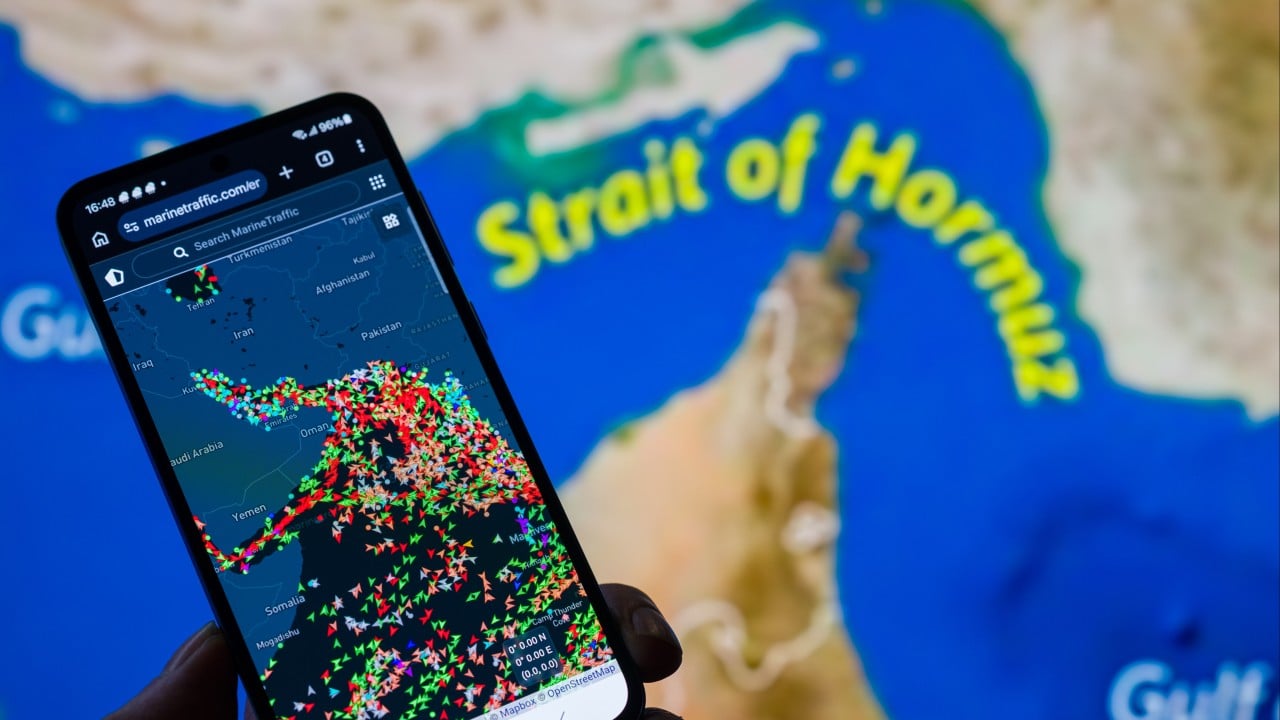
Brussels has finally stopped pretending that diplomacy alone can stabilize its economy. The European Union recently activated a specialized financial framework designed to shield specific industrial sectors from the escalating volatility in the Middle East. While official communiqués frame this as a gesture of regional solidarity, the cold reality is about self-preservation. This mechanism allows member states to funnel targeted state aid and liquidity into industries hit by supply chain fractures, energy price spikes, and the sudden closure of critical trade routes. It is a desperate attempt to prevent the "de-industrialization" of the continent.
The End of Market Neutrality
For decades, the European Union operated on the strict principle that state intervention was a poison to fair competition. That era is dead. The new framework essentially grants a temporary license to ignore standard competition laws. When a conflict thousands of miles away threatens to shut down a German automotive plant or a Spanish fertilizer factory, the national government now has a pre-approved script to step in with cash.
This isn't charity. It is a defensive maneuver against the reality that Europe remains dangerously tethered to Middle Eastern energy and transit corridors. The Suez Canal remains a chokepoint that, when blocked or threatened, adds weeks to shipping times and millions to overhead costs. By creating a unified framework, Brussels is trying to prevent a chaotic "every nation for itself" scenario where wealthy countries like France or Germany bail out their own companies while leaving smaller economies to wither.
Identifying the Targeted Sectors
The framework does not offer a blank check for every struggling business. It focuses on sectors with high energy intensity and those reliant on just-in-time components passing through the Red Sea.
- Chemicals and Fertilizers: These industries are the first to feel the squeeze when natural gas prices fluctuate or trade routes are compromised. Without these, European agriculture collapses.
- Automotive and Manufacturing: The reliance on precision parts from Asian markets, which must traverse the Middle East, makes this sector incredibly fragile.
- Logistics and Maritime Transport: With insurance premiums for shipping through the Red Sea reaching record highs, many European shipping lines are facing a liquidity crisis that could bankrupt smaller players without state-backed guarantees.
The Hidden Cost of State Aid
Injecting billions into private industry rarely comes without a hangover. While the framework provides a short-term floor for the economy, it risks creating "zombie industries" that only survive because of government life support. There is also the glaring issue of fiscal disparity. Even with a shared framework, a country like Italy does not have the same financial firepower as Germany. This creates a two-tier Europe where the quality of your "crisis protection" depends entirely on your passport.
Investors are watching this closely. The introduction of this framework signals that the EU expects the Middle East crisis to be a multi-year fixture rather than a temporary blip. If the "temporary" measures become permanent, we are looking at a fundamental shift in how European business operates. Competition will no longer be based on efficiency or innovation alone, but on how effectively a company can lobby its government for a piece of the emergency fund.
The Energy Dependency Trap
Energy remains the primary lever of pain. Despite the aggressive push toward renewables, the European industrial base still breathes on gas and oil. The Middle East crisis has exposed the hollery of the "energy independence" narrative. Every time a drone is sighted near a shipping lane or a pipeline is threatened, the price of a kilowatt-hour in Lyon or Berlin jumps.
The framework attempts to mitigate this by allowing member states to subsidize energy costs for heavy users. However, this is a band-aid on a gunshot wound. Subsidizing the cost does not increase the supply. It merely shifts the bill from the corporation to the taxpayer. At some point, the taxpayer will stop being able to foot that bill.
Geopolitical Realism vs Economic Policy
The timing of this framework is not accidental. It coincides with a growing realization that the European Union cannot wait for a political resolution in the Middle East to save its economy. In the past, Brussels would have focused on diplomatic pressure and humanitarian aid. Now, the focus has shifted inward to the balance sheet.
This move signals a hardening of European policy. By shoring up its internal sectors, the EU is preparing for a world where global trade is fragmented and unreliable. It is an admission that the old rules of globalization are no longer functional. The framework is, in essence, a bunker.
Why Traditional Diplomacy Failed
Diplomatic efforts have failed to secure the trade routes that Europe depends on. When the Red Sea became a combat zone, the EU realized that its naval missions were not enough to reassure the markets. Shipping companies need more than a destroyer escort; they need financial insurance against the delays that destroy their margins. The framework provides that insurance where the private market has retreated.
The Logistics of the Bailout
To access these funds, companies must prove a direct link between their distress and the Middle East crisis. This sounds simple on paper, but in practice, it creates a massive bureaucratic bottleneck. Accountants are currently working overtime to decouple "normal" market fluctuations from "crisis-driven" losses.
- Documentation of Supply Chain Disruption: Companies must show where their shipping was diverted or delayed.
- Energy Price Audits: Firms must demonstrate that their energy bills have exceeded a specific percentage of their operational costs compared to the previous year.
- Employment Guarantees: In many cases, receiving aid is contingent on the company promising not to lay off workers for a set period.
This last point is the most political. Governments are terrified of mass unemployment leading to civil unrest, especially with populist movements gaining ground across the continent. The framework is as much about social control as it is about economic stability.
The Risk of Retaliation
There is also the matter of global trade relations. By heavily subsidizing its own industries, the EU risks falling foul of World Trade Organization (WTO) rules or inviting retaliatory tariffs from the United States and China. If Europe protects its steel and chemicals with state cash, other nations will likely respond in kind. We are witnessing the beginning of a global subsidy war where the winner is whoever has the deepest pockets and the most resilient taxpayers.
The Middle East crisis was the catalyst, but the result is a permanent change in the European economic DNA. The era of the "hands-off" regulator is over. In its place is a dirigiste entity that views its industrial sectors as strategic assets that must be defended at any cost. This shift might save some factories in the short term, but it fundamentally alters the risk profile of the entire European market.
The success of this framework will not be measured by the amount of money spent, but by whether these industries use the breathing room to actually diversify their supply chains. If they simply use the cash to maintain the status quo, the next regional flare-up will find them just as vulnerable, and the European taxpayer may not be willing to open their wallet a second time. Diversification is no longer a corporate buzzword; it is a matter of national security. Governments must now force their industries to find alternative routes and suppliers, or they will find themselves perpetually subsidizing a failing model.
Pressure your representatives to demand transparency in how these emergency funds are allocated. Ensure the money is building resilience, not just padding the dividends of companies that refused to adapt.