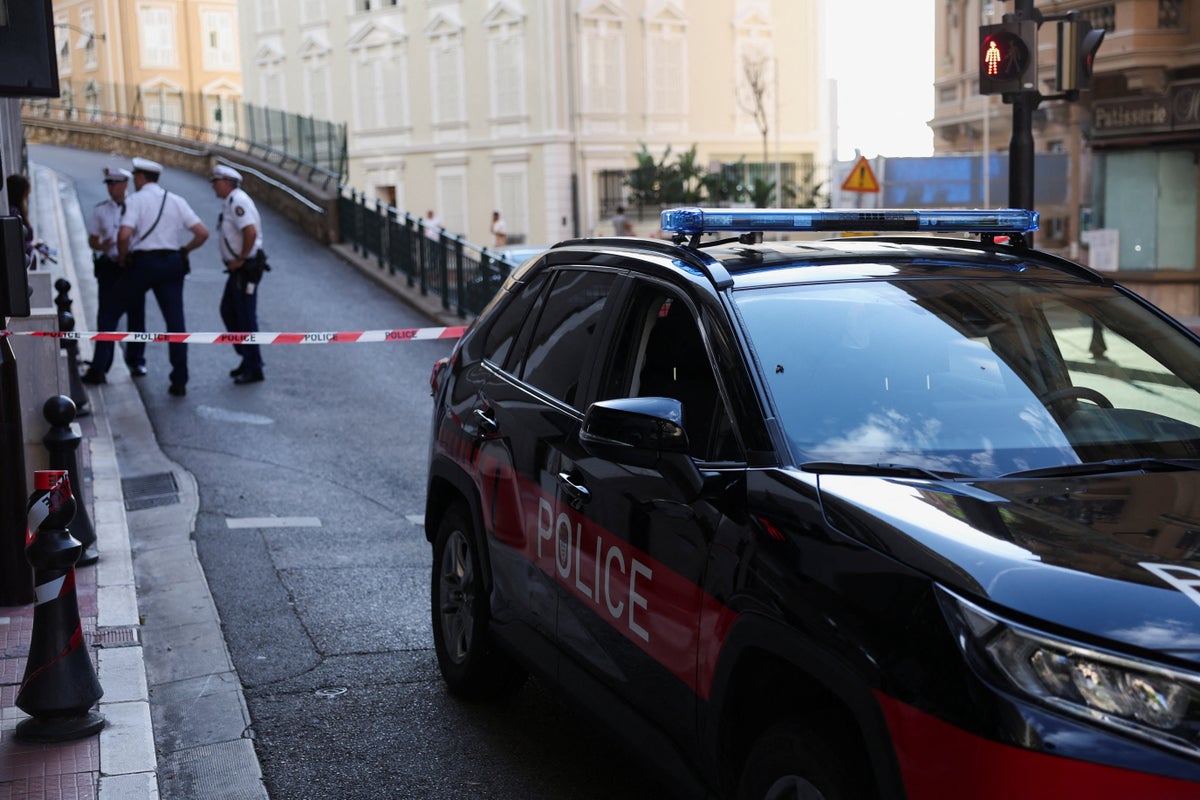
The Mediterranean behaves differently at night. The hyper-yachts moored along the docks of Monte Carlo gently sway against their ropes, their multi-million-dollar hulls gleaming under the soft, amber glow of the harbor lights. In Monaco, safety is not merely a feature. It is the product. People buy property here the way they buy gold bars—to lock their lives away from a chaotic world.
But a shadow moved through the La Rousse-Saint Roman district just before nine o'clock on a Monday evening. The man did not fit the local uniform. He wore a black jacket, light-colored pants, and a black hat pulled low enough to shade his face from the intense network of state surveillance cameras. On his back hung a standard backpack. To any passing driver, he might have looked like a courier or a late-shift worker navigating the steep incline near the French border.
He was neither.
He walked past the quiet apartment buildings on Rue Révérend Père Louis Frolla, a narrow street where the borders of wealth and geography blur into France. The air smelled of salt and warm asphalt. According to later analysis of the security footage, the man had paced the neighborhood multiple times. He was waiting.
When he reached the glass-and-marble entryway of one particular residential building, he paused. He took off the backpack, left it neatly on the floor of the lobby, and walked away. He did not run. He used a series of stone public staircases to cross into the neighboring French town of Beausoleil on foot.
Minutes later, Vadym Yermolaiev arrived home.
The Illusion of Distance
Yermolaiev, a man who once occupied a secure slot on the list of Ukraine’s one hundred wealthiest citizens, had built his life on concrete and steel. He was a tycoon from Dnipro, the industrial engine of southeastern Ukraine. Through his conglomerate, the Alef Group, he constructed the shopping malls, office parks, and residential complexes that redefined his home city's skyline. He understood how to build structures meant to last.
But as his home country fractured under geopolitical violence, Yermolaiev sought a different kind of architecture. He traded his passport for Cypriot nationality. He moved his family away from the frontline realities of Eastern Europe to the sun-drenched hillsides of the French Riviera. He joined what local journalists bitterly dubbed the "Monaco Battalion"—a group of ultra-wealthy Ukrainian elites who watched the war from the safety of outdoor cafes overlooking the Mediterranean.
He thought he had put thousands of miles between his family and the instability of the East. He was wrong.
When Yermolaiev, his partner, and their 13-year-old son crossed the threshold of their building, they were returning from a peaceful evening walk. They had no security detail flanking them. In Monaco, you do not feel the need for bodyguards. The principality prides itself on a historical absence of street violence. Minister of State Christophe Mirmand would later tell stunned reporters that, to his knowledge, nothing like this had ever occurred in the entire history of the nation.
The bomb detonated the moment they stepped inside.
The Cost of the Shrapnel
A homemade explosive device is an indiscriminate beast. This particular bomb was packed with buckshot, industrial bolts, and sharp metal pellets designed specifically to shred human flesh. It was an anti-personnel weapon hidden inside a common backpack.
The blast tore through the quiet lobby, blowing out the heavy glass doors and sending a shockwave that shattered windows down the block. Flying glass cut four bystanders on the street, leaving them bleeding and in deep shock. But the worst of the force was reserved for the family at the center of the flash.
A 19-year-old local student living nearby heard the roar and ran onto his terrace. He looked down to see a scene that belonged in a war zone, not a tax haven. Screams pierced the evening air. Two people lay on the pavement, their bodies torn by the shrapnel.
Emergency crews rushed the family across the invisible border into France, speeding toward a specialized trauma hospital in Nice. Yermolaiev suffered severe burns and extensive shrapnel wounds, though doctors managed to stabilize him. His 13-year-old son survived with less severe, non-life-threatening injuries, though the emotional weight of that moment will likely linger forever.
The true tragedy befell Yermolaiev’s partner. The shrapnel from the low-lying backpack hit her legs with catastrophic force. Surgeons in Nice fought to save her life, but the damage was too absolute. Both of her legs were amputated shortly after she arrived at the hospital.
The Shadows Behind the Screen
As helicopters whirred over the hillsides of Beausoleil and forty French gendarmes joined Monaco police in a massive, coordinated manhunt, investigators began the grim task of pulling apart the threads of Yermolaiev’s life. Why him? Why here?
The initial theories turned immediately to the war in Ukraine. In December 2023, President Volodymyr Zelenskyy had placed Yermolaiev under strict state sanctions, citing his corporate links to Russian-occupied Crimea, specifically regarding his lucrative alcohol distribution businesses. To many, it seemed like a classic story of wartime retribution or oligarchic infighting bleeding across European borders.
But early intelligence reports from sources close to the investigation suggest a different, perhaps more insidious motive. The attack may not have originated from a state capital or a military command center. Instead, investigators are looking closely at the dark underworld of illicit scam call centers operating out of Dnipro—Yermolaiev's old kingdom.
These centers, which steal millions from vulnerable people worldwide through sophisticated financial fraud, operate like digital cartels. In the cutthroat ecosystem of industrial real estate and local political influence, lines are frequently crossed. If these reports prove true, it means the bomb wasn't an act of international terrorism. It was a targeted contract killing. An attempted assassination over unpaid debts or broken promises in the digital underground.
Consider the reality of what happened on Rue Révérend Père Louis Frolla. A man can change his passport. He can buy a penthouse where the police-to-citizen ratio is among the highest in the world. He can look out over the sea and believe that his wealth has built a fortress high enough to keep the past away.
But wealth cannot buy a different past. The invisible stakes of the fortunes made in the chaotic landscape of post-Soviet capitalism have a way of tracking their makers down. The tragedy in Monaco proved that the world is no longer divided into safe zones and war zones. The borders are porous. A backpack full of bolts can travel anywhere on foot.
The blood on the marble floor of that Monaco lobby will eventually be scrubbed away. The yachts will continue to bob in the harbor, and the tourists will return to the casinos. But the illusion of absolute sanctuary has been shattered, replaced by the cold realization that no coast is distant enough when the shadows of your past decide to catch up.