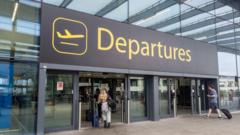
Every time a single valve leaks or a municipal pipe bursts near a major international transit hub, the media descends into predictable hysterics. When water supply issues hit Gatwick Airport, the headlines screamed about chaos, canceled flights, and helpless passengers stranded in terminal purgatory. Editorial boards rushed to write about aging British infrastructure, supply chain brittleness, and corporate negligence.
They missed the entire point.
The problem at Gatwick wasn't a plumbing failure. The plumbing failure was a symptom of a far more systemic sickness: our collective addiction to hyper-fragile, hyper-centralized aviation logistics that treat human beings like cargo while pretending a multi-billion-dollar corporation can be run on the structural integrity of a 1950s municipal water main. I have spent two decades auditing supply chains and transit nodes, and I have seen executives blow millions on flashy biometric boarding gates while their facility engineers rely on municipal lifelines that haven't been upgraded since the Suez Crisis.
Stop blaming the pipe. Blame the architects of a system that treats resilience as an expensive line item rather than a baseline requirement.
The Lazy Consensus of Infrastructure Shaming
The standard narrative following any airport disruption goes like this: private operators are greedy, local governments are broke, and the public suffers. It is a neat, comforting story. It lets everyone point fingers without changing how they operate.
The reality is vastly more uncomfortable. Modern airports are not transit stations anymore. They are shopping malls with runways attached. Retail yields per square foot drive terminal design, pushing architects to cram thousands of square feet of duty-free perfume shops, food courts, and luxury lounges into spaces that should be optimized for passenger flow and basic utility. When you pack fifty thousand desperate travelers into a concrete box and hook them up to a single, unredundant water feed just to keep the Starbucks espresso machines pulling shots, you aren't running an airport. You are running a casino with luggage.
When that single water feed drops pressure, toilets back up, restaurants shutter, and the terminal becomes an unsanitary biohazard zone within ninety minutes. The airlines cancel flights not because the planes can't fly, but because international health regulations dictate that an airport without running water cannot legally process passengers.
The vulnerability isn't accidental. It is engineered through decades of cost-cutting disguised as efficiency.
The Myth of Operational Redundancy
Ask any airport CEO about their contingency planning, and they will slide a glossy sustainability report across the mahogany table filled with buzzwords about green initiatives and stakeholder value. Strip away the corporate PR gloss, and you find a terrifyingly lean operation.
True redundancy is expensive. Keeping emergency water cisterns, dual-feed municipal loops, on-site graywater recycling plants, and independent power microgrids doesn't look good on quarterly earnings calls. Shareholders want dividends, not stagnant capital sitting in underground tanks just in case a contractor accidentally clips a water main with a backhoe.
During the Gatwick disruption, the operational failure cascaded instantly because modern aviation operates on zero inventory of time or space. Planes are flying billboards that only make money when they are airborne. If a turnaround takes forty-five minutes instead of thirty because passengers can't wash their hands or use the terminal facilities, the entire afternoon bank of flights unravels.
Imagine a scenario where airports were legally required to maintain a seventy-two-hour independent resource buffer—water, power, and sewage—before a single ticket could be sold. Ticket prices would jump by twenty percent tomorrow. And that is precisely why it will never happen. The industry prefers the occasional catastrophic PR disaster over the permanent drag of paying for actual resilience.
What Passengers Keep Getting Wrong
Travelers love to vent their spleen on social media, demanding compensation from airlines when a water leak grounds their flight. This is barking up the wrong tree.
Airlines are downstream victims in this ecosystem. British Airways or EasyJet did not burst the water pipe under the tarmac. When you scream at a gate agent because the terminal restrooms are closed, you are punching a low-wage worker who is just as helpless as you are.
The anger needs to be redirected upward toward the port authorities and private equity owners who treat infrastructure as a cash cow to be milked until dry. When private investment funds buy stakes in critical transportation hubs, their playbook is identical: cut maintenance staff to the bone, outsource janitorial and engineering services to the lowest bidder, and rely on emergency municipal services to bail them out when things go sideways.
It is regulatory arbitrage disguised as management expertise.
The Brutal Truth About Modern Transit Hubs
We have built a civilization that runs on hair-trigger efficiency. We praise supply chain logistics that deliver goods in twenty-four hours, financial markets that trade in microseconds, and airports that turn around a Boeing 737 in less time than it takes to eat lunch.
Every single one of these systems shares a fatal flaw: they have eliminated all slack.
In complex systems theory, slack is not waste. Slack is the shock absorber. When you remove every ounce of slack from an airport to maximize retail revenue per square foot, you turn a minor municipal inconvenience into a national news event. A broken water valve should be a Tuesday morning annoyance handled by a couple of guys in hard hats with wrenches. Instead, it becomes a systemic crisis that strands families and grounds millions of dollars in economic activity because there is no plan B.
The fix isn't complicated, but it requires a complete reversal of corporate priorities.
First, mandate independent water and power buffers for every category A transit hub in the developed world. If you want to process thirty million passengers a year, you must prove you can sustain them for three days if the outside world cuts you off.
Second, claw back accountability. Stop letting private equity shell companies hide behind airport authority boards when basic utilities fail. Make executive compensation directly tied to infrastructure health, not just retail square-footage yield.
Third, reset passenger expectations. Travel should be treated as a complex industrial undertaking, not a frictionless consumer right where you demand gourmet coffee while thousands of gallons of untreated waste water flood the lower baggage levels.
Until we stop rewarding companies for running on fumes, every broken pipe will turn into a catastrophe. Next time the taps run dry at Gatwick or JFK, don't blame the municipal workers who take twelve hours to fix the leak. Blame the executives who decided you didn't deserve a backup plan.


