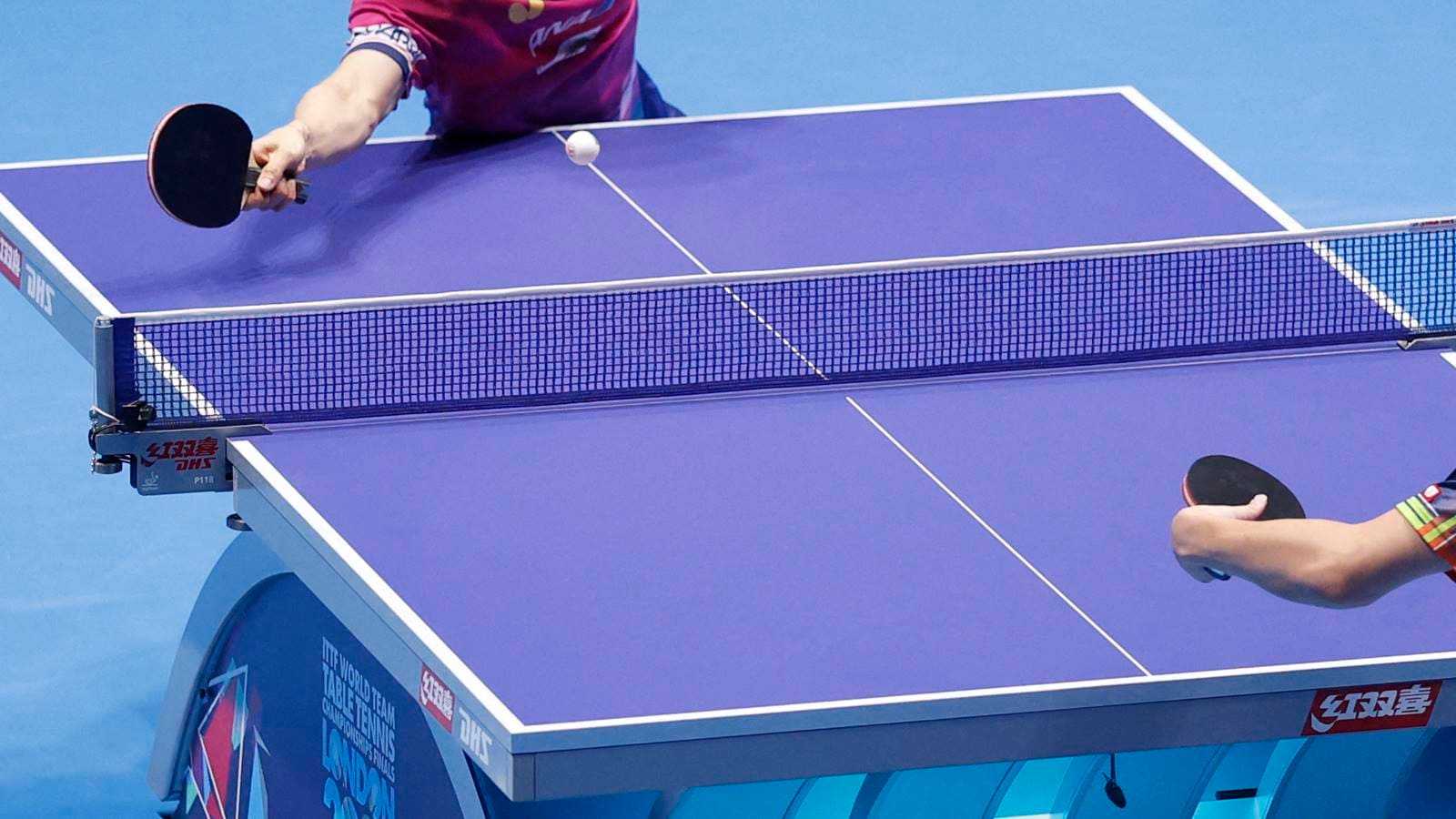
The sound of a table tennis ball hitting a hollow wood blade is a sharp, percussive crack. It is a sound measured in milliseconds. In a damp, poorly ventilated training hall on the outskirts of Delhi, a fourteen-year-old girl named Priya listens to that sound. She listens to it for six hours a day, her hand blistered, her shoes worn thin at the soles, her eyes tracking a celluloid sphere that moves faster than thought.
She does not care about executive boards. She does not know the names of the men who sign the ledgers in air-conditioned offices miles away. She knows only the table, the net, and the dream of an international jersey that smells of new polyester and national pride.
Then comes the silence.
The Sports Ministry stepped in with an executioner's calm. They suspended the Table Tennis Federation of India. Governance issues, they said. Administrative failure, they whispered. Transparency lacking, the headlines blared.
To the bureaucrats, it was a press release. A routine filing. To Priya, and hundreds of children like her across the country, it was the ground opening beneath their feet.
The Anatomy of an Invisible Crisis
We talk about sports in this country through the distorted lens of medals and podium finishes. We wait for the quadrennial fever of the Olympic Games to care about what happens on a court or a mat. When a gold medal drops around a neck, we cheer. When an athlete stumbles, we analyze.
We rarely look at the machinery that builds the athlete in the first place.
The machinery of Indian table tennis was rusting from the inside out. For years, whispers had circulated through the circuit. Selection trials shrouded in opaque clouds of favoritism. Young players, hardened by regional tournaments and parental sacrifices, arriving at national camps only to find politics trumping performance. Complaints were filed. Letters were written on cheap paper and sent to unresponsive desks.
Power corrupts slowly, then all at once.
When an administrative body treats an entire generation of athletes as an inconvenient byproduct of their positions, something has to break. The suspension of the TTFI by the Ministry of Youth Affairs and Sports was not a sudden act of aggression. It was the inevitable collision between institutional arrogance and the desperate reality of ground-level talent.
Consider what happens next. The federation is sidelined. An ad-hoc committee is appointed. Temporary administrators take the wheel. To the outside observer, the paperwork has been updated. The problem is solved.
Except the paddle is still broken in Priya's hand.
The Weight of a Broken System
I remember standing in a similar hall years ago, watching a promising junior paddler weeping behind a concrete pillar. She had won her matches. She had topped the trials on merit. Yet, when the final team list for the Asian Championships was pinned to the damp notice board, her name was missing. A cousin of an official, someone who had barely won a round, had taken her place.
There was no court of appeal that listened to a teenager. There was no Ombudsman for broken hearts.
That is the hidden cost of bad governance. It is not just about misused funds or unapproved travel itineraries, though those things matter. It is the theft of time. In an athlete's life, a year lost to administrative corruption or bureaucratic infighting is an eternity. Reflexes dull. Funding dries up. Sponsors look away. The window of peak physical performance closes before it has even properly opened.
The TTFI suspension targeted specific failures. Autocratic functioning. Failure to adhere to the National Sports Development Code. Disregarding athlete welfare. These are dry, legalistic terms. Let us translate them into human currency.
They mean a kid from a middle-class family in West Bengal or Tamil Nadu having to sell their mother’s jewelry to afford a decent rubber for their racket, while funds meant for grassroots development sit untouched in a bank account frozen by court battles. They mean athletes begging for visas while officials argue over who gets to fly business class.
Rebuilding from the Ashes
Change is messy.
When a governing body is suspended, the immediate aftermath is chaos. Coaches worry about upcoming international fixtures. Players wonder if their entries for the World Youth Championships will be accepted. Parents panic.
This is where the fear creeps in. We are conditioned to believe that stability, even a corrupt one, is better than disruption. Why rock the boat? Just let them run the federation however they want, as long as the kids get to play.
That is the lie that keeps mediocrity alive.
Disruption is the only language an entrenched bureaucracy understands. By halting the operations of the TTFI and placing the sport under direct scrutiny, the state drew a hard line. The message was unmistakable. The institution exists for the athlete, not the other way around.
The ad-hoc committee now holds a heavy burden. They are not merely filling a vacuum; they are drafting a new blueprint for trust. Every rule they rewrite, every transparent trial they conduct, every merit-based selection they finalize acts as a brick in a foundation that should have been poured decades ago.
The Sound of the Future
Back in the training hall, the ball keeps moving.
Priya does not know about the committee meetings. She does not read the legal briefs. She hears the coach clap his hands, signaling the start of the multi-ball drill.
She steps up to the table. She tosses the ball into the air, watches its yellow curve catch the dim fluorescent light, and strikes it with a clean, devastating forehand loop.
The ball hits the opposite side of the table with a crisp, defiant crack.
The administrators may stumble. The offices may empty and refill with new faces. The headlines will inevitably shift to the next crisis, the next scandal, the next sport caught in the crosshairs of accountability. But the game outlives them all, sustained entirely by the relentless, quiet heartbeat of those who refuse to stop swinging