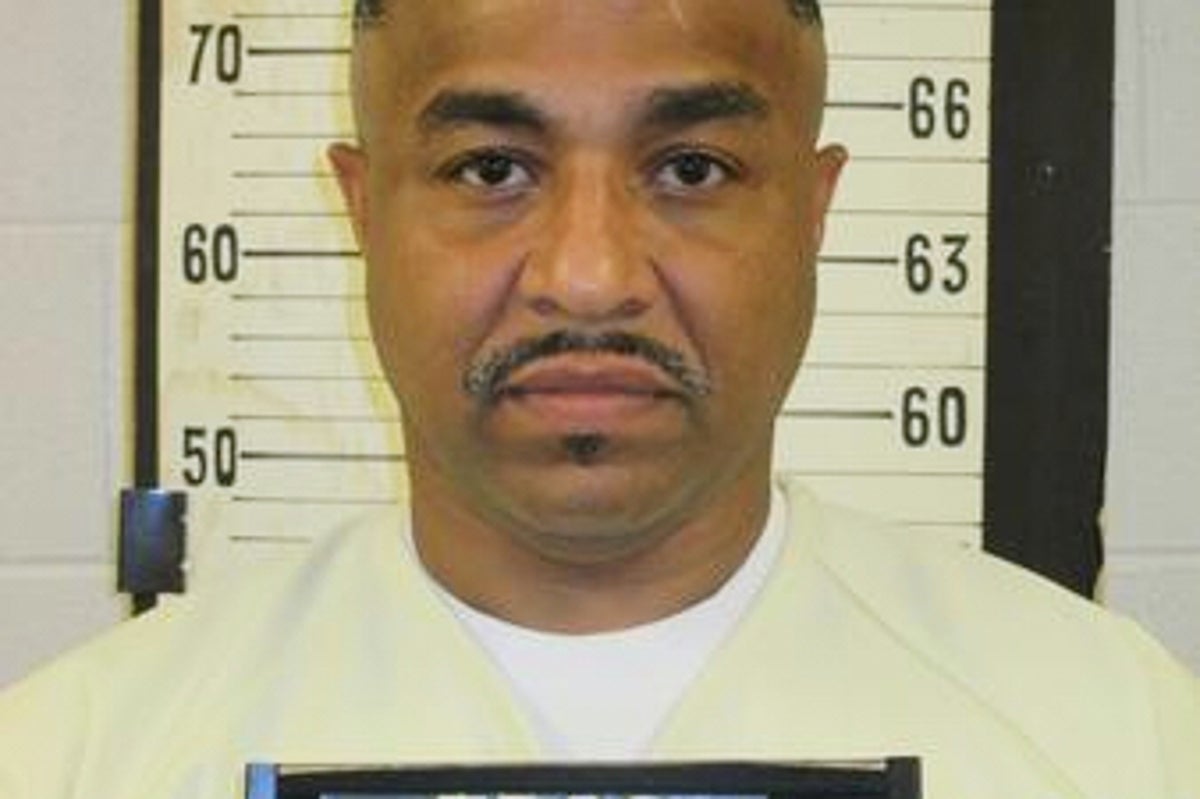
The State of Tennessee halted the scheduled execution of Tony Carruthers on May 21, 2026, after prison staff spent an hour failing to find a viable vein to administer lethal drugs. His defense attorney, Maria DeLiberato, described witnessing Carruthers wincing and groaning inside the chamber at the Riverbend Maximum Security Institution, calling the aborted procedure horrible to watch. This sudden operational collapse comes after Governor Bill Lee and both state and federal supreme courts systematically rejected an avalanche of appeals regarding Carruthers' severe mental illness, missing forensic tests, and a trial where he was forced to act as his own lawyer.
The immediate breakdown inside the death chamber shifts attention from abstract legal arguments to the raw, mechanical dysfunction of state-sanctioned killing. Carruthers’ legal team had already filed an emergency motion hours before the execution, warning that the state's contracted medical personnel lacked the proper qualifications to establish a central line if standard intravenous access failed. The subsequent failure to find a vein validates those warnings, transforming a highly calculated legal process into an chaotic clinical crisis.
Yet the operational mess inside the execution chamber is merely the final, visible layer of a case defined by structural failures over three decades.
The Illusion of a Fair Defense
The core of the legal crisis surrounding Carruthers sits in a foundational constitutional right: the right to counsel. In 1996, a Shelby County judge lost patience with Carruthers after he cycled through multiple state-appointed attorneys. Concluding that Carruthers was intentionally manipulating the system to delay his trial, the court forced him to represent himself.
He became the first person in Tennessee in more than a century to be sentenced to death while acting as his own attorney.
Defending oneself against capital murder charges requires deep legal knowledge, emotional stability, and intellectual detachment. Carruthers possessed none of these. His current appellate attorneys from the Tennessee Federal Public Defender’s Office have presented extensive documentation showing that Carruthers suffers from severe, long-standing mental illness, marked by deep paranoid delusions and Organic Brain Damage.
During his 1996 trial, Carruthers was consumed by an obsession that the judge, prosecutors, and even his own prior defense lawyers were operating as a secret cabal designed to destroy him. His behavior in front of the jury was erratic, combative, and self-destructive.
The systemic double standard became clear during the appeals process. Carruthers was tried alongside a co-defendant, James Montgomery. On appeal, the reviewing court found that Carruthers' bizarre, disruptive behavior while representing himself had so profoundly poisoned the courtroom atmosphere that Montgomery was stripped of his right to a fair trial. Montgomery was granted a brand-new trial. He later accepted an Alford plea to lesser charges, received a 27-year sentence, and was released from custody in 2015.
The paradox is stark. The state acknowledged that Carruthers' mental incompetence and erratic self-representation completely ruined the fairness of the trial for the man sitting next to him. Yet the state maintained that the exact same trial remained perfectly fair and legally sound for Carruthers himself.
The Hidden Informant and Untested DNA
Beyond the procedural chaos of the 1996 courtroom, the substantive evidence used to convict Carruthers for the 1994 triple murder of Marcellos Anderson, Delois Anderson, and Frederick Tucker has slowly unraveled over thirty years.
There is zero physical or forensic evidence linking Carruthers to the crime scene or the burial site. Instead, the prosecution built its entire case on the word of jailhouse informants.
The primary witness was Alfredo Shaw, a career informant who testified to a grand jury that Carruthers had confessed the murders to him. When Carruthers directly questioned Shaw during the trial, asking if he was working as a confidential informant for the state, the prosecution objected. The court sustained the objection, shielding Shaw's true identity from the jury.
For nearly thirty years, the state maintained that Shaw was not a paid operative. That narrative dissolved in 2024 when internal records from a newly formed conviction integrity review unit revealed that the state had indeed paid Shaw for his cooperation. Shaw later recanted his claims, but the disclosure came long after the original trial jury had disbanded.
While the state relied on paid testimony, it consistently blocked requests to analyze the physical evidence collected from the crime scene. Underneath the surface of this case lies a collection of forensic material that has never been cross-referenced against modern databases:
- Unidentified Fingerprints: Latent prints recovered from the home of the victims do not match Carruthers or his co-defendant.
- Unknown Male DNA: A piece of fabric used to bind one of the victims contained foreign male DNA. Initial testing explicitly excluded Carruthers.
- The Alternative Suspect: In 2011, co-defendant James Montgomery told investigators that Carruthers was entirely uninvolved, pointing instead to a local individual named Ronnie Irving.
The ACLU and Carruthers' defense team filed repeated motions under Tennessee’s Post-Conviction DNA Analysis Act of 2001, asking the state to run the unknown DNA and fingerprints against Irving or the national database. The process would take roughly two weeks.
On May 19, 2026, the Tennessee Supreme Court denied the request in a per curiam opinion. The court ruled that even if DNA and fingerprint testing proved the material belonged to a third party like Irving, it would not create a "reasonable probability" that Carruthers would have been acquitted, given the other testimony presented at trial. The state chose to stand by decades-old jailhouse testimony rather than risk letting new scientific data disrupt the finality of a death sentence.
The High Cost of the Execution Push
Tennessee’s aggressive pursuit of capital punishment runs directly against broader national trends, where death sentences and executions have steadily declined. The state scheduled four executions for 2026, putting it on a trajectory to trail only Texas and Florida.
This momentum carries significant financial costs. Internal emails from the Tennessee Department of Correction, uncovered through public records requests by the Federal Public Defender’s Office, show that the state recently spent $625,000 on execution-related services. A substantial portion of that budget went toward acquiring the specific lethal injection drugs intended for Carruthers.
The financial investment is matched by intense political resolve. More than 130,000 people signed a clemency petition delivered to Governor Bill Lee’s office, backed by faith leaders, civil rights organizations, and national figures. Demetrius Minor, executive director of Conservatives Concerned About the Death Penalty, publicly questioned the logic of rushing an execution while basic forensic questions remained unresolved.
Governor Lee remained unmoved, declaring two days before the scheduled date that he would not intervene, choosing instead to uphold the state court decisions. The U.S. Supreme Court similarly declined to issue a stay on the morning of May 21, with Justice Brett Kavanaugh denying the final emergency application.
The Reality of the Chamber
The legal machinery worked precisely as designed, clearing away every constitutional, mental health, and forensic objection to ensure the execution would occur at 10:00 a.m.
The system failed only when it came down to the physical reality of inserting a needle into human flesh.
The execution team's failure to establish intravenous access after an hour of trying highlights a recurring vulnerability in lethal injection protocols across the United States. As corrections departments struggle to find qualified medical personnel willing to participate in executions, technical errors, botched line placements, and prolonged delays inside the chamber have become increasingly common.
By halting the execution because of access issues, Tennessee avoids an immediate constitutional crisis over a botched lethal injection, but it guarantees a prolonged legal battle over what happens next. Carruthers returns to his cell on death row, leaving the state with a pile of untested forensic evidence, a documented history of hiding witness payments, and a $625,000 protocol that broke down at the moment of execution.