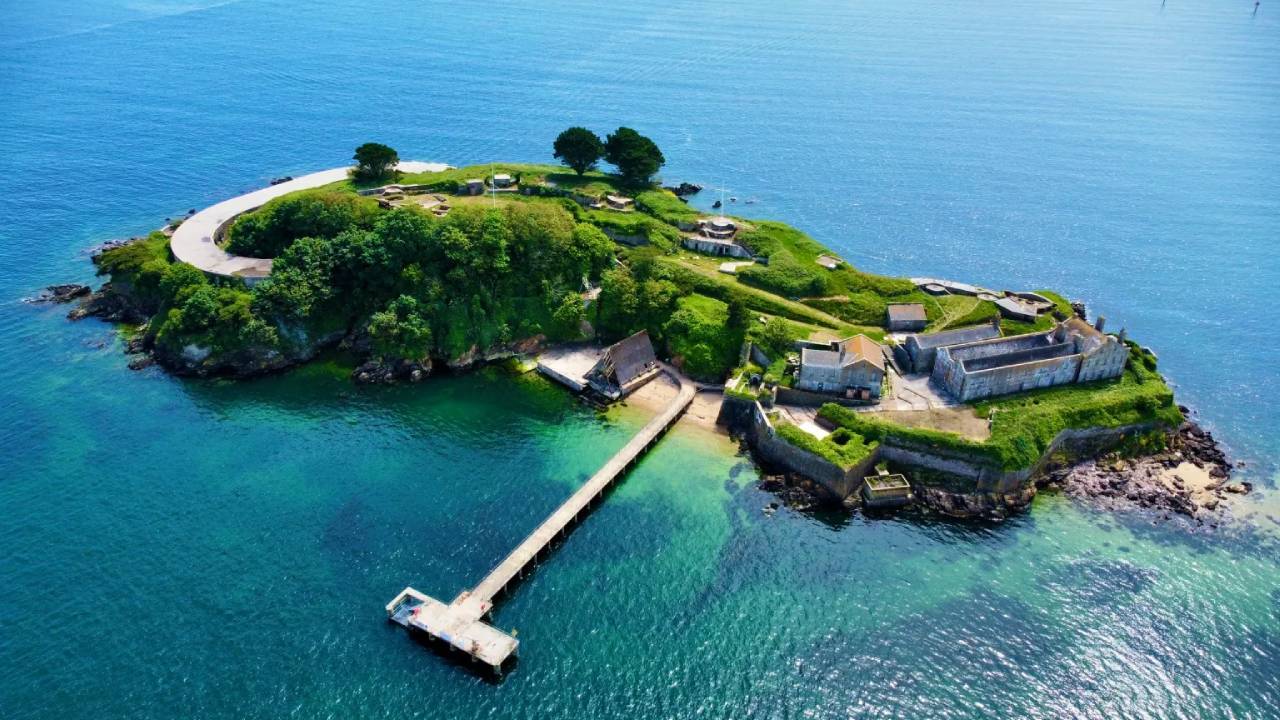
For roughly the price of a modest townhouse in central London, you can buy an entire fortified military island off the coast of Devon complete with a Grade-II listed governor’s house, sprawling underground ammunition stores, and a storied past dating back to Sir Francis Drake.
Drakes Island in Plymouth Sound is back on the market. This time, the asking price has plummeted to offers in excess of £2 million, a steep drop from the £6 million paid by its previous owners during the height of post-pandemic optimism. Handed over to a fixed-charge receiver after Plymouth Sound Properties Ltd collapsed into administration, the 6.4-acre strategic outcrop represents a cautionary tale about the harsh financial reality of heritage-asset development in the United Kingdom.
Property listings love to lean into the romanticism of the site. They mention the ghost stories, the subterranean tunnels that local folklore insists connect the landmass to Plymouth Hoe, and the sweeping views across the English Channel. What promotional brochures gloss over is the crushing weight of structural decay and the intricate web of regulatory hurdles required to transform a decayed military installation into a viable commercial enterprise.
The Anatomy of a Receivership
To understand why Drakes Island is struggling to find a stable long-term steward, look past the maritime lore and examine the balance sheet. When local businessman Morgan Phillips acquired the freehold in 2019, the vision was grand: a luxury 43-bed hotel, an educational hub, and a revitalized tourist attraction that would finally open a shuttered piece of naval history to the public.
Planning consent exists for the hotel conversion, covering the historic island house, barracks, and casemated batteries. Yet, obtaining planning permission is merely the starting line. The execution relies on capital expenditure that easily scales into tens of millions of pounds before the first paying guest ever steps off a ferry. Saltwater corrosion, crumbling Victorian masonry, asbestos remediation, and the logistical nightmare of hauling heavy construction materials onto an isolated tidal rock combine to terrify conventional lenders.
Expert Lending Ltd discovered this the hard way when they extended a heavy mortgage secured against the freehold. When commercial revenues—pegged at roughly £590,000 in 2023 through limited tours, events, and film shoots—failed to service the underlying debt structure, the receivers were triggered. A property can generate respectable seasonal revenue on paper and still bleed cash when pitted against structural maintenance obligations tied to Scheduled Ancient Monument status.
The Heritage Trap
Owning a piece of Britain's military heritage sounds prestigious until you run into the conservation wall. Historic England holds immense sway over what can and cannot be altered on the island. Every square foot of the roughly 30,000 square feet of disused buildings carries stringent oversight.
A developer cannot simply slap modern double glazing into a 16th-century fortification or reconfigure internal layouts to optimize hotel room yields without enduring years of bureaucratic friction. The Section 106 obligations and planning conditions attached to the site demand a delicate balance between commercial viability and historical preservation. Experience shows that this balance often tips heavily in favor of escalating costs, squeezing profit margins until the project becomes financially untenable.
The previous iteration managed to pull in crowds during brief windows, proving there is consumer appetite for dark tourism, naval history, and eco-adventures paired with the National Marine Aquarium. Seasonal guided tours and theatrical productions demonstrated that people want to visit. Translating a day-trip novelty into a self-sustaining luxury resort requires a cash reserve that far exceeds the initial £2 million acquisition cost.
Who Actually Buys a Fortified Rock
Carter Jonas is marketing the freehold to high-net-worth individuals and specialized leisure operators. The pitch centers on alternative uses: an exclusive corporate retreat, an elite boutique eco-hotel, or a high-end hospitality compound cut off from the noise of the mainland.
Yet, any prospective buyer must confront the physical isolation. Power, fresh water, and sewage management must either be independently generated or piped securely from the mainland across 500 metres of tidal water. Weather conditions in Plymouth Sound can abruptly halt marine transport for days at a time, turning logistical schedules into a gamble.
The drop in asking price from £6 million to over £2 million reflects a market correction based on hard utility rather than romantic potential. It is a distressed asset sale disguised as an architectural treasure hunt. Whoever signs the deeds will need deep pockets, immense patience, and an appetite for regulatory combat.
The tunnels beneath the batteries will remain dark, the ghost stories will persist in local pubs, and the tide will continue to pound against the granite seawall long after the current financial dust settles.