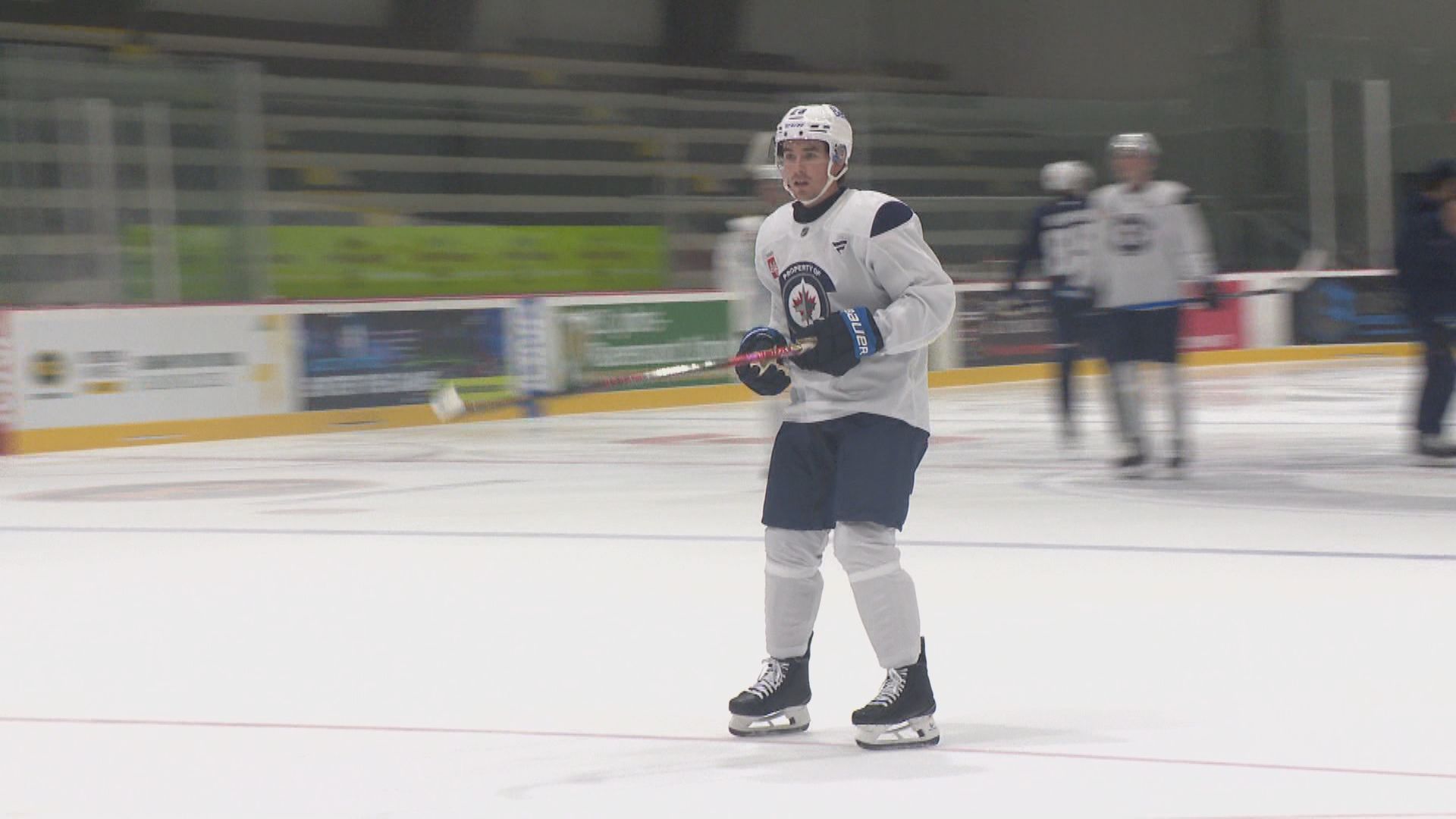
Standard recall announcements treat an American Hockey League call-up as a simple reward for minor-league scoring, yet Winnipeg's decision to bring Brayden Yager back from the Manitoba Moose reflects a structural offense and depth problem rather than a routine injury fill-in. Early in the 2026–27 NHL season, Winnipeg struggled to generate goals and convert power plays, while Yager arrived with seven goals and five assists in 10 AHL games after logging only limited NHL action across the prior and current campaigns. Understanding this transaction requires separating verified roster mechanics from projection, examining how an NHL franchise allocates development minutes, and evaluating whether a high-volume shooter from the AHL can translate production into the top six.
Deconstructing Standard Recall Narratives
Conventional game previews and transaction briefs typically reduce a call-up to three surface claims: a prospect scored well in the minors, the parent club needed a body or a spark, and the player will try to carry momentum upward. That framing is descriptive, not analytical, because it treats NHL ice time and AHL ice time as interchangeable units of output. In reality, AHL scoring rates measure performance against older minor-league veterans and fringe NHLers at higher usage rates, whereas NHL deployment tests decision speed, puck protection under forechecking pressure, and finishing efficiency against top defensive pairings. Learn more on a related subject: this related article.
A sharper analytical model groups any prospect recall around four operational dimensions:
- Supply-Side Scoring Deficit: Whether the parent club's NHL goal-scoring and special-teams conversion sit below league average, creating real demand for shot volume and net-front/slot touches.
- Roster Churn and Waiver Friction: How injuries, injured reserve placements, and waiver clearances open actual lineup seats rather than press-box spots.
- Role Compatibility: Whether the recalled player's natural position and skill profile fit an open assignment—such as middle-six center or wing—rather than forcing square-peg minutes on a fourth line.
- Development Opportunity Cost: What the player loses in top-unit AHL minutes and situational reps if he sits or plays sheltered bottom-six shifts in the NHL.
Standard coverage often conflates known facts with educated hypotheses. Known facts include Yager's draft pedigree as the 14th-overall pick in 2023, his August 2024 acquisition by Winnipeg in the Rutger McGroarty trade, his prior brief NHL appearances with zero points entering the November 2026 recall, and his 12-point start across 10 games with Manitoba. Educated hypotheses include whether his AHL shooting surge reflects sustainable skill growth or early-season variance, and how quickly his release and off-puck reads can stick against NHL defenders. Additional journalism by Bleacher Report highlights similar perspectives on this issue.
Cause and Effect in Winnipeg's Roster Architecture
NHL roster management operates under hard constraints: salary cap rules, 23-man active limits, waiver eligibility thresholds, and positional balance down the middle. When an NHL team's offense stalls—evidenced by low goals-for rates and sluggish power-play execution—front offices face a choice between overpaying for external rentals early in the calendar or testing internal assets on entry-level deals. Recalling an offensive-minded center from the affiliate lowers immediate cash and cap friction while probing whether internal skill can relieve scoring stagnation.
Roster moves also interact across levels in ways simple wire reports miss. Earlier in the fall, Winnipeg navigated injury adjustments and later moved forward Brad Lambert through waivers, altering the depth chart around center and wing. When a team shifts a depth forward via waivers and brings up a scoring prospect from Manitoba, the transaction signals an attempt to upgrade top-nine or middle-six scoring upside rather than merely adding a penalty killer.
Why Center Depth and Line Deployment Matter
Center is the highest-leverage forward position because it links defensive zone exits, neutral-zone support, and offensive zone puck distribution. A prospect who can take middle-six reps or skate alongside playmakers and finishers gives a coaching staff tactical options that a pure fourth-line grinder cannot provide. At the same time, skating in a top-six or middle-six role exposes a young forward to stiffer matchups than fourth-line minutes usually carry.
Consider a simple operational example. If a club places a 21- or 22-year-old center between established NHL forwards during a gameday skate, the immediate goal is to test whether his pace and puck anticipation hold up when time and space shrink. If he chases plays or loses wall battles, coaches either shelter his zone starts or return him to the AHL where he can play heavy minutes in all situations.
The AHL-to-NHL Translation Gap
Moving from the AHL to the NHL is a step-change in execution speed, not merely a step up in talent. In the AHL, a skilled forward with a dangerous shot can manufacture looks off delayed entries or extended perimeter cycles. In the NHL, active sticks close passing lanes faster, goaltenders track cross-ice movement more cleanly, and turnovers immediately become odd-man rushes the other way.
Three mechanisms govern whether a prospect bridges that gap:
- Puck-Touch Speed: How quickly the player receives a pass, scans pressure, and makes a clean play before a forechecker finishes a check.
- Off-Puck Positioning: Whether the player finds soft ice in the slot and supports teammates without waiting for the puck to arrive.
- Transition Reliability: How consistently the player exits the defensive zone and enters the offensive zone without surrendering possession.
Evaluating the Trade-Offs and Limitations
Every recall carries a hidden cost function. In hockey operations, opportunity cost is measured in high-leverage development reps foregone. A young forward logging 18 to 20 minutes per night in the AHL—including top power-play time and late-game situations—gains continuous repetition in reading coverage and driving offense. Sitting in the press box for four out of five NHL games or playing eight sheltered minutes does not build those habits at the same rate.
There are also clear boundaries to what a single call-up can solve. A young forward arriving mid-season cannot single-handedly fix systemic power-play mechanics, five-on-five structure, or goaltending variance. Furthermore, small-sample scoring bursts over ten AHL games can be skewed by shooting percentage spikes, hot power-play units, or favorable matchups. Treating a hot ten-game stretch as proof of NHL readiness risks premature expectations if underlying shot share or defensive zone habits still need seasoning.
| Analytical Dimension | Surface Recall View | Structured Operations View | Primary Operational Risk |
|---|---|---|---|
| Primary Driver | Reward for AHL goals and points | Response to NHL scoring drag and roster openings | Misreading small-sample AHL hot streaks |
| Lineup Function | Extra forward depth | Middle-six or top-nine skill test | Matchup mismatch against top NHL pairs |
| Development Impact | Automatic step forward | Trade-off between NHL exposure and AHL top minutes | Stalled reps if deployed in low-minute roles |
| Team Impact | Instant offensive spark | Incremental shot/skill injection under cap/waiver limits | Over-reliance on a young player to fix team offense |
Strategic Play for Winnipeg's Front Office and Coaching Staff
Winnipeg should treat Yager's recall as a controlled, high-information evaluation rather than an all-or-nothing gamble. Pair him with NHL linemates who win pucks and can carry transition load so his shot release and offensive instincts are showcased rather than buried in dump-and-chase fourth-line minutes. Track concrete process indicators across his first five to eight NHL games—controlled zone exits, slot shot attempts, and defensive-zone exit clean rate—instead of judging him solely by early point totals. If he earns consistent top-nine minutes and holds his own defensively, keep him up and integrate him into secondary scoring and power-play rotation; if his NHL minutes dip into single digits or he struggles to win pucks, return him promptly to Manitoba so he continues logging heavy, high-leverage minutes rather than watching from the sidelines.



