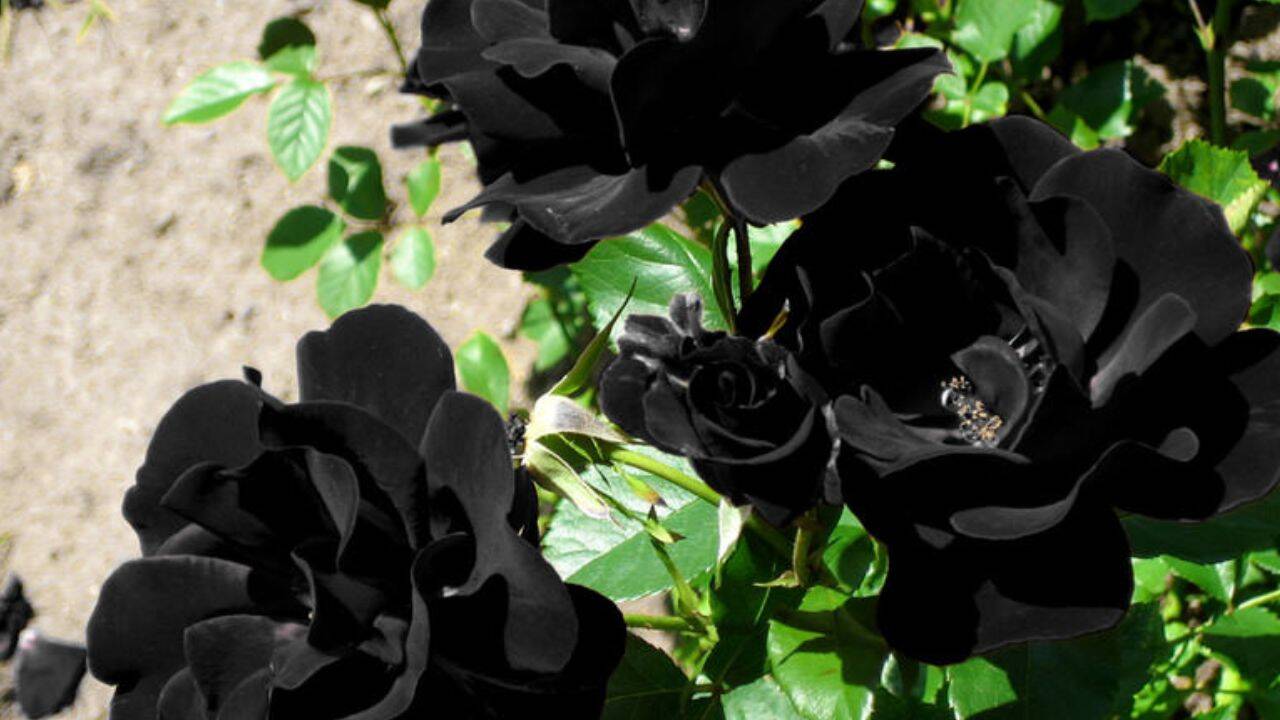
The myth of the naturally occurring pure black rose in Halfeti, Turkey, masks a precise intersection of soil chemistry, microclimate dynamics, and plant physiology. Extreme visual traits in flora rarely stem from unique genetic coding for black pigments; instead, they represent maximum light absorption caused by hyper-concentrations of specific plant compounds. In the Euphrates River basin, localized environmental factors trigger a metabolic response in Rosa x hybrida cultivars that pushes anthocyanin density to human visual saturation thresholds.
Deconstructing this phenomenon requires isolating three distinct operational variables: the soil pH chemistry specific to the Halfeti basin, the seasonal thermal variance that governs pigment accumulation, and the structural illusion of human visual perception.
The Tri-Factor Chemical Framework of Phenotypic Darkening
True black pigment does not exist in the plant kingdom. Chlorophyll, carotenoids, betalains, and anthocyanins comprise the primary pigment classes in vascular plants. The optical perception of black in the Halfeti rose stems exclusively from extreme concentrations of water-soluble vacuolar pigments known as anthocyanins, specifically cyanidin-3-glucoside and peonidin derivatives.
Three interdependent variables force this hyper-concentration:
Hydrogeological Alkaline Drift
The old village of Halfeti sits along limestone bluffs fed by groundwater from the Euphrates River drainage basin. The local hydrological system exhibits a elevated pH, typically ranging between 7.8 and 8.5, driven by dissolved calcium carbonate ($CaCO_3$) leaching from bedrock. Anthocyanins act as natural pH indicators; in acidic environments (pH < 4), they express brilliant red oxonium cations. As vacuolar pH shifts toward neutral and slightly alkaline states, the molecular structure transitions through quinonoidal bases, shifting light absorption spectra from 520 nanometers (red light reflected) toward 600–650 nanometers (blue and green light absorbed).
Thermal Shock and Anthocyanin Accumulation
Pigment accumulation functions as a protective stress response against ultraviolet radiation and low atmospheric temperatures. In Halfeti, the spring-to-summer transitional microclimate creates a sharp diurnal temperature gradient. Cold nighttime temperatures in early spring signal the plant to synthesize anthocyanins as solar protection and osmotic regulators. When combined with high daytime solar radiation, the biosynthesis rate of phenylpropanoids accelerates along the flavonoid pathway, overloading the petal vacuole space.
Petal Cell Morphology and Micro-Prismatic Trapping
Visual darkness depends heavily on surface texture. Scanning electron microscopy of dark rose petals reveals conical epidermal cells rather than flat surfaces. These micro-structures act as light traps, causing incident light to bounce repeatedly within the cellular matrix rather than reflecting directly back to the observer. When ultra-dense cyanidin compounds fill these conical cells, photon reflection drops below 2 percent, registering visually as pure black to the human eye.
Seasonal Transmutation Mechanics
The Halfeti rose does not maintain a fixed dark phenotype year-round. Phenotypic expression operates strictly as a seasonal curve tied directly to environmental inputs.
[Early Spring]                    [Late Spring / Peak]              [Summer Heat]
Low Temp + High UV                Alkaline Soil Uptake              High Heat Decay
      │                                   │                               │
      ▼                                   ▼                               ▼
Anthocyanin Synthesis        Vacuolar Structural Shift          Enzymatic Breakdown
(Deep Crimson Petals)        (Maximum Absorptance / Black)      (Fades to Dark Red)
Phase One: Spring Biosynthesis Initiative
As buds form in early spring, cooler night temperatures restrict vegetative growth while encouraging flavonoid synthesis. Petals open displaying an extraordinarily dark crimson or deep burgundy baseline.Phase Two: Hydrogeological Saturation Peak
During peak blooming in mid-to-late spring, root absorption of alkaline Euphrates-fed groundwater reaches maximum activity. The cellular pH shift alters the molecular geometry of accumulated anthocyanins, shifting the absorption band across the visible light spectrum. The petal surface achieves its maximum visual density, appearing pitch-black.Phase Three: Thermal Degradation and Fade
As summer temperatures exceed 35°C, high thermal exposure causes enzymatic degradation of anthocyanin molecules alongside increased transpiration rates. The hyper-pigmented state collapses, and subsequent bloom cycles transition back to standard deep red hues.
Supply Chain Bottlenecks and Geographic Vulnerabilities
The physical geography that created the Halfeti rose also limits its commercial scalability. The construction of the Birecik Dam in the late 1990s flooded the historic lower town of Halfeti, submerging a significant portion of the alluvial agricultural terraces responsible for the specific hydrogeological conditions required for optimal bloom expression.
Attempts to cultivate the specific Halfeti stock outside this micro-basin consistently result in dark red blooms rather than black ones. Transplanting the stock into neutral or acidic soils breaks the hydrogeological leg of the tri-factor framework. Without the high calcium carbonate saturation of the local groundwater and the microclimate created by the Euphrates gorge, the plant defaults to standard Rosa x hybrida pigment levels.
Economic exploitation of the phenomenon faces structural constraints:
- Perishability and Transport Sensitivity: The high concentration of vacuolar anthocyanins degrades rapidly post-harvest under standard refrigeration, causing color shift within 48 to 72 hours.
- Geographic Isolation: The suitable micro-terraced land remaining along the upper banks of the Euphrates comprises less than 50 total hectares.
- Cultivar Instability: Commercial propagation relies on tissue culture or grafting onto standardized rootstocks, which frequently alters soil-element extraction efficiency and reduces petal darkening intensity.
Commercial Reality Versus Botanical Identity
Market claims attributing the name 'Louis XIV' directly to the natural Halfeti rose confuse distinct botanical lines. 'Louis XIV' is an established French hybrid china rose cultivated by Lévêque in 1859, recognized for its dark crimson coloration and intense fragrance. The native Halfeti dark rose, locally referred to as Karagül, represents a distinct landrace stabilized by decades of localized environmental selection within southeastern Anatolia.
Vendors exploiting the novelty factor often rely on artificial dye infusion or digital saturation enhancements to market seeds online. Rosa x hybrida seeds do not breed true for environmental phenotypes; purchasing seeds labeled as "black rose seeds" ignores fundamental genetic principles. The unique visual output remains an environmental expression requiring specific localized variables rather than a isolated genetic seed trait.
Operational Execution for High-Phenotype Cultivation
To replicate maximum phenotypic darkening in dark-pigmented rose varieties outside the Anatolian basin, growers must artificially simulate the three core environmental variables.
First, adjust soil chemistry by introducing calcified dolomite lime to establish a stable rhizosphere pH between 7.8 and 8.2. Monitor runoff conductivity to prevent nutrient lockup, specifically iron deficiency chlorosis, which frequently occurs at elevated pH thresholds.
Second, manage solar exposure and temperature differentials. Introduce supplemental ultraviolet light (UV-A and UV-B spectrums) during early bud formation while maintaining night ambient temperatures below 12°C. This combination forces maximum flavonoid defense response without triggering heat-shock protein pathways that arrest growth.
Third, restrict nitrogen inputs during the bloom phase to limit vegetative cell elongation, which effectively concentrates anthocyanin volume within the conical epidermal cells of the opening petals.