The media loves a border tunnel story. Whenever federal agents discover a sophisticated, rail-car-equipped subterranean passage stretching from Tijuana to San Diego, the headlines read like a Tom Clancy novel. The narrative is always identical: a massive blow to the cartels, a triumph of law enforcement, and proof that we need heavier surveillance infrastructure.
It is a comforting story. It is also entirely wrong.
The lazy consensus treats a smuggling tunnel as a shocking security breach. In reality, these tunnels are predictable, structural responses to basic supply-and-demand economics. Treating a cross-border tunnel as a security failure misses the entire point of modern logistics. Cartels do not view these tunnels as permanent monuments; they view them as depreciable assets.
To understand why the current border enforcement framework is failing, you have to look past the optics of the drug war and analyze the border as a hyper-efficient supply chain.
The CapEx Delusion: Why Cartels Want Tunnels Found
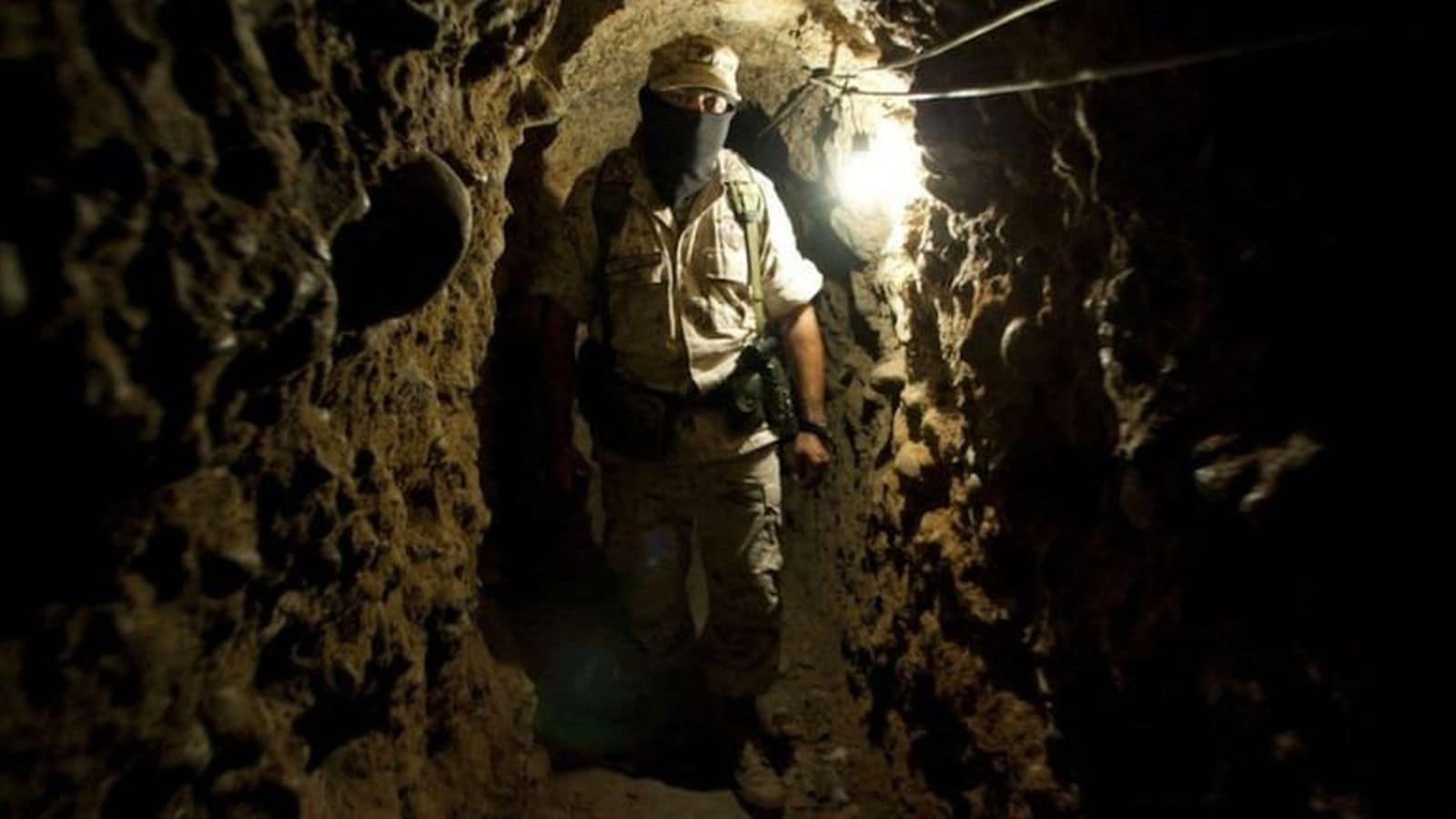
The standard reporting on these discoveries always emphasizes the cost. Media outlets breathlessly quote officials estimating that a 1,700-foot tunnel with electricity, ventilation, and rail tracks costs $1 million to $2 million to build. The assumption is that seizing the tunnel inflicts a massive financial hit on the illicit enterprise.
This reveals a fundamental ignorance of corporate finance.
In any legal logistics operation, Amazon or FedEx projects a certain percentage of asset loss. Warehouses burn down, delivery vans crash, and inventory gets damaged. In the illicit logistics sector, interdiction is simply the cost of goods sold (COGS).
A million-dollar tunnel is a Capital Expenditure (CapEx) that pays for itself in a matter of days, sometimes hours. If a cartel moves three tons of cocaine through a tunnel before it is discovered, the net profit clears the initial construction investment by a factor of ten. Once that threshold is crossed, the asset has yielded its return.
When U.S. authorities pour concrete down a discovered shaft, they are not disrupting an empire. They are decommissioning an asset that has already depreciated to zero on the cartel’s internal balance sheet.
The Law of Displacement: Why Better Walls Equal Deeper Holes
Every time a politician promises to build a higher wall or deploy more ground-penetrating radar, the illicit market responds with textbook economic substitution.
When surface security tightens, smuggling routes do not disappear; they simply shift to alternative vectors. If you seal the surface, the traffic goes underground. If you invest heavily in subterranean detection, the traffic moves to ultra-light aircraft, maritime drones, or legitimate commercial supply chains.
Consider the data from the San Diego border sector. As surface infrastructure became more formidable over the last two decades, the density of discovered tunnels in the Otay Mesa region skyrocketed. Why? Because Otay Mesa possesses the perfect soil composition for digging—a clay-like mixture that is easily excavated but holds its shape without massive timber reinforcement.
The enforcement strategy creates the very phenomenon it aims to destroy. By restricting the ease of surface transit, the government increases the premium on underground routes. This artificially inflates the profit margin for anyone willing to dig, ensuring that as long as the demand exists, the incentive to build the next tunnel remains absolute.
The Real Smuggling Conduit: Plain Sight
Here is the truth that border security advocates refuse to acknowledge: the vast majority of illicit substances do not move through tunnels. They do not cross via remote desert paths.
They drive through the front door.
According to data from U.S. Customs and Border Protection (CBP), the overwhelming majority of hard narcotics seized at the border are intercepted at official Ports of Entry (POEs). They are hidden inside the body panels of passenger vehicles, welded into the frames of commercial semi-trucks, or mixed with legitimate cargo like fresh produce and industrial parts.
The obsession with tunnels is a distraction from a much harder problem: the sheer volume of global trade. Millions of trucks cross the U.S.–Mexico border every year. Thoroughly inspecting every single vehicle would cause a catastrophic economic bottleneck, grinding North American supply chains to a halt.
Cartels exploit this systemic vulnerability. They know that border security is a game of probability. If they send ten trucks loaded with hidden compartments through a busy port, and two get seized, the remaining eight generate more than enough revenue to cover the loss. The tunnel is merely a specialized boutique pipeline used for high-value or high-volume shipments when a specific port gets too hot.
The Fragility of Technical Solutions
Every few years, defense contractors pitch a new savior technology. We are told that seismic sensors, satellite imagery, or cosmic-ray muon radiography will finally map the underworld and render tunnels obsolete.
I have watched public sectors waste millions on these technological silver bullets. The failure point is never the tech itself; it is the environment.
The Otay Mesa industrial park is a bustling hub of heavy machinery, warehouse operations, and constant truck traffic. This operational noise creates immense seismic interference. For a sensor array, distinguishing between a team of cartel laborers digging 40 feet below ground and a 40-ton semi-truck backing into a loading dock is an algorithmic nightmare. The result is a flood of false positives that exhausts field agents and renders the data useless.
Even when technology works perfectly, it only addresses the symptom. You cannot solve a socioeconomic market reality with an engineering patch.
Dismantling the Premise of "Victory"
The public wants to know when the border will be secure. They ask how many tunnels need to be filled before the flow stops.
This is the wrong question entirely. The metric of success used by law enforcement—kilograms seized and tunnels destroyed—is a vanity metric. It measures activity, not outcome. If seizures are up, does it mean enforcement is more effective, or does it mean the total volume of traffic has increased?
True supply chain disruption requires targeting the financial friction points, not the physical infrastructure. As long as the retail price of an illicit substance in Chicago or New York is several thousand percent higher than its production cost in South America, the physical border will remain porous. Tunnels will be dug, walls will be bypassed, and ports will be compromised.
Stop looking at the tunnel as a breach of sovereignty. Look at it for what it actually is: an underground commercial pipeline built by rational economic actors responding to a high-yield market signal. Until the economic incentives change, the digging will continue.