The coffee goes cold while the phone stays silent.
That is the rhythm of international trade for thousands of families who wake up every morning wondering if the rules of their livelihood are about to change before breakfast. We talk about North American commerce as a massive, monolithic engine of billions of dollars, a pristine abstraction charted on Bloomberg terminals and debated in wood-paneled rooms in Washington and Ottawa. But the engine is actually made of people. It is made of inventory sitting in a warehouse in Michigan, waiting on customs clearance. It is made of a truck idling in the damp morning air at the Ambassador Bridge, carrying auto parts that must arrive by noon or a factory line stops cold.
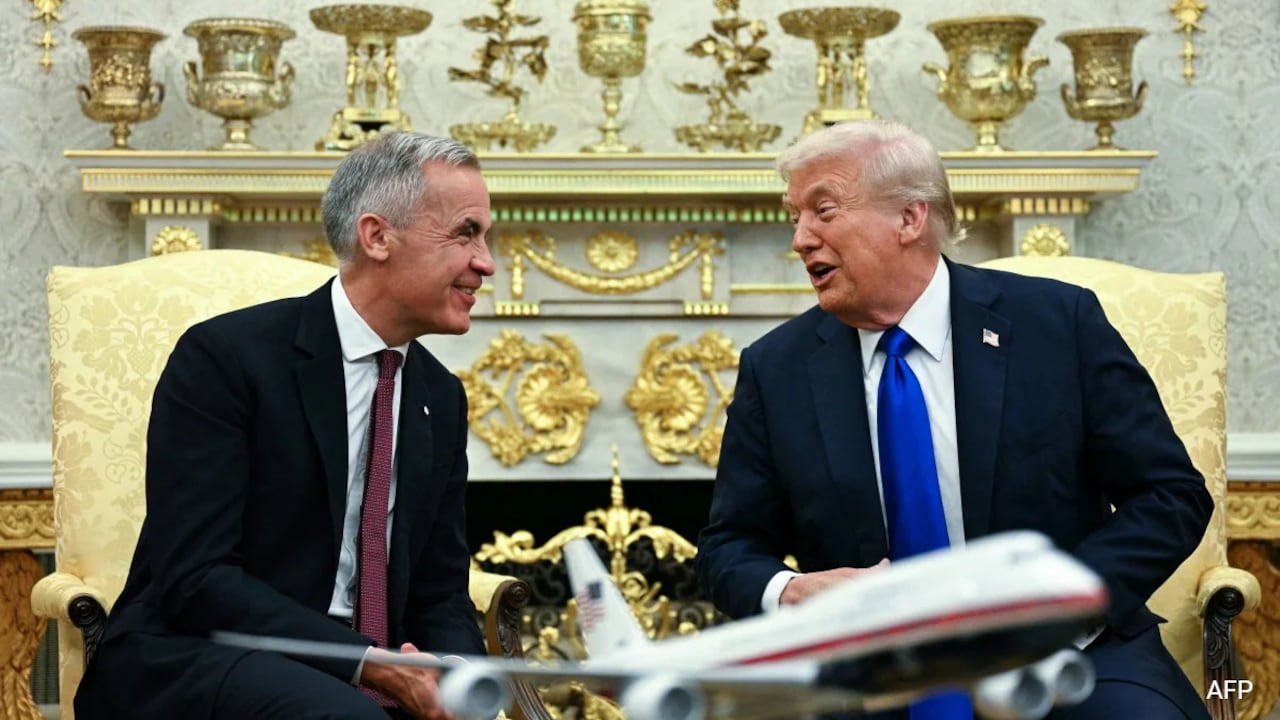
Right now, the headlines tell us that the United States and Canada are close to a final trade deal. Soon. Just around the corner.
Details remain scarce.
Those four words are a quiet earthquake for anyone whose life depends on the flow of goods across the northern border. Scarce details mean a frozen present. They mean expansion plans shelved, hiring freezes enacted, and sleepless nights for business owners who do not know whether tomorrow brings a frictionless market or a thicket of new tariffs, quotas, and regulatory walls.
To understand what is actually happening behind those closed doors, we have to step away from the press releases and look at how trade agreements are built in the real world. Imagine Elena, a hypothetical manufacturer who builds specialized agricultural machinery components in Ontario. Her biggest market is just across the Detroit River. For twenty years, her business has relied on a predictable rhythm. Parts cross the border seamlessly, assembled from steel sourced within the regional bloc, adhering to shared environmental and labor standards.
When politicians announce that a final deal is imminent, Elena does not pop champagne. She checks her cash reserves.
Because "soon" in the lexicon of international diplomacy can mean a week, a month, or an election cycle away. And "scarce details" means she cannot order the specialized alloy she needs for next quarter’s production run. If the new trade framework alters regional content rules—forcing her to source raw materials from entirely different suppliers to maintain tariff-free status—every contract she holds right now is suddenly at risk of becoming unprofitable.
This is the hidden cost of ambiguity. Markets do not just hate uncertainty; they suffocate in it.
To grasp why these negotiations are so painfully slow, we have to look past the political theater and examine the structural anatomy of the modern North American supply chain. It is not like two distinct countries trading separate goods across an ocean. It is an intricate, shared nervous system. A single car door crossing the border between Michigan and Ontario might cross that international line seven times before the finished vehicle rolls off the assembly line. Every single crossing is a potential friction point.
Diplomats call these technical barriers to trade. The people living them call them headaches.
For months, negotiators from both sides have been wrestling over thorny, deeply personal economic issues. Dairy quotas, digital services taxes, environmental enforcement mechanisms, and the strict rules of origin for manufactured goods. These are not abstract policy items. They are leverage points for domestic political constituencies. In Canada, protecting cultural industries and agricultural supply management is treated as a matter of national identity. In the United States, safeguarding domestic manufacturing jobs and pushing back against foreign digital subsidies is an article of political survival.
When these forces collide behind closed doors, progress is measured in millimeters.
And then, a compromise is struck. The ministers step up to the microphones. They smile for the cameras. They speak of historic ties, shared values, and a bright, integrated future. They declare that a final trade deal is coming soon.
Then they walk away. Leaving the details behind.
Why do they do it? Why release the headline before the fine print is dry?
Because momentum is a political currency. Governments under pressure need to signal competence and stability to the financial markets. A grand announcement acts as a stabilizing anchor, calming currency traders and soothing nervous investors. It tells Wall Street and Bay Street that the adults are in the room and the alliance is holding firm.
The strategy works for the macro economy. It fails the micro economy.
Consider the trucking company dispatcher in Winnipeg who hears the news broadcast on the radio. He has a fleet of fifty semi-trucks. Does he invest in upgrading his fleet to meet anticipated new emissions mandates that might be written into the upcoming trade text? Or does he hold off, risking breakdowns and higher maintenance costs? The announcement tells him a deal is coming, but it does not tell him if his current permits will remain valid under the new regulatory regime.
The silence between the grand announcement and the published text is where anxiety lives.
We have lived through this movie before. The renegotiation of NAFTA into the USMCA was a masterclass in this exact psychological theater. Months of brinkmanship, dramatic walkouts, late-night Twitter pronouncements, and sudden breakthroughs. Throughout it all, businesses large and small were forced to recalibrate blindfolded. Those who survived did so not because they had superior foresight, but because they built resilience into their operations. They diversified their supply chains. They kept cash buffers. They learned to treat political promises as weather forecasts: interesting to know, dangerous to rely upon.
This current moment is an echo of that friction.
The United States and Canada share the longest undefended border in the world, a three-thousand-mile line that functions less as a barrier and more as a circulatory system for nearly two trillion dollars in annual bilateral trade. When that system stutters, the fever is felt everywhere. From the lumber mills of British Columbia to the tech hubs of Seattle.
So what do we do with the news that a deal is coming soon, with details still scarce?
We stop treating trade policy as a spectator sport. We recognize that behind every delayed treaty text is a human choice delayed, a factory floor waiting for a green light, a family budget paused in mid-air.
The ink is not dry yet. The negotiators are still arguing over commas, percentages, and enforcement clauses in some windowless conference room in Washington or Ottawa. Outside, the trucks keep rolling across the bridge. The drivers hand over their manifests. The customs officers scan the barcodes. Life moves forward on its own momentum, paying little attention to the diplomatic clock.
When the full text finally drops, when the PDFs are uploaded to government websites and parsed by armies of trade lawyers, the headlines will shift. But the real work—the messy, daily grinding work of keeping two massive economies stitched together across a snowy frontier—will remain unchanged.
Until then, the coffee gets cold, the phone stays silent, and the border waits.